
Blooming
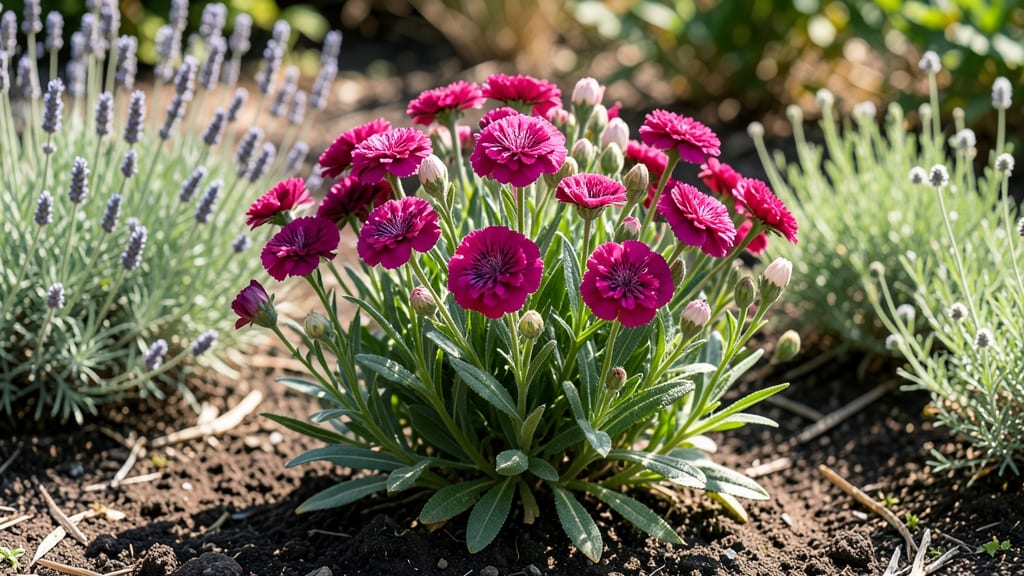
Dianthus don't bloom continuously all summer, but varieties like Sweet William and Perpetual Flowering types produce staggered blooms in response to heat and proper care. Their flowering cycles create waves of color throughout the season, though cool nights or drought can temporarily pause blooming.
Most dianthus varieties follow a seasonal rhythm rather than nonstop flowering, with heat acting as their primary trigger for new buds. 🔥 The key lies in their photoperiod sensitivity—long daylight hours combined with consistent warmth encourage reblooming, while sudden temperature drops or dry spells can cause buds to drop or enter dormancy.
For example, Sweet William often produces its best displays in spring and fall, while Perpetual Flowering types may reward gardeners with sporadic bursts of color through summer if given balanced moisture and occasional deadheading.
What sets dianthus apart is their ability to adapt to environmental cues. Unlike annuals that bloom once and fade, dianthus plants store energy in their roots, allowing them to respond to changing conditions.
This makes them more resilient than many other perennials, but it also means their blooming patterns depend heavily on your local climate and care routine. For instance, varieties like the 'Firewitch' series are bred specifically to handle summer heat better than traditional types, making them excellent choices for extended-season displays.
💡 In This Article
- How Heat and Light Trigger Dianthus Rebloom Cycles
- Tips to Extend Dianthus Blooms Through Summer
How heat and light trigger dianthus rebloom cycles
Dianthus flowering follows a photoperiodic response where day length and temperature work together to trigger bud formation. Most varieties need 14-16 hours of daylight combined with daytime temperatures above 70°F to initiate blooming.
The plant's meristem cells (growth points) respond to these cues by converting stored energy into flower buds rather than foliage. This explains why you often see peak blooms in spring and fall—when days are long but nights remain cool enough to prevent stress.
The ‘Firewitch’ series and other heat-tolerant varieties have been bred to extend this window by lowering their temperature threshold to 65°F during bud formation. However, even these types will struggle if nighttime temperatures drop below 55°F, as the plant enters a protective dormancy state.
This is why gardeners in hot climates sometimes see secondary blooms after summer rains—moisture triggers root activity, which restarts the flowering cycle when temperatures stabilize.
Light quality also plays a role. Dianthus prefer full sun exposure (6+ hours daily) because blue light wavelengths (400-500nm) stimulate chlorophyll production while red light (600-700nm) promotes flowering. The combination creates an energy surplus that the plant directs toward bud development.
Without sufficient light, dianthus will focus on leaf growth instead, delaying or preventing blooms entirely. 🌞 This is why container-grown plants often bloom less vigorously—their root systems can't access enough nutrients to support both foliage and flowers simultaneously.
Stress responses further complicate these cycles. Drought or sudden heat spikes above 90°F trigger the plant's survival mechanisms, causing buds to abort or flowers to wilt prematurely. The root pressure that normally delivers water to blooms gets redirected to maintain cellular hydration.
This explains why consistent moisture (about 1 inch per week) is critical—it prevents the plant from prioritizing survival over reproduction. Even heat-tolerant varieties like ‘Illumination’ will show reduced blooming if their roots dry out completely.
Comparing varieties reveals distinct patterns: Sweet William typically produces its main flush in spring, with minor reblooms in late summer if deadheaded regularly. In contrast, Perpetual Flowering Pinks may produce staggered blooms throughout summer, though these are often smaller than spring flowers.
The difference lies in their genetic programming—Sweet William prioritizes one strong growth cycle, while Pinks have evolved to take advantage of multiple seasonal windows.
What most gardeners miss is how root temperature affects blooming. Soil temperatures below 60°F can stall root activity, even if air temperatures are ideal. This is why mulching with 2-3 inches of organic matter helps maintain consistent soil warmth.
The roots' ability to absorb nutrients directly impacts the plant's energy reserves for flower production, creating a feedback loop between above-ground conditions and below-ground health.