
Blooming
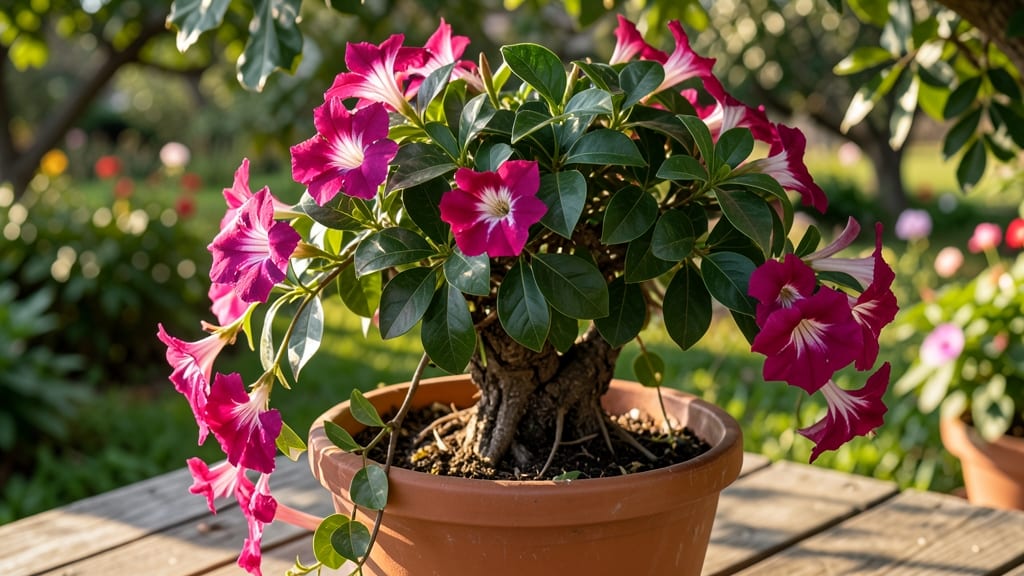
Mandevilla does bloom all summer when given the right conditions—typically from May through September—if you prune it regularly, fertilize monthly, and provide full sun exposure. Late-season blooms often taper off as cooler temperatures and shorter daylight hours arrive.
This tropical beauty thrives on summer's long daylight hours and warmth, which trigger its continuous flowering. 🌸 The key to extending its bloom season lies in consistent care: regular pruning encourages new growth, while balanced fertilizers (like a 20-20-20 NPK ratio) support vibrant flowers.
I've found that container-grown mandevillas actually perform better than in-ground plants because you can move them to optimize sunlight exposure as seasons shift.
What many gardeners don't realize is that mandevilla actually has a built-in dormancy period when temperatures drop below 50°F. This natural cycle explains why even the most diligent care can't force blooms beyond late summer.
The good news? With proper winter care (like bringing potted plants indoors), you can often coax early spring blooms before the full summer cycle begins again.
💡 In This Article
- Mandevilla’s Natural Blooming Cycle and Seasonal Triggers
- Pro Tips to Maximize Mandevilla Blooms Year-Round
Mandevilla’s natural blooming cycle and seasonal triggers
Mandevilla's flowering is directly tied to its native tropical environment, where it responds to specific seasonal cues. The plant enters its peak bloom phase when daylight exceeds 12-14 hours daily—typically from late spring through early fall.
This extended daylight triggers photoperiodic responses in the plant's meristem cells, stimulating continuous flower production. 🌞 What's fascinating is how the plant's internal clock (circadian rhythm) synchronizes with these light patterns, creating a natural bloom cycle that aligns with summer's long days.
The temperature sweet spot for mandevilla blooming is between 70-85°F during the day and 60-65°F at night. When temperatures rise above 90°F for prolonged periods, the plant conserves energy by slowing flower production—a survival mechanism to prevent stress.
Conversely, cooler temperatures below 60°F trigger dormancy, which explains why blooms naturally taper off in late summer. The plant's native Brazilian and Argentine habitats experience similar seasonal temperature shifts, which have shaped its biological responses over centuries.
Daylight duration plays an even more critical role than temperature alone. Mandevilla flowers require a minimum of 6-8 hours of direct sunlight daily to maintain vigorous blooming.
When daylight shortens below 12 hours (typically after Labor Day in most climates), the plant receives a hormonal signal to reduce flower production and focus on root development instead. This is why even well-cared-for mandevillas often show reduced blooming in September—it's an evolutionary adaptation rather than a care failure. 🌅
What most gardeners overlook is the plant's response to humidity levels. Mandevilla thrives in 50-70% relative humidity, and when humidity drops below 40% (common in late summer heat), the plant's stomata (pores) close to prevent water loss.
This closure reduces photosynthesis efficiency, which directly impacts flower production. The result? Even with perfect sunlight and temperature, low humidity can cause blooms to wilt or drop prematurely.
Interestingly, mandevilla's blooming cycle follows a predictable pattern even under ideal conditions: early summer shows moderate blooms as the plant establishes growth, mid-summer peaks with maximum flower production, and late summer gradually declines as the plant prepares for dormancy.
This pattern mirrors the natural progression of its wild counterparts in South America, where summer rains and temperatures create optimal conditions for about 10-12 weeks of continuous flowering.
For those in cooler climates, understanding this natural cycle is crucial. The plant's dormancy period isn't just about temperature—it's also triggered by the combination of shorter daylight and cooler nights. This dual trigger explains why even indoor-grown mandevillas may show reduced blooming in fall, even with artificial lighting.
The key insight? Working with these natural patterns—rather than fighting them—yields the most beautiful, sustainable blooms throughout the summer season. 🌸