
Blooming
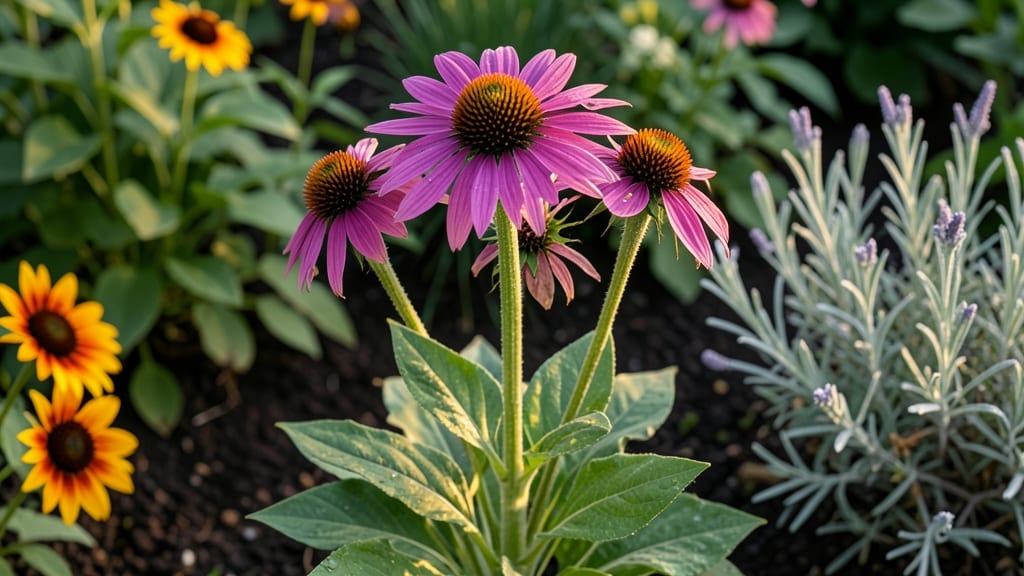
These zone 8 perennials that bloom all summer deliver vibrant color with minimal care, thriving in heat and reblooming when deadheaded regularly. Opt for hardy varieties such as 'Autumn Joy' sedum or 'Purple Smoke' bush clover to ensure nonstop color through the season.
These heat-loving plants rely on deep root systems to store water and adapt to dry spells, while their natural resilience makes them ideal for low-maintenance landscapes. 🌿 The key to their continuous blooming lies in strategic pruning—removing spent flowers redirects energy to new growth, while drought-tolerant species like lavender and salvia require even less water once established.
I’ve found that pairing these perennials with mulch can further boost their performance by retaining moisture and regulating soil temperature.
Beyond the classics, consider shasta daisies for their cheerful white blooms or bee balm for its vibrant red spikes that attract pollinators. For shade-tolerant options, heuchera (coral bells) and hostas offer foliage interest alongside occasional flowers, while Russian sage thrives in full sun with striking purple spikes.
The secret to a summer-long display? Start with well-draining soil and space plants according to their mature size—typically 18-24 inches apart for most varieties.
💡 In This Article
- How Heat-Tolerant Perennials Sustain Summer Blooms
- Top 12 Zone 8 Reblooming Perennials by Color & Care
How heat-tolerant perennials sustain summer blooms
The secret behind these long-blooming perennials lies in their deep root systems, which can extend 3-5 feet below the surface. This allows them to access moisture stored from winter rains, a survival mechanism called xerophytic adaptation.
Plants like 'Autumn Joy' sedum store water in their thick, succulent leaves, while others like black-eyed Susans develop extensive lateral roots to spread out and capture water efficiently. 🌱 The deeper the roots, the more resilient the plant becomes during drought spells that often hit Zone 8 summers.
Another key factor is their photoperiod sensitivity—the ability to detect day length changes. Unlike many perennials that bloom once in spring, these varieties have adapted to trigger multiple bloom cycles throughout summer. For example, coneflowers (Echinacea) produce flowers continuously because their growth isn't dependent on a single seasonal cue.
This is why regular deadheading (removing spent blooms) works so well—it mimics the plant's natural response to remove energy-draining seed heads, redirecting nutrients toward new flower production.
Water retention strategies vary dramatically between species. Drought-tolerant picks like Russian sage have silvery, fuzzy leaves that reflect sunlight and reduce water loss through transpiration, while moisture-loving impatiens rely on frequent watering to maintain their vibrant blooms. The difference?
Russian sage can survive on 1 inch of water per week once established, while impatiens may need daily watering in peak summer heat. This is why choosing the right plant for your microclimate makes all the difference.
Pruning techniques play a crucial role in extending bloom cycles. For daylilies, cutting back faded blooms to the first set of leaves encourages a second flush of flowers, while salvia benefits from shearing back by one-third after the first bloom to stimulate new growth.
The timing matters too—prune in early morning when plants are hydrated to reduce stress. This simple act can extend your summer display by 4-6 weeks in many varieties.
Consider the soil's role in this ecosystem. Well-draining soil prevents root rot while retaining enough moisture for these perennials to thrive. Amending heavy clay with compost or sand improves aeration, while mulching with 2-3 inches of organic matter helps regulate temperature and conserve moisture.
The result? Plants that look lush and continue blooming even when others in your garden are struggling.
What most gardeners don't realize is how companion planting enhances this effect. Pairing drought-tolerant lavender with moisture-loving bee balm creates a microclimate where each plant benefits from the other's strengths.
The lavender's shallow roots don't compete with the deeper roots of bee balm, while both attract beneficial pollinators that improve overall garden health. This synergy is why mixed borders often outperform monoculture plantings in Zone 8 climates.