
Blooming
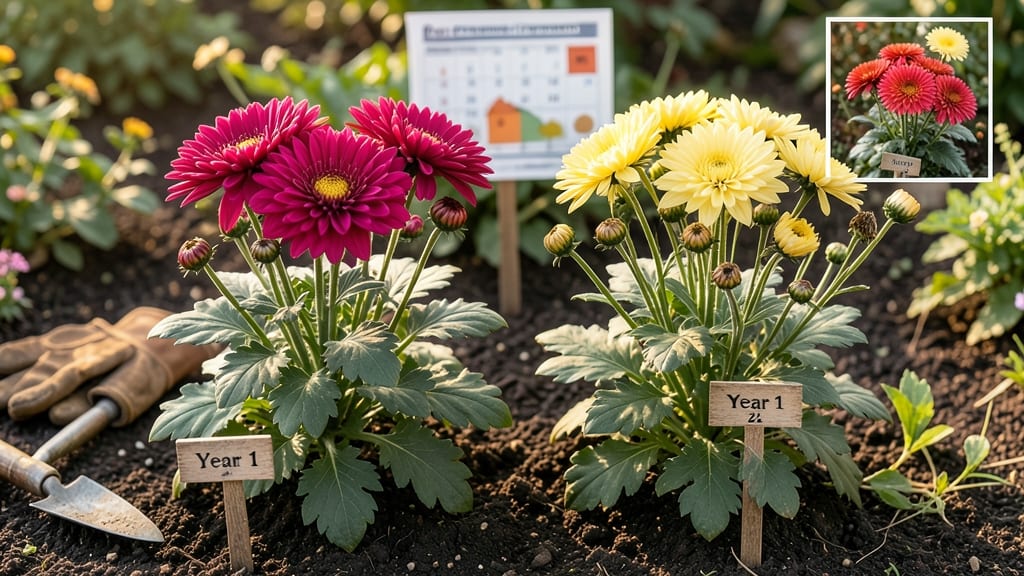
Chrysanthemums bloom every year only if they're planted as perennials in your climate zone, while annual types need yearly replanting. Reblooming varieties like 'Korean' or 'Inden' require careful pruning and seasonal maintenance to flower repeatedly each season.
Whether your chrysanthemums return with flowers each year depends entirely on their type and growing conditions. 🌸 Perennial varieties thrive in USDA zones 5-9, where they establish deep roots and survive winter dormancy to bloom again.
Annual types, however, complete their life cycle in one season unless you replant them. The key difference lies in their growth habits—perennials store energy underground while annuals focus all their energy on current-year blooms.
For reblooming types, the secret lies in proper care after their first flush of flowers. Regular deadheading (removing spent blooms) signals the plant to produce more flowers, while high-phosphorus fertilizers support root development.
I've found that providing 6-8 hours of sunlight daily and avoiding late-season pruning keeps my reblooming chrysanthemums producing vibrant flowers well into fall.
💡 In This Article
- Perennial vs Annual Chrysanthemum Bloom Cycles
- How to Encourage Annual Chrysanthemum Reblooming
Perennial vs annual chrysanthemum bloom cycles
The fundamental difference between perennial and annual chrysanthemums lies in their root systems and energy storage. Perennial varieties like Chrysanthemum morifolium develop extensive underground rhizomes that store carbohydrates throughout winter, allowing them to regrow and bloom again in spring.
These hardy plants typically thrive in USDA zones 5-9, where winter temperatures don't drop below -20°F for prolonged periods. The key mechanism is their ability to enter dormancy when daylight shortens in fall, then reawaken when days lengthen again.
Annual chrysanthemums, on the other hand, complete their entire life cycle in one growing season. They focus all their energy on producing flowers and seeds within 90-120 days, then die back completely.
What many gardeners don't realize is that even some "annual" varieties are actually short-lived perennials that may self-seed or regrow from basal shoots if conditions are favorable.
The photoperiodism response varies too—perennials often bloom in response to shorter daylight hours (as little as 10-12 hours of light), while annuals typically flower when days are longer.
Climate plays a crucial role in determining whether your chrysanthemums will return year after year. In colder zones (below 5), even perennials may need winter protection like mulch or row covers to survive.
I've seen gardeners in zone 4 successfully overwinter their plants by piling 12-18 inches of straw mulch around the base in late fall. The roots' ability to store starches is what makes perennials so resilient—these stored nutrients fuel early spring growth before photosynthesis kicks in.
There's also a fascinating biological distinction in how these plants handle their energy budgets. Perennial chrysanthemums allocate about 30-40% of their photosynthates to root storage during summer, while annuals divert nearly all energy to above-ground growth.
This fundamental difference explains why perennials can rebound year after year while annuals must start fresh each season. The trade-off is that perennials often have stronger stems and larger blooms in subsequent years.
One visual clue to identify perennials is their basal rosette of leaves that persists through winter. Annuals typically die back completely to the ground. The leaf arrangement also differs—perennial varieties often have more robust, upright growth habits, while annuals tend to be bushier and more compact.
This structural difference affects how they respond to pruning and whether they'll regrow after flowering.
Understanding these growth patterns helps explain why some gardeners report their chrysanthemums returning year after year while others struggle. The secret often lies in providing consistent moisture during the plant's establishment year (first year) and protecting the roots from temperature fluctuations.
Even in ideal conditions, first-year perennials may produce fewer blooms as they focus on building their root systems.