
Blooming
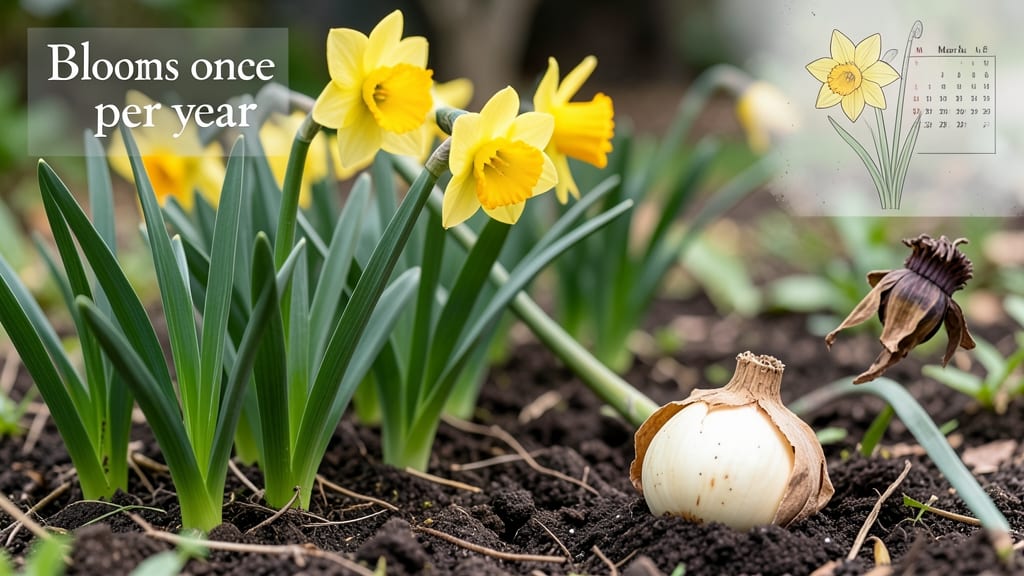
Not all daffodils bloom just once—many varieties produce multiple flowerings per season, while others bloom only annually. Whether a daffodil reblooms depends entirely on its specific cultivar, sunlight exposure, soil nutrients, and post-bloom care.
Daffodil reblooming behavior boils down to two key factors: genetics and growing conditions. 🌼 Some cultivars, like 'Ice Follies' or 'Tête-à-Tête', are bred specifically to rebloom, storing enough energy in their bulbs to produce a second (or even third) flush of flowers.
Meanwhile, traditional spring-blooming varieties like 'Jonquil' or 'Dutch Master' typically exhaust their energy in one spectacular show. Sunlight is another critical piece—rebloomers need at least 6 hours of direct sun daily to maintain the energy reserves required for multiple blooms.
Even then, proper care after the first bloom (like deadheading spent flowers and fertilizing with a balanced formula) can make the difference between a one-time display and a year-round garden highlight.
What's fascinating is how these plants manage their energy cycles. After the first bloom, daffodils enter a dormancy-like state where they focus on rebuilding their bulbs. Rebloomers are essentially cheating this system by storing extra nutrients during their growing season, while single-bloomers prioritize bulb expansion over flower production.
This biological trade-off explains why some daffodils look lush and healthy but never produce a second bloom—even with perfect care.
💡 In This Article
- Why Some Daffodils Rebloom While Others Don’t
- Best Reblooming Daffodil Varieties for Year-Round Color
Why some daffodils rebloom while others don’t
The difference between single-blooming and reblooming daffodils comes down to how they store and allocate energy. Reblooming varieties like 'Ice Follies' or 'Tête-à-Tête' have evolved (or been bred) to store excess carbohydrates in their bulbs during the growing season.
These reserves act like a battery, powering a second bloom cycle when conditions are right. Think of it as a plant version of marathon training—rebloomers build up extra fuel to sustain multiple rounds of flowering, while single-bloomers use all their energy in one spectacular performance. 🌟
Sunlight exposure plays a critical role in this energy equation. Reblooming daffodils need at least 6-8 hours of direct sunlight daily to maintain their energy reserves. Without sufficient light, the plant can't perform photosynthesis efficiently, leading to weaker bulbs that struggle to support a second bloom.
Even with ideal sunlight, soil health matters—well-draining, nutrient-rich soil (with a pH of 6.0-7.0) ensures the plant can absorb and store the maximum nutrients. I've seen rebloomers in poor soil produce only one weak bloom, while the same variety thrives with multiple strong blooms in enriched conditions.
The post-bloom care routine makes all the difference. After the first flowers fade, rebloomers need immediate attention: deadhead spent blooms to redirect energy back to the bulb, and fertilize with a balanced 10-10-10 formula to replenish nutrients.
This is where many gardeners miss the mark—assuming the plant is done for the season after the first bloom. The key is to treat the plant as if it's preparing for a second act, even when it looks dormant.
Without this care, rebloomers often revert to single-blooming behavior, proving that genetics alone don't guarantee performance. ✨
Temperature also influences reblooming success. Most daffodils require a period of cool dormancy (40-50°F) after their first bloom to reset their biological clocks. Without this cooling period, the plant may produce a weak second bloom or none at all.
This is why reblooming daffodils often perform best in regions with distinct seasons—hot climates can disrupt this natural cycle, even for the hardiest rebloomers. In warmer areas, gardeners sometimes mimic this dormancy by withholding water and allowing the foliage to yellow naturally before cutting it back.
There's a fascinating biological trade-off at play here. Single-blooming varieties prioritize bulb expansion over flower production, investing their energy in creating larger, more robust bulbs for next year's single spectacular show. Rebloomers, on the other hand, split their energy between current blooms and future storage.
This explains why some daffodils look lush and healthy but never produce a second bloom—they're following a different growth strategy entirely. Understanding this mechanism helps gardeners make informed choices about which varieties to plant based on their climate and care capacity.
One common misconception is that all daffodils will eventually rebloom with enough care. In reality, some cultivars are genetically hardwired to bloom just once, no matter how perfect the growing conditions. These varieties often have larger, showier flowers but require more energy to produce them.
The key is to match your expectations with the right cultivar—reblooming daffodils typically have smaller, more delicate flowers but offer the reward of multiple bloom cycles throughout the season. 💫