
Blooming
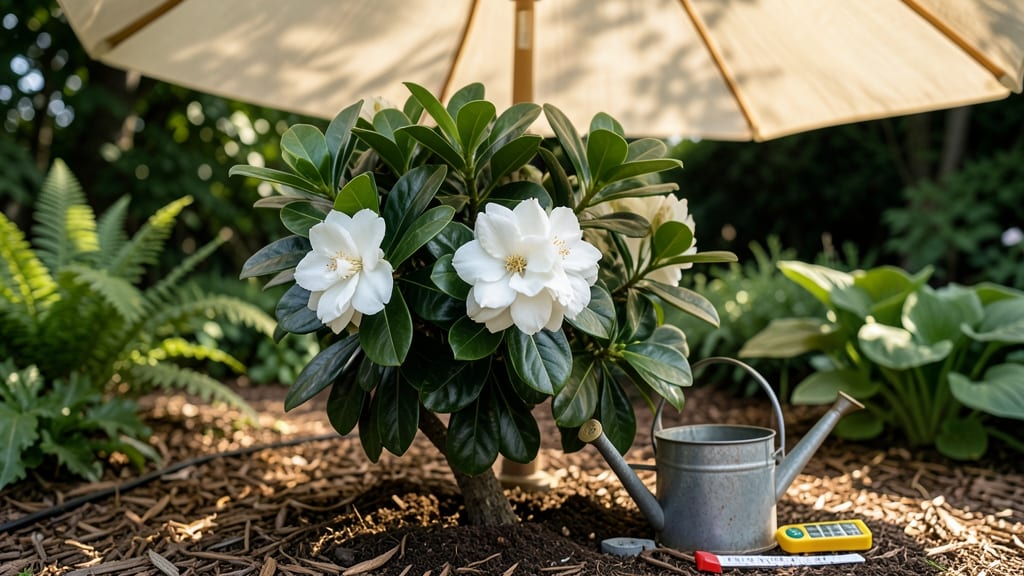
Gardenias don’t bloom all summer continuously—they follow seasonal cycles, with peak flowering in late spring to early summer and occasional blooms in fall if conditions are right. While you can encourage more flowers with proper care, over-blooming stresses the plant and requires recovery time.
Gardenias are sensitive to environmental cues, particularly daylight hours and temperature shifts. 🌸 When summer heat peaks, many gardenias enter a natural rest phase, conserving energy for their next bloom cycle.
This is why you might see fewer flowers mid-summer—it’s not a sign of poor care, but rather the plant’s biological rhythm. The key to extending blooms lies in mimicking their natural environment: consistent moisture, partial shade during intense afternoon sun, and a balanced fertilizer rich in phosphorus to support flowering.
One common mistake is pushing gardenias too hard—over-fertilizing or pruning at the wrong time can actually reduce blooms. Instead, focus on stress reduction: regular pruning after flowering to maintain shape, and avoiding cold drafts or sudden temperature changes.
With the right approach, you can coax a second, lighter bloom cycle in late summer or early fall, though it’ll never match the abundance of spring.
💡 In This Article
- Gardenia Flowering Cycles: Seasonal Patterns and Biological Triggers
- How to Extend Gardenia Blooms: Pruning, Fertilizing, and Light Adjustments
Gardenia flowering cycles: seasonal patterns and biological triggers
Gardenias follow a strict seasonal rhythm driven by photoperiodism—their response to daylight length. In their native tropical habitats, they bloom when days are longest (late spring to early summer), triggered by 12-14 hours of daylight and temperatures between 65-75°F.
This is why indoor gardenias often struggle to rebloom—they don't experience these natural seasonal cues. When summer solstice arrives (around June 21), daylight begins shortening, signaling the plant to conserve energy for root and foliage growth rather than flowering.
The plant's biological clock also responds to temperature shifts. Gardenias enter a semi-dormant state when nighttime temperatures exceed 75°F for prolonged periods.
This heat stress causes buds to drop before opening, a common mid-summer frustration. 🌿 The solution lies in recreating their natural environment: provide afternoon shade during peak heat (1-4 PM) and ensure good air circulation to prevent fungal issues that further stress the plant.
Even a slight drop in nighttime temperatures (to 68-72°F) can trigger new bud formation.
Watch for these stress signals that indicate your gardenia is conserving energy: yellowing leaves (often starting at the bottom), bud drop before opening, or leathery, dark green foliage. These are nature's way of saying "I need a break!"
Pruning at this stage can actually set back recovery, as the plant needs to redirect energy to root growth. The key is patience—allowing 4-6 weeks of reduced flowering lets the plant rebuild reserves for potential fall blooms.
Gardenias also have a two-year flowering cycle—plants often produce their most abundant blooms in their second year, then enter a lighter production phase in years three and four. This is why some gardenias seem to "quit" blooming after their first big flush. The good news?
With proper care, they can revive their flowering potential. For example, a 10-10-10 fertilizer (equal parts nitrogen, phosphorus, potassium) applied every 6-8 weeks during growing season supports this cycle, while organic options like fish emulsion provide slow-release nutrients that mimic natural soil conditions.
Consider this comparison: A well-cared-for gardenia might produce 50-100 blooms in its spring peak, then 10-30 blooms in fall if conditions are ideal. The difference isn't just quantity but also fragrance intensity—spring blooms often have a 20-30% stronger scent due to higher essential oil production during cooler weather.
This biological trade-off explains why gardenias never bloom continuously—they're prioritizing either flowers or foliage growth at any given time.
One fascinating detail is how gardenias use ethylene gas to regulate blooming. This plant hormone, naturally produced during stress or injury, actually inhibits flower formation. That's why pruning or repotting during bloom time can cause bud drop—you're triggering ethylene production.
Timing is everything: prune right after the main flowering cycle (late summer) when ethylene levels are naturally lower, and you'll encourage new growth without disrupting the plant's energy balance.