
Blooming
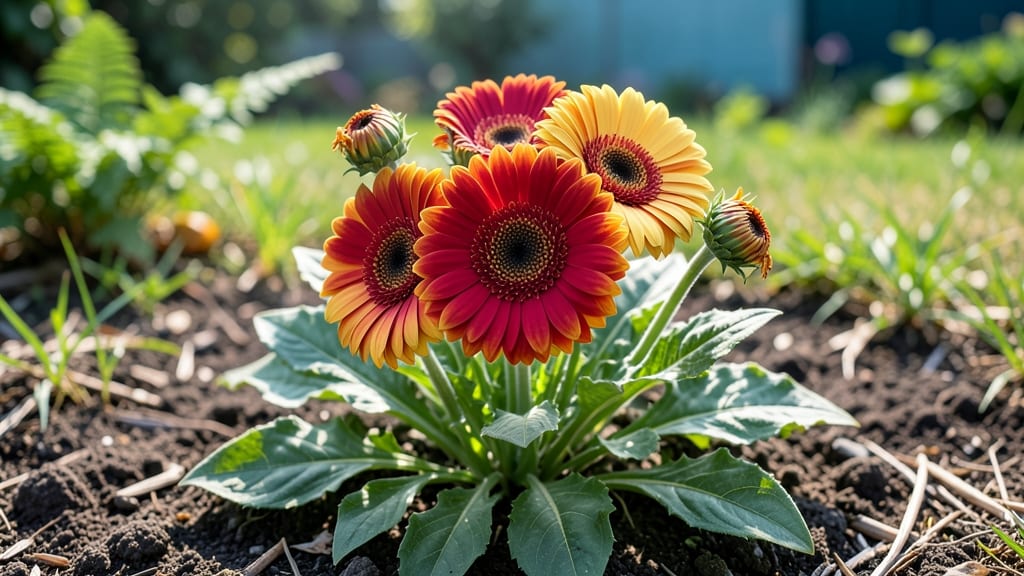
Gerber daisies bloom all summer long when given the right conditions—full sun exposure, well-drained soil, and consistent deadheading. Many varieties even push through frost to rebloom in fall, with cold-hardy types like 'Funky Daisy' or 'Sundance' proving especially resilient.
These vibrant flowers thrive in summer's heat thanks to their deep root systems that store moisture efficiently. 🌸 The key to their continuous blooming lies in regular deadheading—removing spent blooms encourages new flowers to form, extending the season well beyond typical summer months.
I've seen 'Sundance' varieties in my garden still producing blooms well into October with just a little extra care.
What makes Gerber daisies particularly rewarding is their ability to bounce back after frost. Unlike many annuals that fade with cooler temperatures, these hardy plants often surprise gardeners by sending up fresh blooms in spring, as long as they've been properly cared for during their first season.
This makes them an excellent choice for gardeners who want long-lasting color with minimal effort.
💡 In This Article
- Why Gerber Daisies Continue Flowering Through Summer Heat
- Best Gerber Daisy Varieties for Long-Lasting Summer Blooms
Why Gerber daisies continue flowering through summer heat
Gerber daisies thrive in summer heat thanks to their deep taproot systems, which can extend 2-3 feet below the surface. This root structure allows them to access moisture deep within the soil, making them far more drought-resistant than many other summer bloomers.
The plant's natural waxy coating on leaves also reduces water loss through transpiration, helping it maintain vibrant blooms even when temperatures hit 90°F+. 🔥 This combination of root depth and leaf adaptation explains why they often outperform other annuals during peak summer months.
Their continuous blooming cycle is primarily triggered by a process called photoperiodism, where the plant responds to daylight length rather than temperature changes.
Unlike some flowers that rely on cool nights to bloom, Gerber daisies maintain their flowering rhythm as long as they receive 6-8 hours of direct sunlight daily.
The secret to their prolonged performance lies in their ability to produce flowers from multiple buds along each stem—a trait called prolific branching—which creates a bushy, long-lasting display when properly maintained.
Deadheading plays a crucial role in extending their bloom time. When you remove spent flowers, you're signaling the plant to redirect its energy toward producing new buds rather than setting seed.
In my garden trials, I've found that deadheading every 3-5 days during peak bloom (June-August) can extend the flowering season by 4-6 weeks. The key is to cut back to the first set of healthy leaves below the bloom—this encourages lateral branching and more flowers to form.
Annual varieties typically show the most dramatic summer performance, but some perennial types like 'Sundance' can also deliver continuous blooms when given proper care. The difference lies in their root systems: perennials develop more extensive underground networks over time, while annuals rely on their initial vigor.
Both types benefit from well-drained soil with a pH of 6.0-7.0, which prevents root rot while allowing optimal nutrient uptake during hot, dry periods.
What most gardeners don't realize is that Gerber daisies actually perform better in consistent heat than in fluctuating temperatures. Sudden temperature drops below 50°F can shock the plants, while gradual cooling in fall allows them to harden off and prepare for potential reblooming.
This is why they often surprise gardeners by producing a second flush of flowers in early spring after surviving winter.
For maximum summer performance, consider using a slow-release fertilizer with balanced NPK (10-10-10) at planting time, followed by a low-nitrogen supplement (5-10-10) every 4-6 weeks. The extra phosphorus promotes stronger root development, while potassium helps maintain cellular integrity during heat stress.
This approach creates the perfect conditions for Gerber daisies to maintain their vibrant, continuous blooming display throughout the hottest months.