Blooming
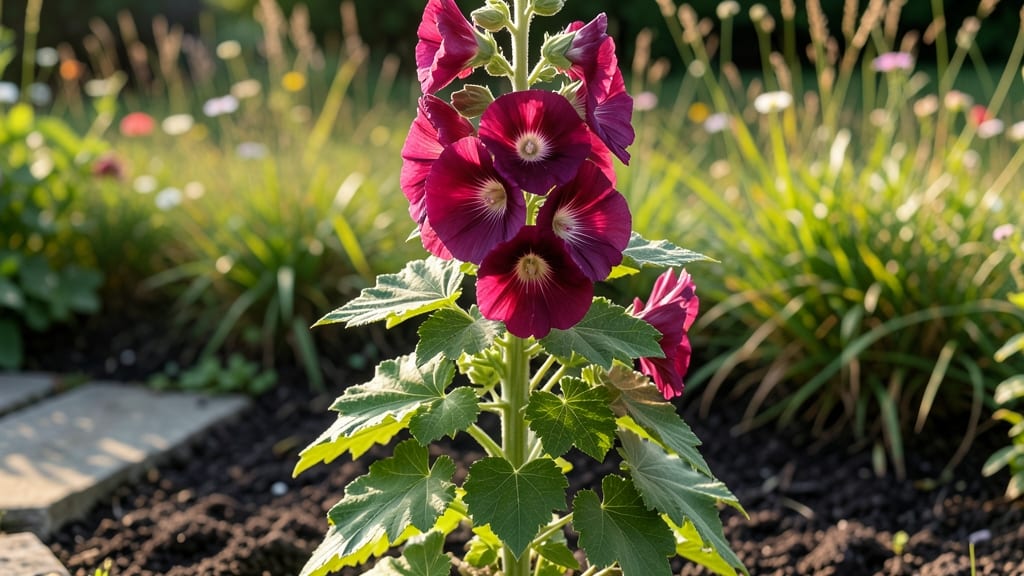
Hollyhocks don't bloom all summer—most varieties flower for just 4-6 weeks during mid-to-late summer, with some late-blooming types lasting into early fall. Their flowering window is naturally limited by seasonal growth cycles and variety-specific traits.
This seasonal bloom pattern isn't random—it's hardwired into hollyhock genetics. 🌸 Most varieties follow a predictable mid-summer peak, with 'Black Prince' typically blooming earliest and 'Peach Blush' extending furthest into fall.
The key difference lies in their growth habits: early bloomers prioritize quick flowering, while late varieties focus on sustained energy storage for delayed bursts. Your local climate zone can shift these timelines by 2-4 weeks, making late summer the most reliable window for consistent blooms.
What's fascinating is how these plants manage their energy. Hollyhocks allocate resources between stem growth and flower production, which is why you'll see some varieties produce fewer but larger blooms over a shorter period.
This trade-off explains why even with perfect care, their flowering season remains limited—though strategic deadheading can coax an extra 2-3 weeks of color from many cultivars.
💡 In This Article
- Hollyhock Bloom Cycles by Variety
- Extending Hollyhock Blooms with Deadheading and Care
Hollyhock bloom cycles by variety
Hollyhocks follow a genetically programmed bloom cycle tied to their growth stage, not just calendar months.
Early varieties like 'Black Prince' prioritize rapid flower production, typically blooming for just 3-4 weeks in early to mid-summer (June-July), while mid-season types such as 'Chater’s Double' stretch their display to 5-6 weeks during peak summer (July-August).
This difference stems from their photoperiod sensitivity—early bloomers respond to increasing daylight hours faster, while late varieties like 'Peach Blush' delay flowering until after establishing stronger root systems.
The science behind this involves florigen hormone production, which hollyhocks regulate based on temperature and daylight. In cooler climates (USDA zones 3-5), blooms may start 2-3 weeks later than in warmer zones (6-9) due to slower metabolic activation.
For example, 'Black Prince' in zone 4 might bloom in late June, while the same variety in zone 7 could flower by early June. The trade-off? Later bloomers often produce slightly smaller flowers but maintain color longer due to their delayed energy allocation strategy.
What's often overlooked is how variety height affects bloom duration. Tall varieties (5-6 feet) like 'Chater’s Double' allocate more energy to stem growth, resulting in 1-2 weeks shorter bloom periods compared to shorter types (3-4 feet) that focus resources on flower production.
This explains why dwarf hollyhocks often outperform their taller cousins in prolonged displays—simply because they don't "waste" energy on excessive vertical growth.
Climate plays a surprising role in extending bloom windows. In regions with consistent 70-75°F daytime temperatures, hollyhocks can maintain flowering for up to 8 weeks when given proper care, while sudden temperature drops below 50°F or above 90°F trigger premature dormancy.
This is why coastal gardeners often see longer bloom periods—the moderating ocean influence creates ideal temperature stability for extended flowering.
Here's how varieties compare in bloom duration:
- Early bloomers: 'Black Prince' (3-4 weeks), 'Scarlet Flame' (4 weeks)
- Mid-season: 'Chater’s Double' (5-6 weeks), 'Pink Beauty' (6 weeks)
- Late bloomers: 'Peach Blush' (6-8 weeks), 'White Lady' (7 weeks)
The longest natural bloom periods come from biennial varieties that store energy in their first year, like 'Peach Blush', which can produce flowers for up to 10 weeks in perfect conditions—but this requires careful overwintering and spring care. 🌿