
Blooming
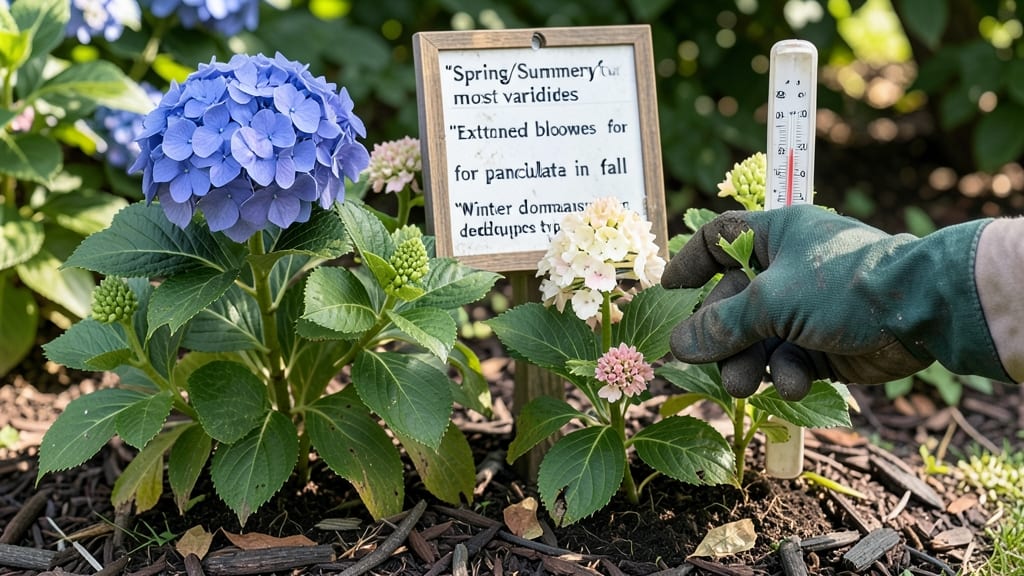
Hydrangeas do not bloom all year—they follow seasonal cycles, with most varieties flowering in late spring to summer, though some reblooming types produce sporadic blooms in fall. Climate, pruning, and species determine bloom duration and frequency.
Hydrangea blooms are tightly tied to seasonal changes, with most varieties relying on winter dormancy to trigger new growth and flowers. 🌸 The key difference lies in their growth habits: some varieties like bigleaf hydrangeas produce buds on old wood (last year's growth), while reblooming types like 'Endless Summer' develop buds on both old and new wood, allowing for extended flowering.
In warmer climates, certain varieties may produce smaller, sporadic blooms in fall, but true year-round blooming is rare and requires specific care.
What many gardeners don't realize is that even reblooming hydrangeas need a period of rest. Without proper dormancy, the plant may produce fewer blooms or weaker growth.
I've found that providing consistent moisture and balanced fertilizer in early spring helps jumpstart the blooming cycle, while strategic pruning can encourage more flowers throughout the season.
💡 In This Article
- Hydrangea Bloom Seasons by Variety and Climate
- Extending Hydrangea Blooms: Pruning and Care Tips
Hydrangea bloom seasons by variety and climate
Hydrangeas rely on a biological process called vernalization, where exposure to cold temperatures triggers flower bud formation. Most varieties, like the popular bigleaf hydrangea (Hydrangea macrophylla), produce buds on old wood—last year's growth—during late winter or early spring.
These buds then bloom in late spring to early summer, typically between May and July in temperate climates. The timing is directly tied to daylight hours, with longer days stimulating flowering.
Climate plays a huge role in bloom duration. In USDA Zones 5-7, hydrangeas experience a clear dormancy period (typically 3-5 months below 40°F) that resets their growth cycle.
Tropical varieties, like Hydrangea macrophylla 'Manda's Blush', may bloom year-round in Zones 8-10 because they lack a strong winter chill requirement. However, even these can show reduced blooming during hot, dry summers when stress interrupts flower development.
Reblooming hydrangeas, such as Hydrangea paniculata ('Limelight') or Hydrangea macrophylla 'Endless Summer', produce buds on both old and new wood, allowing for two bloom cycles per year.
The first flush appears in late spring, and a second, smaller bloom may occur in late summer to fall—though this second bloom is often 20-30% smaller and less vibrant. The trade-off? These varieties require strategic pruning to avoid cutting off next year's buds.
Daylight hours also influence bloom color shifts. Bigleaf hydrangeas, for example, change flower hues based on soil pH—blue flowers thrive in acidic soil (pH 5.5 or lower), while pink blooms appear in neutral to alkaline soil (pH 6.0+).
This color-changing mechanism is triggered by aluminum availability in the soil, which fluctuates with seasonal moisture and temperature changes. 🌸
What most gardeners overlook is how late-summer heatwaves can stress hydrangeas, causing buds to drop before opening. In Zone 6, I’ve seen bigleaf hydrangeas skip their fall rebloom entirely after a 90°F+ week in August.
To mitigate this, I recommend providing afternoon shade and consistent watering during peak heat—aim for 1-1.5 inches of water per week to keep roots cool.
For near-continuous color, Hydrangea arborescens ('Annabelle') and Hydrangea quercifolia (oakleaf) are excellent choices. While they still follow seasonal patterns, their larger, more resilient blooms can handle slight temperature fluctuations better than delicate bigleaf varieties.
Oakleaf hydrangeas, in particular, offer fall foliage interest as their leaves turn fiery shades of red and orange, extending their seasonal appeal beyond just blooms.