
Blooming
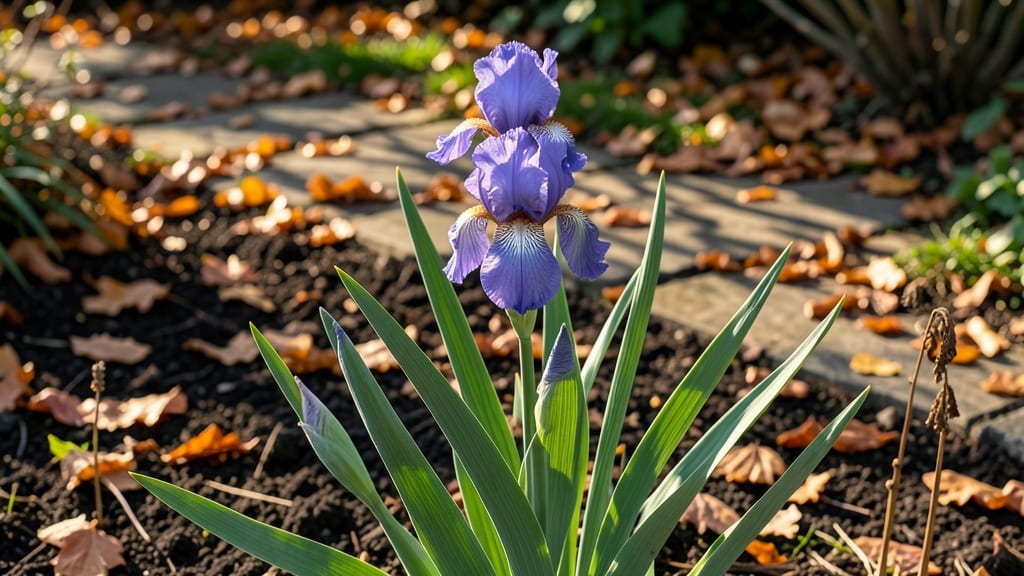
Some iris varieties—particularly Japanese, Siberian, and Louisiana irises—do bloom in the fall, especially in warmer climates or with proper care that mimics their natural growing conditions.
While spring remains the classic iris blooming season, certain varieties have adapted to produce late-season flowers when conditions align. 🌿 Japanese irises, for instance, thrive in cooler autumn temperatures and often reward gardeners with a second flush of blooms if planted in well-draining soil.
Siberian irises, known for their hardiness, may also rebloom in mild fall weather, particularly in USDA zones 5-8 where frost arrives late. Louisiana irises, native to swamps, naturally extend their blooming period into autumn when given consistent moisture—a key factor in triggering their second growth cycle.
What makes this possible is their sensitivity to daylight changes. Unlike spring-blooming varieties that rely strictly on temperature cues, these irises respond to shortening daylight hours in fall. This photoperiod sensitivity allows them to push new growth when other perennials have gone dormant.
The catch? You'll need to provide consistent moisture and balanced fertilization throughout summer to build the energy reserves needed for fall blooming. In drier climates, supplemental watering can make all the difference between a vibrant autumn display and missed flowers.
💡 In This Article
- Fall-Blooming Iris Varieties and Their Growing Conditions
- Encouraging Fall Blooms in Your Iris Garden
Fall-blooming iris varieties and their growing conditions
The ability of certain irises to bloom in fall comes down to their evolutionary adaptations. Japanese irises, for example, have developed a photoperiod sensitivity that triggers new growth when daylight shortens in autumn.
This is why they often produce a second flush of blooms in regions with mild fall temperatures, like the Pacific Northwest or coastal California. Their rhizomes store energy during summer, allowing them to push through cooler weather when other varieties would remain dormant. 🌸
Siberian irises take this adaptation a step further with their hardy nature and deep root systems, which can access moisture even as the soil cools. These varieties thrive in USDA zones 3-8 and may continue blooming into October if planted in well-draining, slightly acidic soil (pH 6.0-7.0).
Louisiana irises, native to swampy regions, naturally extend their blooming season because their roots remain active in moist conditions—a trait that makes them ideal for fall gardens in humid climates like the Southeast.
All three varieties require 6-8 hours of sunlight daily but tolerate partial shade better than traditional bearded irises.
The key to fall blooming lies in understanding each variety's native climate. Japanese irises, for instance, prefer cool, moist conditions similar to their Japanese mountain origins, while Siberian irises adapt well to containers or raised beds where drainage prevents winter rot.
Louisiana irises, on the other hand, demand consistent moisture year-round—a critical factor that distinguishes them from drought-tolerant spring-bloomers. In drier regions, these varieties may need weekly watering during summer to build the energy reserves needed for autumn flowering.
What most gardeners don't realize is that soil temperature plays a surprising role. Fall-blooming irises perform best when soil stays above 50°F—a threshold that explains why they thrive in coastal areas where ocean breezes moderate temperatures.
In colder inland zones, gardeners can mimic these conditions by planting near south-facing walls or using black landscape fabric to absorb and retain heat. This simple technique can extend the blooming window by 2-4 weeks in marginal climates.
Consider these regional growing conditions for fall blooms:
- Pacific Northwest: Japanese and Siberian irises excel with mild, wet falls and acidic, peat-rich soil
- Southeast U.S.: Louisiana irises dominate with high humidity and consistent rainfall
- Midwest: Siberian irises may rebloom if planted in raised beds with gravel drainage
- Mountain West: Only hardy Siberians survive, needing extra mulch to protect rhizomes
For optimal results, pair these varieties with companion plants that thrive in similar conditions. Hostas provide shade while retaining moisture, while ferns create a lush backdrop that highlights iris blooms.
The contrast between the irises' upright stems and these low-growing companions creates a visually striking autumn display that extends the garden's season. 🌿