
Blooming
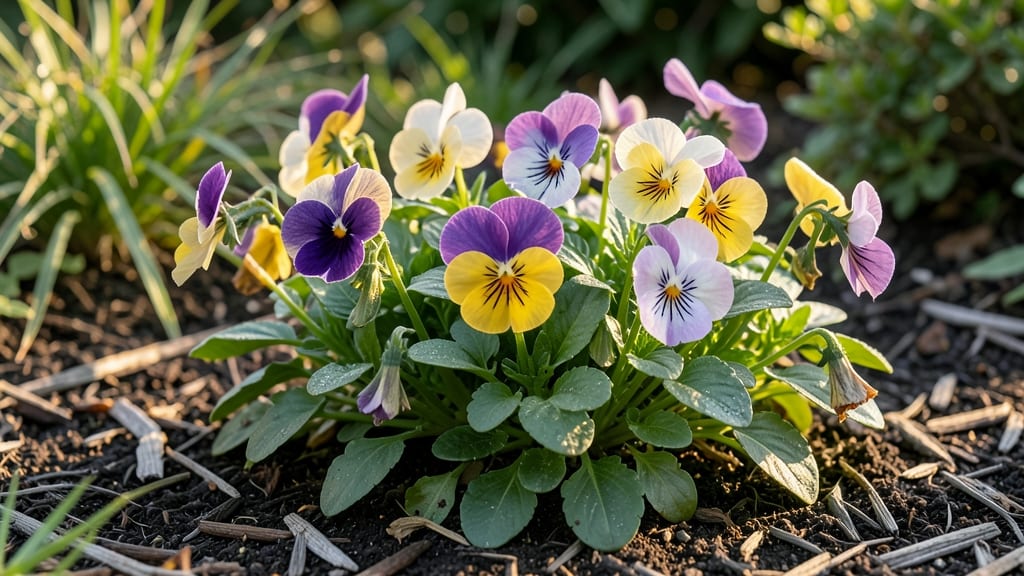
Pansies don’t bloom all year—they love cool weather but shut down flowering when temperatures hit 75°F+ or drop below 20°F, going dormant until conditions improve.
Pansies are cool-season champions, designed to thrive when days are short and temperatures mild.
When summer heat arrives, their flowering slows or stops completely as a survival mechanism—think of it like their built-in "pause button" to conserve energy. 🌸 The same happens in freezing conditions, though frost-hardy varieties may recover once spring arrives.
If you’re dreaming of year-round color, consider shade-loving varieties or staggered plantings to keep blooms going through different seasons.
What’s fascinating is how pansies adapt: they’ll often produce more foliage in extreme heat, then burst back into bloom when temperatures dip. This resilience makes them one of the most reliable cool-weather annuals—but don’t expect them to compete with summer heat lovers like zinnias or marigolds.
💡 In This Article
- Pansy Bloom Cycles: Heat and Cold Triggers Explained
- Extending Pansy Blooms: Seasonal Care and Variety Selection
Pansy bloom cycles: heat and cold triggers explained
Pansies (Viola spp.) are genetically programmed to follow a vernalization cycle—a biological process where exposure to prolonged cool temperatures (typically 50-60°F for 4-6 weeks) triggers flowering. This is why they bloom so vigorously in spring and fall but struggle in summer heat.
When temperatures climb above 75°F, their metabolic processes shift from flower production to survival mode, reducing ethylene—one of the key hormones responsible for blooming. 🌡️
The photoperiod (day length) also plays a role: pansies are short-day plants, meaning they flower best when daylight hours are shorter (12-14 hours). During summer solstice, when days stretch to 14-16 hours, their flowering mechanism essentially shuts down, even if temperatures are moderate.
This is why you’ll often see pansies produce more foliage than flowers in late summer—they’re prioritizing leaf growth to store energy for potential regrowth when conditions improve.
Cold stress works similarly but in reverse. When temperatures drop below 20°F, pansies experience cold-induced dormancy, where their cellular activity slows dramatically. This isn’t just about freezing—it’s a protective response where auxin (a growth hormone) levels drop, halting flower development.
Frost-hardy varieties like Viola cornuta (horned violet) can tolerate down to 10°F, but even they’ll stop flowering until spring warmth returns. 🥶
What’s less obvious is how pansies handle heat waves after prolonged cool periods. If they’ve been vernalized properly, they might produce a few blooms even at 80°F, but sustained heat above 85°F will cause buds to drop or flowers to wilt within hours.
This is because high temperatures accelerate transpiration (water loss), which disrupts the delicate balance of sugars and hormones needed for flower maintenance.
Interestingly, pansies exhibit seasonal plasticity—they can adjust their growth patterns based on environmental cues. For example, in regions with mild winters, pansies might bloom intermittently through winter if temperatures stay above 30°F, but they’ll always prioritize survival over continuous flowering.
This adaptability is why they’re such reliable garden stars in spring and fall but never true "all-year" performers. 🌱
To visualize this cycle, imagine pansies as seasonal athletes: they train hard in cool weather (vernalization), compete during their peak season (spring/fall), and retreat to the bench (dormancy) when conditions become extreme.
Their biology is perfectly tuned for temporary bursts of color, not marathon blooming—making them ideal for gardeners who embrace seasonal gardening rather than year-round expectations. ⚡