
Blooming
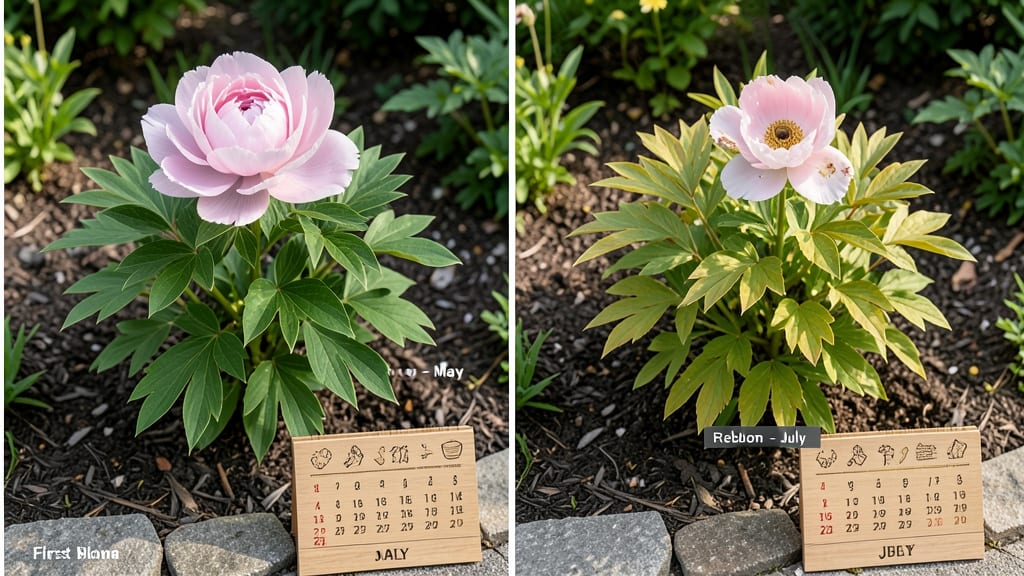
Most peonies do bloom more than once in a season, with their spectacular flowers appearing in early to mid-spring before the plant enters dormancy. However, certain reblooming varieties can produce a second, smaller set of blooms later in summer when given proper care and maintenance.
Peonies follow a natural blooming cycle driven by their need to conserve energy for survival. 🌸 The first flush of flowers in spring depletes the plant's resources, prompting a dormancy period where it focuses on root and foliage growth.
Reblooming varieties, like 'Sarah Bernhardt' or 'Bowl of Beauty,' are genetically different—they store enough energy to produce a second, often smaller bloom cycle in late summer, but only if you provide consistent water, balanced fertilizer, and strategic pruning.
What sets these rebloomers apart is their ability to balance growth and flowering through careful cultivation. I've seen gardeners extend the blooming season by up to 6-8 weeks with these techniques, though the second flush will never match the first in size or abundance.
The key is patience—reblooming takes 2-3 years of proper care to establish before you'll see that second display.
💡 In This Article
- Why Most Peonies Bloom Only Once Per Year
- How to Encourage Reblooming in Peony Varieties
Why most peonies bloom only once per year
Peonies follow a strict energy budget where their primary goal is survival rather than repeated flowering. After their dramatic spring display, these perennials shift focus to building robust root systems and foliage—an investment that ensures they can withstand harsh winters and regenerate for next year.
The first bloom cycle typically occurs when daytime temperatures reach 50-60°F consistently, signaling the plant to allocate resources toward flower production rather than vegetative growth.
The physiological trigger for this single bloom cycle lies in the plant's hormonal balance. Peonies produce high levels of gibberellins during spring growth, which promote flowering but also signal the plant to enter a period of dormancy afterward.
This hormonal shift explains why even healthy peonies rarely produce a second flush without human intervention. 🌱 The plant's natural instinct is to conserve energy for root expansion, which is why gardeners often see lush foliage but no flowers after the initial spring display.
Environmental factors play a critical role in this cycle. Peonies require 6-8 hours of direct sunlight daily to store enough energy for their spring bloom. When deprived of adequate light, they'll prioritize survival over flowering entirely.
Temperature fluctuations also matter—too much heat in summer can stress the plant, while inconsistent cold snaps may disrupt its dormancy cycle. Most peony varieties originate from temperate climates where these seasonal shifts are predictable, reinforcing their single-bloom pattern.
What makes this particularly fascinating is how peonies manage their carbohydrate reserves. During spring blooming, the plant converts stored starches into sugars for flower production, leaving minimal reserves for subsequent growth. This is why you'll often see peonies with beautiful blooms but sparse foliage—the energy trade-off is intentional.
The plant's roots continue growing throughout summer, but the focus shifts entirely to rebuilding reserves for next year's display.
Interestingly, this single-bloom pattern isn't a flaw—it's a survival strategy. In the wild, peonies prioritize producing seeds (which requires energy) over repeated flowering. The dramatic spring display ensures maximum seed production with minimal energy expenditure, while the summer months focus on root expansion.
This dual strategy explains why peonies can live for 50-100 years—they're mastering long-term sustainability over short-term spectacle.
For gardeners, understanding this cycle helps explain why some peonies seem "lazy" after their first bloom. The plant isn't being unproductive—it's following its biological programming. The challenge becomes convincing it to break this pattern through cultivation techniques that mimic optimal growing conditions year-round.
This is where reblooming varieties come into play, as they've been selectively bred to store additional energy reserves.