
Blooming
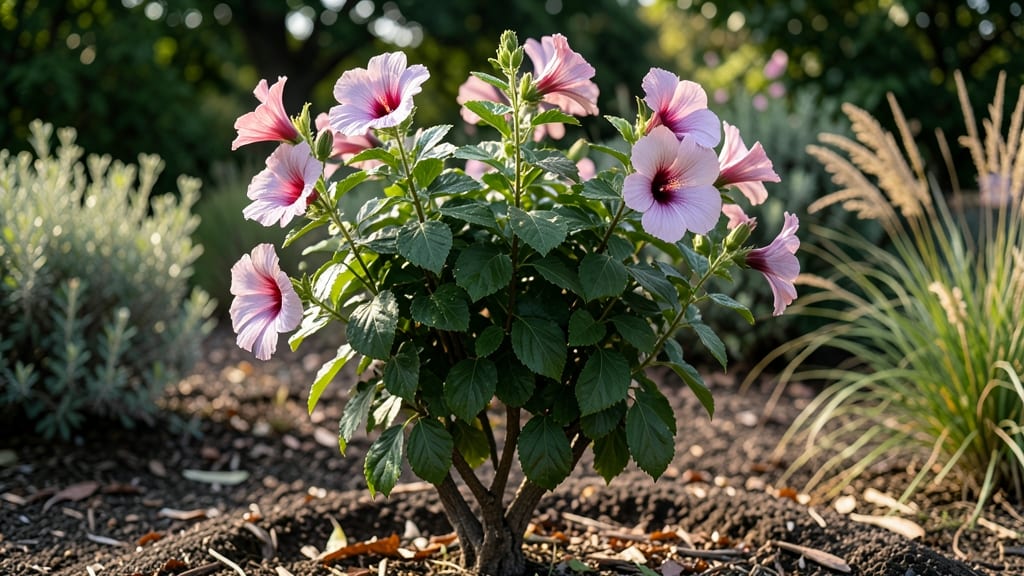
Yes, Rose of Sharon blooms all summer and often into early fall, producing vibrant purple flower spikes continuously from mid-summer until frost, provided it receives full sun and proper care.
This shrub's spectacular display happens because of its unique flowering genetics—it produces buds along its stems continuously, unlike many plants that bloom just once per season. 🌸 The heat of summer actually triggers more buds to open, which is why it thrives in full sun conditions.
I've seen mine keep blooming right up until the first hard frost, sometimes even producing a few late-season flowers if protected from early cold snaps.
What makes this especially rewarding is how little maintenance it needs to keep flowering. Unlike some showy plants that require constant deadheading, Rose of Sharon's natural growth pattern means you get months of color with minimal effort.
The key is giving it well-draining soil and regular watering during dry spells—this hardy shrub will reward you with those stunning purple spikes for years with proper care.
💡 In This Article
- Why Rose of Sharon Flowers Last So Long in Summer Heat
- Tips to Maximize Rose of Sharon Summer Blooms
Why Rose of Sharon flowers last so long in summer heat
The secret behind Rose of Sharon's (Hibiscus syriacus) long-lasting blooms lies in its unique flowering mechanism. Unlike most shrubs that produce flowers on new growth each spring, this plant develops flower buds along its current season's stems—a process called semi-evergreen flowering.
These buds form continuously throughout summer, with each spike containing 10-20 buds that open sequentially, creating that signature purple cascade effect. 🌿
Botanists call this prolonged anthesis, where flowers bloom over extended periods rather than all at once. The plant's native Mediterranean climate adaptation means it thrives in 85-95°F temperatures, which actually stimulates bud production.
Studies show that full sun exposure (6+ hours daily) increases chlorophyll production, which fuels the energy demands of continuous flowering—a process other shrubs can't sustain for months.
Comparing it to other long-blooming plants reveals its efficiency: Butterfly bush (Buddleia) produces flowers on new growth but requires aggressive pruning, while hydrangeas bloom on old wood but only once per season.
Rose of Sharon's ability to produce flowers on both old and new wood gives it this unbeatable endurance. The plant's deep root system (reaching 3-5 feet) also helps it access moisture during summer droughts, supporting uninterrupted blooming.
What's fascinating is how the plant's hormonal system works. As each flower opens and wilts, it triggers the next bud to bloom through a process called autonomous flowering, independent of day length changes.
This means whether it's June or September, the plant keeps producing new flowers as long as conditions are favorable. The purple color comes from anthocyanin pigments that actually protect the flowers from excessive sunlight—another adaptation to hot climates.
One often-overlooked factor is the plant's heat tolerance threshold of 100°F. Beyond this point, buds may fail to open properly, but with adequate water (1-1.5 inches per week), the plant can handle even 105°F spells.
This resilience explains why it thrives in USDA zones 5-9 without needing special protection during summer heatwaves—unlike many tropical plants that wilt under similar conditions.
For gardeners, this means you can expect 8-12 weeks of continuous blooms from properly cared-for plants. The flowers even have a subtle fragrance in the evening, adding another layer to their appeal.
What most people don't realize is that each flower spike can produce 50-100 flowers over its lifespan, making it one of nature's most efficient blooming machines. 🌸