
Blooming
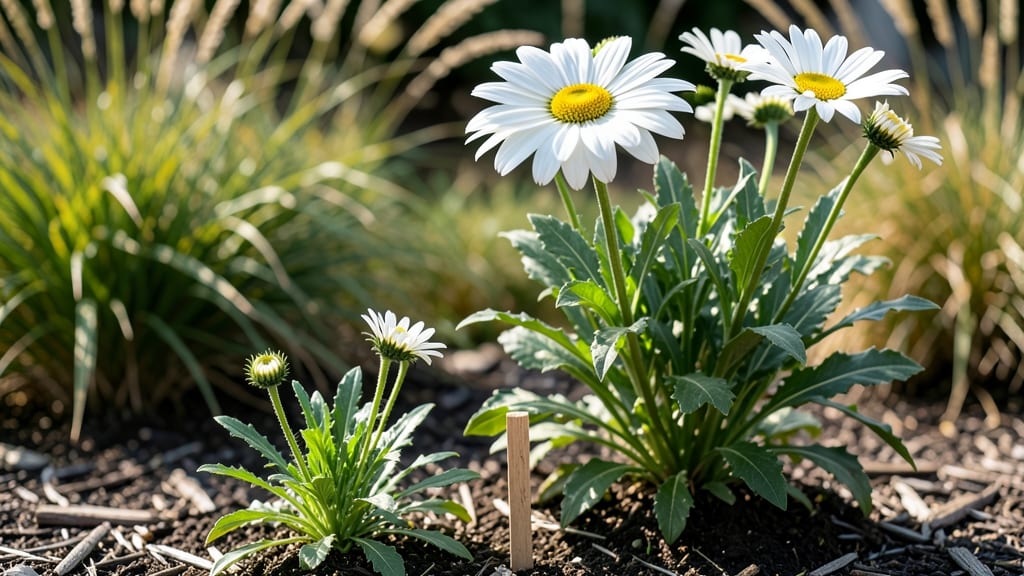
Shasta daisies typically do not bloom the first year after planting, as they focus on establishing a strong root system before producing flowers. Most varieties require 60-90 days of cool weather to trigger blooming, which usually occurs in the second growing season under ideal conditions.
Shasta daisies prioritize root growth over flowering in their first year, a survival strategy that ensures long-term vitality. 🌱 This behavior is especially common in cooler climates (USDA zones 3-9), where the plant conserves energy until it's fully established.
Think of it like a marathon runner building endurance before racing—patience pays off with bigger, healthier blooms in the following seasons.
While first-year blooms are rare, you can support your daisies by providing well-draining soil, consistent moisture, and a light feeding of phosphorus-rich fertilizer (like 5-10-10) in early spring. This gives them the energy boost they need to focus on roots while still preparing for future flowering.
The key is balancing care without overstimulating the plant—too much nitrogen can actually delay blooming further.
💡 In This Article
- Why Shasta Daisies Skip Blooming in Year One
- Tips to Encourage First-Year Shasta Daisy Growth
Why Shasta daisies skip blooming in year one
Shasta daisies follow a biological strategy called "juvenile dormancy," where young plants prioritize root development over flowering. This is hardwired into their genetics as a survival mechanism—think of it like a plant version of building muscle before competing.
During their first year, up to 80% of their energy goes toward establishing a deep, fibrous root system that can access water and nutrients efficiently. The above-ground growth stays modest, with leaves developing just enough to photosynthesize while minimizing water loss.
The timing of blooming is also controlled by a process called "vernalization," where cool temperatures trigger hormonal changes. Shasta daisies typically need 60-90 days of temperatures below 65°F to initiate flowering signals.
In warmer climates (USDA zones 7-9), this can delay blooms until the second year, while cooler zones (3-6) may see earlier flowering—though still often in year two. The plant's internal clock also responds to daylight length, with shorter days in fall stimulating flower bud formation for next season's blooms.
Transplant shock plays a surprising role too. When you plant nursery-grown daisies, their roots are often disturbed, triggering a stress response that redirects all energy to recovery. This is why many gardeners report their first-year plants look "stunted"—they're not failing, they're strategically conserving resources.
Even well-established daisies may skip blooming if they experience drought stress or poor soil during their first season, as their survival instincts override reproductive goals.
Climate zone matters significantly. In USDA zone 5, where winters are cold but summers are moderate, daisies often bloom in their second year. But in zone 9's heat, they may take three years to flower if not given proper care.
The key difference? Cooler zones provide natural dormancy periods that reset the plant's biological clock, while warmer zones require more careful watering and shade management to prevent heat stress that could delay flowering indefinitely.
Here's what's happening at the cellular level: Flower buds form from apical meristems (growth points) in the plant's crown. But in year one, these meristems remain dormant due to low levels of florigen (the flowering hormone).
Only when the root system reaches a critical mass—typically 12-18 inches deep—does the plant produce enough sugars and hormones to trigger blooming. This is why over-fertilizing with nitrogen can backfire: it promotes leafy growth at the expense of root development, pushing back flowering even further.
One fascinating exception occurs with "spray" or "prolific" Shasta daisy varieties, which are bred to flower more reliably in their first year. These cultivars have been genetically modified to reduce their juvenile dormancy period, sometimes blooming within 90-120 days of planting.
However, even these may produce only a few small blooms in year one compared to their second-year displays, which can reach 4-6 inches in diameter with dozens of flowers per stem.