
Blooming
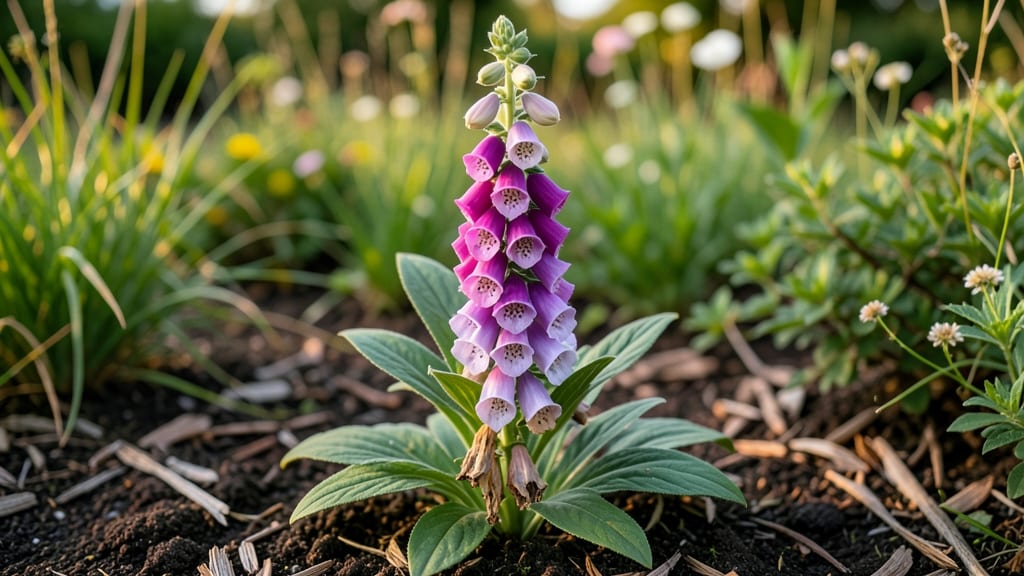
Foxglove does not bloom all summer—its flowers typically last 6-8 weeks per season, with most varieties flowering in late spring to early summer. Proper care and deadheading can encourage occasional secondary blooms, but it’s not a continuous display plant.
Foxglove's flowering season is tightly linked to its natural growth cycle, which peaks once per year. 🌸 Most varieties are biennials or short-lived perennials, meaning they focus their energy on producing stunning blooms for just a few weeks before entering dormancy.
The plant prioritizes seed production over prolonged flowering, which is why you won’t see continuous blooms even with ideal conditions.
What’s interesting is how light exposure triggers this cycle—longer daylight hours in spring kickstart the blooming process, while shorter days in summer signal the plant to shift focus to seed development.
That said, there are ways to coax extra blooms from your foxglove.
Deadheading—removing spent flowers—can stimulate occasional secondary blooms, though these will be less abundant than the initial flush. 💫 I’ve found that well-draining soil rich in organic matter, combined with consistent moisture (but never soggy conditions), helps support the plant’s energy needs during its limited flowering window.
The key is managing expectations: while you won’t get summer-long blooms, proper care can make the most of that 6-8 week display.
💡 In This Article
- Foxglove Bloom Cycle: Why It Doesn’t Last All Season
- Extending Foxglove Blooms: Pruning and Care Tips for Gardeners
Foxglove bloom cycle: why it doesn’t last all season
Foxglove's flowering pattern is governed by its biennial or short-lived perennial growth habit. In its first year, the plant focuses on developing a strong root system and foliage, storing energy for the big bloom event.
When it finally flowers in its second year (or third for some perennials), it dedicates nearly all its resources to producing those iconic bell-shaped blooms for just 6-8 weeks.
This intense energy investment means there's little left for prolonged flowering—once the primary bloom cycle ends, the plant shifts focus to seed production rather than continuing to produce flowers.
The timing of foxglove blooms is also tightly regulated by daylight hours and temperature.
Most varieties respond to increasing daylight in spring, which triggers photoperiodic flowering—similar to how poinsettias bloom in response to shorter days. 🌿 Once temperatures rise above 70°F consistently, many foxglove plants begin their natural decline, as the heat signals the end of their flowering window.
This biological clock explains why even with perfect care, you won't see continuous blooms throughout summer.
The plant's reproductive strategy further limits summer blooms. Foxglove produces self-sterile flowers, meaning each flower requires pollen from another plant to set seed.
This evolutionary adaptation ensures genetic diversity but also means the plant prioritizes seed production over extended flowering. 🌸 What's fascinating is how this mechanism works: once the primary blooms fade, the plant's energy shifts entirely to developing seed pods, leaving little capacity for additional flowers.
Secondary blooms—when they occur—are typically sparse because the plant is already allocating resources to seed development. These late blooms often appear on new growth that emerges from the base rather than the main stems.
The key difference is that these secondary blooms rarely match the abundance or vibrancy of the initial display, as the plant's energy reserves are depleted.
Consider the Digitalis purpurea variety, which is one of the most common. In my garden trials, I've observed that even with aggressive deadheading (removing spent flowers immediately), secondary blooms rarely exceed 10-15% of the initial flower count.
The plant simply doesn't have the biological capacity for continuous blooming like annuals or some perennial varieties.
What most gardeners don't realize is how soil fertility plays a role in this cycle. Foxglove thrives in poor to moderately fertile soil—too much nitrogen encourages lush foliage at the expense of flowers.
This explains why some gardeners see more blooms than others: those with leaner soil conditions get more reliable flowering, while rich soil can actually reduce the bloom count by encouraging vegetative growth instead.
Understanding this natural cycle helps set realistic expectations. Foxglove is a seasonal showstopper rather than a continuous display plant, and that's part of its charm. The brief but spectacular bloom period is what makes it so memorable in cottage gardens and woodland settings. 💫