
Blooming
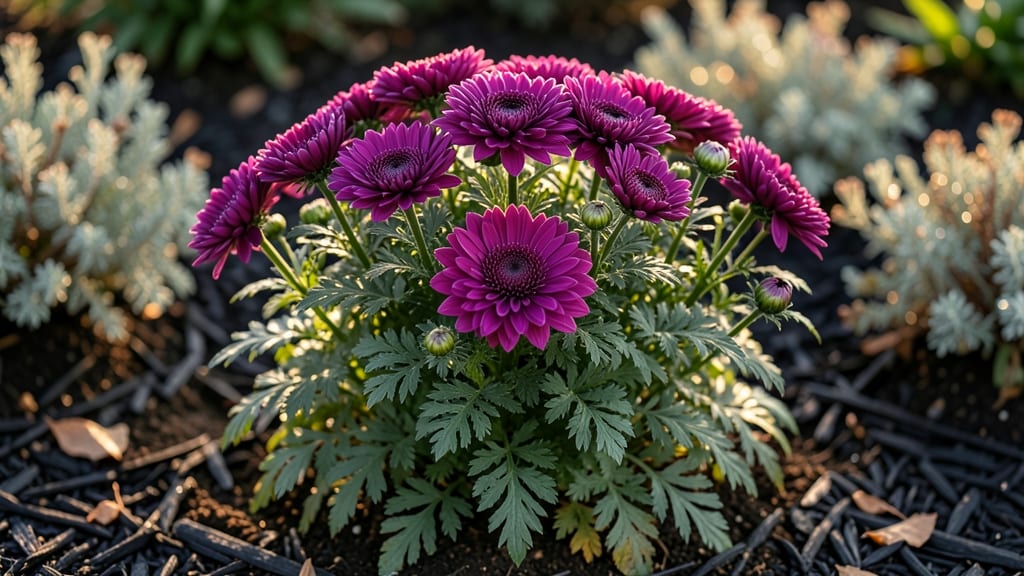
Mums don't always bloom only once per season—reblooming varieties like 'Autumn Joy' or 'Pablo' can produce multiple flower flushes with proper deadheading and seasonal care, while most standard mums bloom just once annually in fall.
Not all mums follow the same blooming schedule—it depends on the variety and care you provide. 🌼 Reblooming types have been selectively bred to respond differently to light and temperature changes, allowing them to produce new blooms throughout the season.
The key difference lies in their sensitivity to daylight hours: while single-bloom mums rely on shorter fall days to trigger flowering, rebloomers can be coaxed into producing flowers again with strategic pruning and fertilization.
For gardeners looking to extend the blooming season, the secret lies in timing and technique. Removing spent blooms (deadheading) right after they fade signals the plant to redirect energy toward new growth.
Pair this with a balanced fertilizer high in phosphorus during the growing season, and you'll often see a second flush of flowers by late summer or early fall. Even standard mums may surprise you with occasional reblooming if given consistent moisture and protection from harsh weather.
💡 In This Article
- Why Most Mums Bloom Once vs. Reblooming Mechanics
- How to Encourage Reblooming in Garden Mums
Why most mums bloom once vs. reblooming mechanics
The single-bloom cycle in standard chrysanthemums (mums) is primarily driven by photoperiod sensitivity—their natural response to decreasing daylight hours in late summer. As daylight shortens to 12-14 hours per day, these plants trigger a hormonal cascade that shifts energy from leaf growth to flower production.
This biological mechanism ensures they bloom synchronously in fall, maximizing pollination opportunities before winter dormancy. 🌿 The trade-off is that once they've allocated their energy to that single flush, their resources are depleted for the season.
Reblooming varieties, like 'Autumn Joy' or 'Pablo,' bypass this natural cycle through selective breeding that modifies their light sensitivity. These cultivars have been developed to remain responsive to pruning and fertilization cues rather than relying solely on daylight changes.
Botanists have identified specific genes that influence this trait, allowing breeders to create mums that can produce 3-5 flower flushes per season when given proper care. The key difference lies in their ability to maintain active growth points (meristems) that can be stimulated into flowering multiple times.
Light manipulation plays a crucial role in reblooming mechanics. Standard mums enter a dormancy-like state after their initial bloom, conserving energy for next year. Rebloomers, however, can be "tricked" into thinking it's still summer by providing 14+ hours of light daily through supplemental lighting or strategic placement.
This extends their growing season and delays the natural flowering trigger. The process involves complex interactions between phytochrome pigments (light receptors) and florigen hormones that control flowering time.
Temperature also influences this cycle. Reblooming mums require consistent daytime temperatures between 65-75°F to maintain active growth. When nights drop below 55°F, even rebloomers may slow down or enter a semi-dormant state. This explains why gardeners in cooler climates often see fewer reblooms than those in milder regions.
The plant's internal clock (circadian rhythm) synchronizes with these temperature shifts, making precise environmental control essential for multiple blooming cycles. 🌡️
Energy allocation is another critical factor. Standard mums store nutrients in their roots during the growing season, then redirect everything to flower production when daylight shortens. Rebloomers, however, have been bred to distribute energy more evenly.
They maintain a balance between vegetative growth (leaf production) and reproductive growth (flowering), allowing them to produce new blooms after deadheading. This requires careful management of nutrients through fertilization to prevent depletion between flushes.
What most gardeners don't realize is that even standard mums contain the genetic potential for reblooming—it's just suppressed by their natural photoperiod sensitivity. Through careful pruning and fertilization, you can sometimes coax a second, smaller flush from these varieties, though the results are typically less robust than with true rebloomers.
The difference comes down to how much the plant's flowering mechanism has been modified through breeding. 🌸