
Blooming
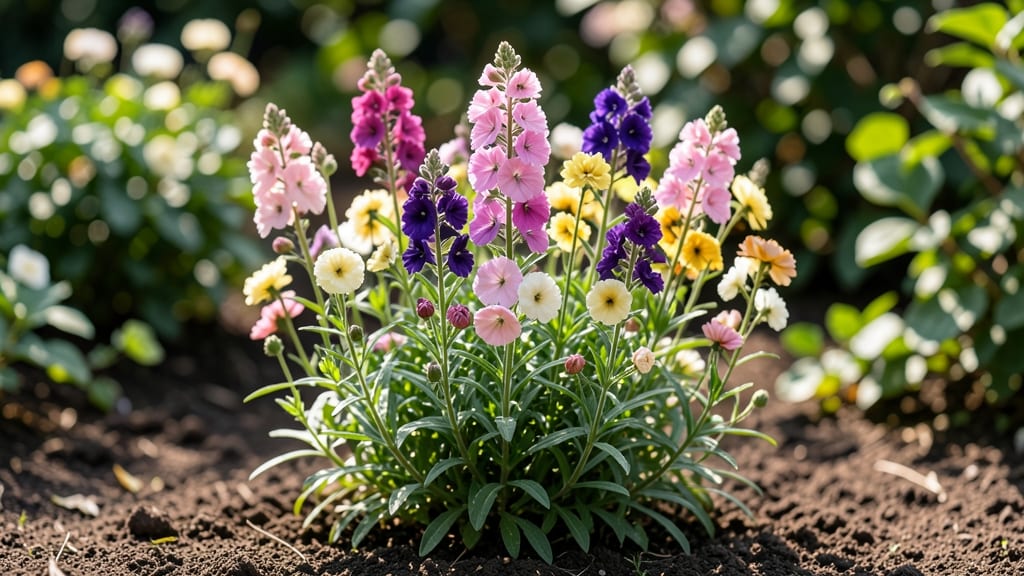
Stock plants don't bloom all summer continuously—they produce vibrant flowers primarily in spring and early summer, with blooming cycles lasting 4-8 weeks before entering dormancy or requiring deadheading to encourage sporadic reblooming. Even with proper care, you'll rarely see full-season flowers.
Stock plants (Matthiola incana) are cool-season biennials, meaning they thrive when temperatures dip below 75°F—their natural blooming window aligns with spring's mild weather. 🌸 Once summer heat arrives, most varieties shut down production, though some late-blooming cultivars might linger into early fall with consistent care.
The key to extending their season lies in deadheading spent blooms and maintaining even moisture, which tricks the plant into focusing energy on new growth rather than seed production.
What many gardeners don't realize is that stock plants actually perform better in cooler conditions—their vibrant colors intensify when nights stay below 60°F. Planting them in partial shade during peak summer can preserve their blooms longer, though this often results in smaller flowers.
For a second flush of color, try replanting seeds in late summer for a fall display, as the shortening daylight hours naturally trigger another blooming cycle.
💡 In This Article
- Stock Flower Season: Why Blooming Peaks in Spring/Summer
- How to Prolong Stock Blooms Beyond Early Summer
Stock flower season: why blooming peaks in spring/summer
Stock plants (Matthiola incana) are cool-season biennials, meaning their blooming cycles are tightly linked to temperature and daylight. Their natural growth pattern favors cooler weather—ideal blooming occurs when daytime temperatures stay between 60-75°F and nights dip below 60°F.
This explains why their most vibrant displays appear in spring and early summer, when these conditions align perfectly. 🌸 The plant's internal clock, or photoperiodism, responds to increasing daylight hours (14+ hours) by shifting energy from leaf growth to flower production, a process triggered by specific hormone signals like florigen.
Heat stress becomes the primary reason blooming fades by mid-summer. When temperatures consistently exceed 80°F, stock plants enter a survival mode, redirecting energy toward heat resistance rather than flower production. The leaves may appear wilted or yellowed as the plant conserves moisture, and buds often drop before opening.
This reaction is similar to how sweet william (Dianthus barbatus), another biennial, struggles in prolonged heat—both species prioritize drought tolerance over flowering when stressed. The key difference is that stock plants are slightly more heat-sensitive, making their summer dormancy more pronounced.
Daylight hours play a secondary but critical role in stock blooming cycles. Shortening days in late summer naturally signal the plant to prepare for dormancy, even if temperatures remain mild.
This is why you might see a second, smaller bloom cycle in fall—stock plants respond to the decreasing daylight by attempting another flowering phase, though the display is typically less robust.
The plant's genetic programming favors this seasonal pattern, which has evolved to maximize reproduction during optimal growing conditions rather than continuous blooming.
Another factor is the plant's energy allocation strategy. Stock plants, like many biennials, prioritize seed production over prolonged flowering. Once they've produced enough seeds, their energy shifts to sustaining the plant through dormancy.
Deadheading (removing spent blooms) can trick the plant into continuing flower production, but this is a temporary solution—it doesn't change the fundamental seasonal limitations imposed by temperature and daylight. The result is a natural cycle where stock plants bloom vigorously for 4-8 weeks before entering a rest period.
Comparing stock to other biennials like sweet william reveals similar patterns but with key differences. Sweet william often tolerates slightly warmer conditions and may produce sporadic blooms later in the season, while stock plants are more sensitive to heat.
This makes stock a classic spring/early summer flower, whereas sweet william can sometimes extend its display into late summer with proper care. The choice between the two often comes down to climate—stock thrives in cooler regions, while sweet william adapts better to warmer summers.
Understanding these botanical mechanisms helps explain why stock plants rarely bloom all summer. Their natural growth cycle is designed for seasonal bursts of color rather than continuous flowering, a trait shared by many ornamental biennials.
This adaptation ensures the plant's survival through both optimal and challenging growing conditions, prioritizing reproduction during the most favorable periods. 🌿