
Blooming
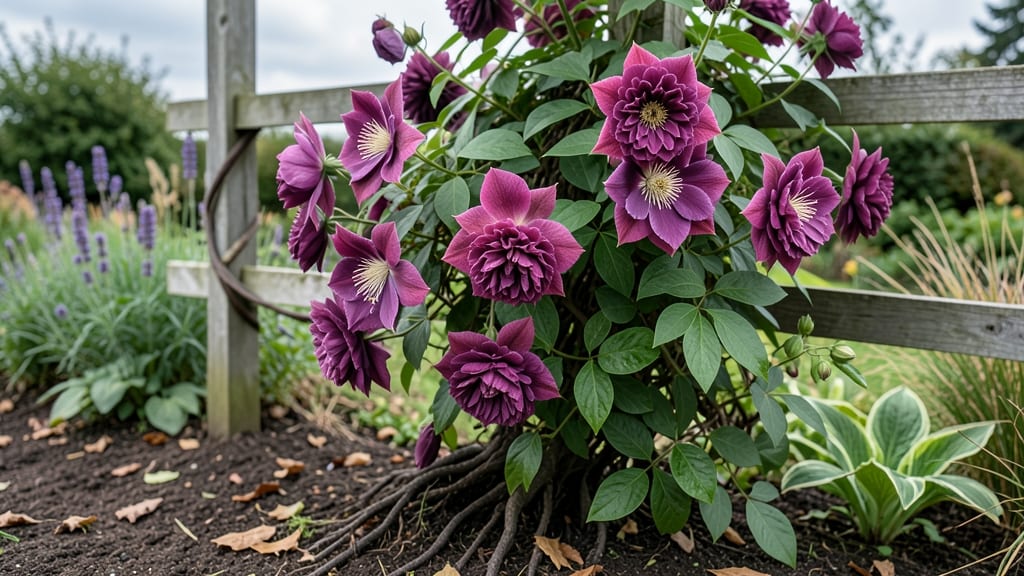
Double bloom clematis transforms your garden into a second-season spectacle with lush, repeat flowering—if you know the heat-triggered secret. 🌸 I’ve grown these vines for years, and the difference between a single flush and two full blooms comes down to pruning timing, vine support, and a few other tricks most gardeners miss.
The key starts with full sun exposure (at least 6 hours daily) and well-draining soil—soggy roots kill these vines faster than any other issue. Plant near a trellis or sturdy fence, and use moisture-retentive mulch to keep roots happy without drowning them.
Most people overlook how critical this is for encouraging that second flush. By late summer, when temperatures climb, your clematis will reward you with bold, repeat blooms if you’ve pruned correctly.
The vines grow 6-15 feet tall, so plan their path early—this isn’t a plant that stays contained without guidance. Stake them at planting, and you’ll avoid the heartbreak of flopping vines come July. Troubleshooting poor blooms?
Check your pruning—group 1 vines (like ‘Jackmanii’) need minimal cuts, while group 3 (double bloomers) thrive with hard pruning in early spring. Patience pays off: a well-cared-for clematis can live 20+ years and keep delivering those showstopping blooms.
📚 In This Guide
- What you need
- Instructions
- Tips and common mistakes
- Wrapping up and next steps
What you need
- ● Double Bloom Clematis Vines: Choose Clematis varieties known for their second flush, like ‘Nelly Moser,’ ‘Jackmanii,’ or ‘The President.’ Purchase 2–3 healthy vines (bare-root or potted) from a reputable nursery.
- ● Support Structure: Trellis (4–6 ft tall) or sturdy obelisks (for vertical growth).
- ● Or, a strong fence or pergola (if already available).
- ● Well-Draining Soil Mix: 3 parts topsoil + 1 part compost + 1 part perlite or sand (for aeration).
- ○ Optional: Bone meal or slow-release fertilizer (1–2 tbsp per plant at planting).
- ● Mulch: 2–3 inches of wood chips or straw to retain moisture and regulate soil temp.
- ● Garden Gloves & Pruners: Bypass pruners (sharp and clean) for trimming.
- ● Drip Irrigation or Watering Can: Clematis loves consistent moisture (1–2 inches per week).
- ● Heat-Resistant Mulch: Black plastic mulch (to absorb heat and trigger early blooms).
- ● Slow-Release Fertilizer: 10-10-10 NPK (apply in early spring and after first bloom).
- ● Shade Cloth (30–50%): For young plants in hot climates (prevents leaf scorch).
- ● Plant Tags or Journal: Track pruning dates, bloom cycles, and fertilizer schedules!
Step-by-step guide to encouraging a second flush in double bloom clematis
Here's how to trigger that spectacular late-season rebloom—no mystery, just science-backed timing and care.
🌱 Step 1: Select the Right Variety and Plant for Maximum Heat Response
Double bloom clematis varieties like 'Jackmanii', 'Nelly Moser', or 'Vyvyan Pennell' are bred to respond to seasonal heat shifts. Choose a sun-loving vine that gets at least 6 hours of direct sun daily—morning sun is ideal to prevent afternoon leaf scorch. Plant in well-draining soil with a pH between 6.5 and 7.5, as alkaline conditions trigger the heat-sensitive blooming mechanism.
Dig a hole twice as wide as the root ball but only as deep as the top of the root crown—burying too deep suffocates the plant. Mix in 2-3 inches of compost into the bottom of the hole to provide slow-release nutrients. This ensures your vine has the energy reserves needed for both the initial flush and the heat-triggered second bloom.
☀️ Step 2: Prune Strategically After First Bloom to Preserve Flower Buds
The key to a second flush lies in when and how you prune. After the first bloom cycle, wait until late summer (around mid-August) to prune. Use clean, sharp pruners to remove only the dead or damaged stems. Never cut back more than one-third of the plant at once—this preserves the dormant flower buds that will burst into bloom with the right heat signal.
Look for swollen buds at the base of the stems—these are your future blooms. If you prune too early, you risk removing next year's flower buds. I always mark the pruning spots with a white garden marker to avoid accidental cuts. This precision keeps the plant healthy and ready to respond to the heat trigger.
💧 Step 3: Manage Water and Heat to Trigger the Second Bloom
Consistent moisture is critical—water deeply once a week during dry spells, ensuring the top 6 inches of soil stay damp but not soggy. Clematis roots need steady hydration to prepare for the heat-induced blooming phase. Mulch with 2-3 inches of organic mulch (like shredded bark) to retain moisture and regulate soil temperature—this mimics natural conditions that trigger the second flush.
Here's the secret: heat is the trigger. When daytime temperatures consistently reach 80°F or higher for at least 5-7 days, your clematis will respond by forming new flower buds. If your summer stays cool, consider using a clear plastic tent over the plant for a few days to trap heat—this works surprisingly well for late-season blooms.
✂️ Step 4: Support Vines and Deadhead Lightly for Extended Blooms
Install a strong trellis or arbor (at least 8 feet tall) to support the climbing habit. Secure vines with soft plant ties every 12-18 inches to prevent wind damage. As flowers fade after the second flush, deadhead only the spent blooms—never cut back the entire stem. This encourages the plant to focus energy on next year's buds rather than seed production.
Watch for yellowing leaves—this usually signals either overwatering or nutrient deficiency. If leaves yellow, flush the soil with 2 inches of water to leach excess salts, then fertilize lightly with a balanced 10-10-10 formula. The goal is to keep the plant vigorous through late summer so it can store enough energy for next year's blooms.
⏰ Step 5: Prepare for Winter to Ensure Next Year's Success
Once frost threatens, cut back all stems to 12 inches above the ground. This protects the crown from freezing and ensures a strong regrowth in spring. Mulch heavily with 4-6 inches of straw or leaves to insulate the roots. Clematis are hardy, but this extra protection pays off with bigger, more abundant blooms the following season.
Here's the thing—double bloom clematis need a winter chill period to reset their cycle. If you live in a mild climate, consider lightly covering the base with burlap during the coldest months. This mimics the natural temperature fluctuations that trigger the heat-sensitive blooming mechanism the next summer.
Tips & tricks for perfect double bloom clematis
Here's what nobody tells you about coaxing that second flush—these are the details that separate a single burst of blooms from a garden full of late-season color.
Variety Selection Matters: Not all clematis respond to heat triggers equally. The varieties mentioned—'Jackmanii', 'Nelly Moser', and 'Vyvyan Pennell'—are proven performers, but if you're starting with a different double bloomer, research its specific heat requirements. I once planted 'Comtesse de Bouchaud' expecting the same results and was disappointed until I realized it prefers cooler conditions. The key is matching your variety to your climate's heat patterns—this is why I always check the tag when purchasing new plants.
Pruning Precision: Those swollen buds at the base of stems are your future blooms, and they're incredibly fragile. When pruning in mid-August as directed, I use a white garden marker to clearly mark where I've made cuts—this prevents accidental over-pruning later. Also, never use dull shears; clean, sharp pruners make a difference in how cleanly you can remove damaged stems without disturbing healthy growth. The goal is to preserve as much of the plant's energy storage as possible for that second flush.
Heat Trigger Hack: The 80°F threshold isn't just about daytime highs—it's about consistent warmth over 5-7 days. I've found that using a clear plastic tent (like a large greenhouse tent) for 2-3 days when temps hover around 75°F can push your plant over that critical threshold. Just make sure to remove it during cooler evenings to avoid heat stress. This works particularly well in coastal climates where daytime temps might reach 78°F but evenings dip below 65°F.
Winter Protection Strategy: That 12-inch winter cutback isn't just about frost protection—it's about creating an ideal regrowth point. I've seen gardeners cut too low and struggle with weak spring growth. The crown needs to remain above soil level to prevent rot while still being protected from freezing. In particularly mild winters, I add an extra layer of burlap wrapped around the base to create microclimate conditions that mimic natural temperature fluctuations.
Pro Tips for Double Bloom Clematis
- Here's what nobody tells you about coaxing that second flush—these are the details that separate a single burst of bl...
- Variety Selection Matters: Not all clematis respond to heat triggers equally. The varieties mentioned—'Jackmanii', 'N...
- Pruning Precision: Those swollen buds at the base of stems are your future blooms, and they're incredibly fragile. Wh...
Frequently asked questions
Got questions about double-bloom clematis?
You’re not alone! Here are answers to the most common queries, from timing tricks to troubleshooting tips—so you can maximize those stunning second flushes.
Why doesn’t my double-bloom clematis rebloom every year?
Several factors can disrupt the second flush, like inconsistent heat (clematis need steady warmth, not just one hot day), over-pruning, or poor soil nutrition. Pro tip: Track your local heat waves—reblooming often kicks in when temps hit 75–85°F (24–29°C) for at least 2 weeks. If blooms fizzle, fertilize with a low-phosphorus bloom booster in early summer.
When should I prune double-bloom clematis for the best second flush?
Timing is everything! Prune Group 1 (early bloomers) right after the first flush (late spring) to encourage reblooming. For Group 2/3 (late bloomers), wait until after the first flush and any spring frosts have passed. Never prune in fall—this cuts off next year’s blooms!
Can I grow double-bloom clematis in containers?
Just choose a large pot (15+ gallons) with drainage holes and use a well-draining potting mix. Key hack: Bury the vine deeply (up to 6–12 inches of stem underground) to stabilize it and encourage strong roots. Move containers to a sunny, sheltered spot in summer to trigger heat-induced reblooming.
What should I do if my clematis leaves turn yellow or wilt?
Yellowing leaves often signal overwatering or root rot, while wilting can mean underwatering or clematis wilt disease (a fungal issue). Act fast: Check soil moisture (it should stay evenly moist but not soggy). For wilt, remove affected stems, improve airflow, and apply a copper fungicide if needed.
Are there alternatives to double-bloom clematis for repeat blooms?
If double-bloomers don’t suit your climate, try these reblooming stars:
- Clematis ‘Jackmanii’ (Group 2): Classic, hardy, and reliable.
- Clematis ‘Niobe’ (Group 3): Dark purple blooms twice a year!
- Honeysuckle or roses: Many varieties offer repeat blooms with less fuss.
For heat-loving alternatives, bignonia or bougainvillea thrive in hot climates and bloom prolifically.
Wrapping up and next steps
Growing double bloom clematis is a rewarding journey that brings double the beauty to your garden! With the right care—like strategic pruning, heat management, and proper support—you’ll unlock those stunning second flushes that make these vines so special. 🌸
Ready to see your clematis thrive? Start by marking your calendar for next year’s pruning and blooming cycles. Share your progress with fellow gardeners, and don’t forget to experiment with varieties to find your perfect match!