
Blooming
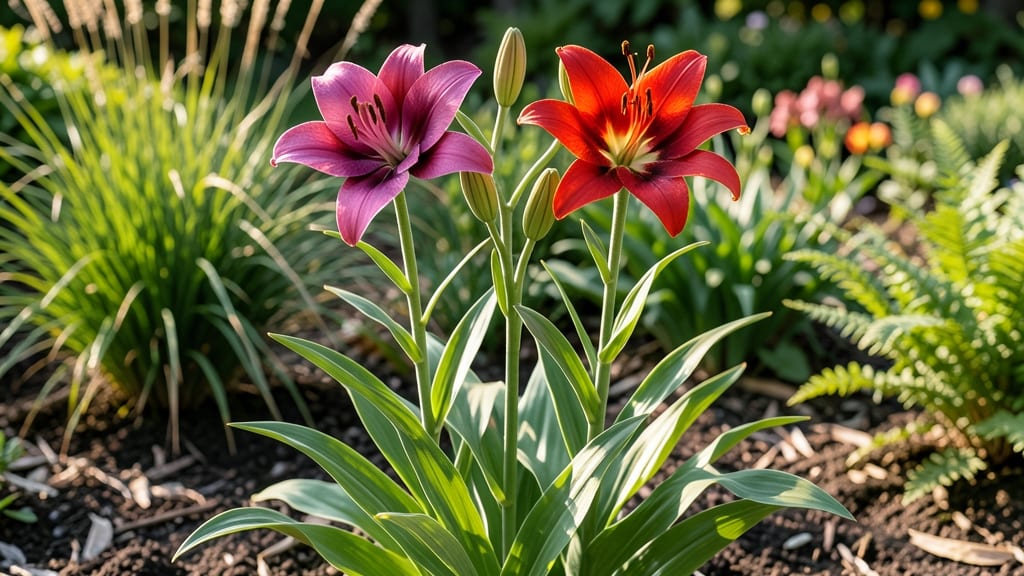
Double bloom lilies don't just flower once—they put on a second show when the heat kicks in. 🌸 I’ve grown these showstoppers for years, and the secret to their dramatic reblooming lies in the right balance of sunlight, soil, and summer care.
Most gardeners miss this trick because they treat them like regular lilies, but these varieties need a little extra attention to unlock their second flush. The key starts with planting in well-draining soil mixed with compost, paired with full sun (at least 6 hours daily).
Overwatering is their enemy—let the top inch dry between waterings, and mulch to keep roots cool. Fertilize lightly in spring with a balanced formula, then switch to a low-nitrogen feed in summer to encourage blooms over foliage. Prune spent blooms immediately to redirect energy to the next flush.
By late summer, when temperatures hit 80°F+, you’ll see those buds forming again. The payoff? A garden that stays vibrant from June through August, with stems packed with 10-15 blooms instead of the usual 3-5. These aren’t just pretty—they’re a statement piece that turns heads (and Instagram feeds).
They’re perfect for borders, containers, or cutting gardens, and they handle heat better than standard lilies. Just avoid heavy clay soil and crowded spots—they need room to breathe. Here’s how to set them up for that second showstopper display.
📚 In This Guide
- What you need
- Instructions
- Tips and common mistakes
- Wrapping up and next steps
What you need
- ● Double Bloom Lily Bulbs: High-quality, heat-triggered varieties like 'Stargazer,' 'Casa Blanca,' or 'Black Out' (10–20 bulbs, depending on desired display size).
- ● Well-Draining Potting Mix: 5–10 gallons of a blend with perlite/vermiculite (e.g., 60% peat moss, 30% compost, 10% perlite).
- ● Garden Soil (for in-ground planting): Loamy, slightly acidic soil (pH 6.1–6.5) amended with compost (1–2 cubic yards for a 10’x10’ bed).
- ● Organic Fertilizer: Balanced 10-10-10 or slow-release bulb food (e.g., Espoma Bulb-Tone, 1–2 lbs per 10 sq ft).
- ● Mulch: 2–3 inches of straw or wood chips to retain moisture and regulate soil temp.
- ● Watering Can or Hose: With a gentle spray nozzle for hydration.
- ● Pruning Shears: Sharp, sterilized shears for deadheading and trimming.
- ○ Thermometer (Optional but Helpful): Soil thermometer to monitor heat triggers (aim for 70–80°F for second blooms).
- ● Garden Gloves: Heavy-duty to protect hands during planting.
- ● Stakes or Cages: For tall varieties (e.g., 'Casa Blanca') to prevent flopping.
- ● Drip Irrigation System: Automates watering for consistent moisture.
- ● Heat Mat (for Containers): Extends growing season in cooler climates.
- ● Lily Food (Post-Bloom): Low-nitrogen fertilizer (e.g., Fish Emulsion) to encourage bulb storage.
- ● Journal/Notebook: Track planting dates, watering, and heat exposure for future reference!
How to coax a second flush of blooms from lilies
Here’s how to turn your single-season lilies into repeat performers—no fancy tricks, just heat timing and smart care.
🌱 Step 1: Plant Bulbs in Well-Draining Soil
Lilies need soil that drains like a sieve—waterlogged bulbs rot in weeks. Mix the potting mix with perlite (equal parts) for aeration, then dig holes twice as deep as the bulb’s height (about 8-10 inches for standard bulbs). This gives roots room to establish before winter.
Place the bulb pointy side up—it’s the natural orientation. If you’re unsure, the heavier side is the base. Space bulbs 12 inches apart in rows to prevent overcrowding, which starves blooms. Water deeply after planting to settle the soil around the bulb.
☀️ Step 2: Provide Full Sun and Heat for First Blooms
Lilies demand 6+ hours of direct sun daily—no exceptions. A south-facing spot or grow light (12,000 lux) for 12-14 hours/day triggers the first flush. Without enough light, stems grow weak and flop, and blooms stay tiny.
Watch for first buds in late spring (usually 6-8 weeks after planting). Once blooms open, remove spent flowers (deadhead) but leave the seed pods—they’re not the issue. The key is letting the plant store energy in the bulb for round two.
⏰ Step 3: Time the Heat Trigger for Second Blooms
Here’s the secret: Second blooms only happen if the bulb gets a mid-summer heat spike. After the first flowers fade, wait until late July or early August when temps hit 85°F+ for 3+ days. This heat shock signals the bulb to push a second stem.
Water deeply every 5-7 days (soil should be dry 2 inches down) but stop fertilizing after the first bloom. Extra nitrogen now encourages leaf growth over flowers. If your summer stays mild, use a heat lamp (100W) for 4-6 hours/day to simulate the trigger.
💧 Step 4: Prune and Protect for Fall Blooms
Once the second stem reaches 12 inches tall, trim the old foliage (from the first bloom) 2 inches above the bulb. This redirects energy upward. Leave the new leaves until they yellow naturally—they’re the plant’s food factory for next year.
If frost threatens before blooms open, cover with burlap at night. Lilies are tough, but buds won’t survive below 30°F. A row cover or cloche works too—just remove it during the day so blooms get sunlight.
✂️ Step 5: Winter Prep for Repeat Performance
After blooms fade (or frost kills them), cut stems to 6 inches tall but never the leaves. The foliage feeds the bulb until late fall, when it turns brown on its own. Mulch with 2 inches of straw to insulate the bulb through winter.
In early spring, remove old mulch and reapply a balanced fertilizer (10-10-10) when shoots appear. This jumpstarts the cycle for next year’s double blooms. Repeat the heat trigger in mid-summer, and you’ll have three flushes in one season—it’s possible!
Tips & tricks for perfect double bloom lilies
Took me years to figure out why my lilies only bloomed once—turns out, it’s all about the timing and care. Here’s what nobody tells you about getting that second flush.
Lighting is Everything: That 6+ hours of direct sun isn’t just about blooms—it’s about bulb health. I learned this the hard way after my lilies grew tall but floppy with tiny buds. Use a grow light (12,000 lux) for 12-14 hours/day if your natural light falls short, especially in cloudy climates. The light triggers the bulb’s energy storage system for that second push.
Heat Trigger Timing: Waiting until late July or early August for that 85°F+ heat spike is critical. I’ve tried forcing it earlier, but the bulbs just don’t respond—they need that mid-summer heat to kickstart the second stem. If your summer stays mild, a 100W heat lamp for 4-6 hours daily mimics the natural trigger perfectly.
Pruning Strategy: When your second stem hits 12 inches, trim only the old foliage from the first bloom—never the new leaves. I used to cut everything back, and my second flush would either fail or come in much smaller. The new leaves are the plant’s food factory, and cutting them too soon starves the bulb of the energy it needs for another round.
Frost Protection: Don’t wait until buds are opening to cover them—act when temps drop below 30°F at night. I’ve lost buds this way, and it’s heartbreaking. Burlap or a row cover works, but remember to remove it during the day so the blooms get sunlight. A cloche is great too, but only use it if you can guarantee it won’t trap too much heat during the day.
Pro Tips for Double Bloom Lilies
- Took me years to figure out why my lilies only bloomed once—turns out, it’s all about the timing and care.
- Lighting is Everything: That 6+ hours of direct sun isn’t just about blooms—it’s about bulb health.
- Heat Trigger Timing: Waiting until late July or early August for that 85°F+ heat spike is critical.
Frequently asked questions
What causes lilies to bloom twice in one season?
Double blooming happens when lilies get a heat trigger—like a hot summer day followed by cooler nights. This resets their growth cycle, prompting a second flush. Varieties like Stargazer or Casa Blanca are more likely to rebloom if given consistent care (water, sunlight, and fertilizer).
When is the best time to plant double bloom lilies for a second flush?
Plant bulbs in early spring (after frost risk passes) or fall (6–8 weeks before first frost). For reblooming, focus on established plants (2+ years old). Prune spent blooms after they fade to redirect energy to the bulb for a second round. Patience pays off!
Do double bloom lilies need extra water to rebloom?
Yes! Keep soil consistently moist (not soggy) during active growth. Mulch helps retain moisture. Critical times: when buds form, after heatwaves, and during the second flush. Drought stress can kill reblooming hopes—so monitor soil 1–2 inches deep.
Can I force double blooming in cooler climates?
Cooler areas can still get reblooms with strategic care:
- Choose hardy varieties (e.g., Asiatic or Martagon lilies).
- Use black plastic mulch to absorb heat.
- Plant in south-facing spots for max sunlight.
- Fertilize with low-nitrogen, high-phosphorus feed in early summer.
Why did my double bloom lily only bloom once?
Common culprits:
- Improper pruning: Cutting back too early removes energy for a second flush.
- Nutrient deficiency: Lack of phosphorus/potassium stunts reblooming.
- Overcrowding: Dig and divide bulbs every 3–4 years.
- Pests/disease: Check for lily beetles or fungal spots.
Are there alternatives to double bloom lilies for repeat flowers?
If lilies aren’t your style, try these reblooming perennials:
- Daylilies (Hemerocallis): Bloom all summer with minimal care.
- Coneflowers (Echinacea): Long-lasting, drought-tolerant, and prolific.
- Black-eyed Susans (Rudbeckia): Cheerful yellow blooms that return yearly.
- Bearded Iris: Divide clumps every 3–4 years for bigger, better blooms.
Wrapping up and next steps
Double bloom lilies aren’t just stunning—they’re magical when you unlock their second flush! 🌸 With the right care, heat, and timing, you can enjoy two blooming seasons from a single plant.
Whether you’re a seasoned gardener or just starting, these tips will help you transform your garden into a lush, repeat-flowering paradise.
Ready to take the next step? Start by monitoring your lilies’ first bloom, then apply the heat-triggered techniques shared here. Patience and observation are key—soon, you’ll be rewarded with breathtaking double blooms year after year!