
How To
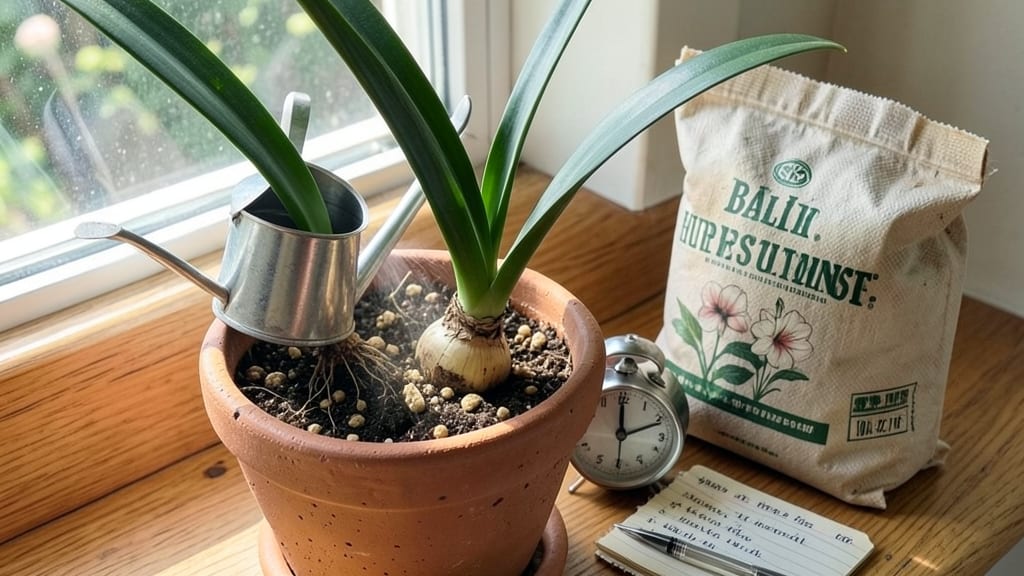
If you’re wondering how do I get my amaryllis to bloom after it grows long leaves, the answer is actually great news: your plant is doing exactly what it should be. 🌱 The key is understanding that this tropical plant needs a rest period to trigger flowers, not just constant growth.
Most growers skip this critical step, which is why their plants stay leafy but never bloom.
Here’s the secret: after those long leaves appear, reduce watering and stop fertilizing for 6-8 weeks to mimic winter dormancy. Place it in a cool spot (around 55-60°F) with bright, indirect light—this tricks the plant into thinking it’s time to bloom.
Too much warmth or water keeps it growing leaves instead.
Within 8-12 weeks, you’ll see a flower stalk emerge from the base, often with 2-6 buds ready to open. The blooms last 7-10 days, but the real magic is in the timing: if you force dormancy after leaf growth, you’ll get flowers earlier next season too.
This method works for indoor amaryllis in pots or even those in the ground—just adjust the dormancy period to your climate. The first time I did this, my plant went from leafy to six stunning blooms in under two months. Here’s exactly how to replicate it.
The Hidden Triggers Blocking Blooms
Your amaryllis (Hippeastrum) has put all its energy into growing lush, long leaves—but where are the flowers? 🌱💡 The truth is, blooming is a delicate balance of environmental cues, internal signals, and care timing.
If your plant is stuck in "leaf mode," it’s likely because one (or more) of these key triggers isn’t firing. Let’s break down the science behind why your amaryllis is holding back its floral fireworks.
Amaryllis bulbs are tropical perennials with a sneaky temperate twist. In their natural habitat, they experience a cool, dry rest period (not freezing, but 50–60°F (10–15°C) for 8–12 weeks) to signal it’s time to bloom.
Without this "winter nap," the bulb stays in vegetative growth mode—pumping out leaves instead of flowers.
Why it happens:
- No temperature drop: If your home stays warm year-round (like many indoor setups), the bulb thinks it’s still summer and keeps growing leaves.
- Short or interrupted chill: Even a few weeks at cooler temps won’t cut it—think of it like a lightbulb needing a full charge.
- Overwatering during "rest": A dormant bulb stores energy for blooms. Too much water tricks it into thinking it’s active growing season.
Actionable fix: Mimic nature by giving your bulb a 6–8 week cool, dry spell (even in a basement or garage). Reduce watering to once every 3–4 weeks and keep it out of direct light.
Amaryllis bulbs are light-sensitive, and their bloom cycle is triggered by day length and light intensity. Too little light = no flowers. But here’s the catch: too much light at the wrong time can also sabotage blooms.
Why it happens:
- Weak light during growth: If your plant gets less than 6 hours of bright, indirect light daily while leaves are forming, it won’t have the energy to produce a flower stalk.
- Overhead grow lights: LED or fluorescent lights above the plant (like in a kitchen) can disrupt the bulb’s internal clock, delaying or preventing blooms.
- Sudden light changes: Moving the plant from a sunny window to a dark corner (or vice versa) confuses its biological rhythms.
Actionable fix:
- Place your amaryllis in a south- or east-facing window (or under a grow light 6–12 inches away for 12–14 hours/day).
- Avoid direct midday sun (it can scorch leaves) but ensure bright, consistent light.
- If using artificial light, keep it stable—no flickering or sudden changes.
Amaryllis bulbs are energy hoarders. They store nutrients in their scales, and if they’re overfed with nitrogen-heavy fertilizers, they’ll prioritize leaf growth over flowers. Think of it like a squirrel stuffing acorns—too many snacks, and it forgets to reproduce! 🐿️
Why it happens:
- Too much nitrogen: Fertilizers with a high first number (e.g., 30-10-10) promote lush foliage but delay or prevent blooming.
- Lack of phosphorus: Phosphorus (the middle number in NPK) is critical for flower development. If it’s missing, your bulb will grow leaves but skip the show.
- Over-fertilizing: Feeding every watering or using liquid fertilizers too often burns the roots, stressing the plant.
Actionable fix:
- Switch to a low-nitrogen, high-phosphorus fertilizer (e.g., 5-10-10 or 10-20-20) only during the growing season (spring–summer).
- Feed every 4–6 weeks, not monthly. Less is more!
- After leaves appear, reduce fertilizer to half-strength to encourage bloom formation.
Amaryllis bulbs are sensitive to root disruption. If the roots are crowded, damaged, or stressed, the bulb diverts energy to repair work instead of producing flowers. Even subtle issues can derail the bloom cycle.
Why it happens:
- Overcrowded pot: If the bulb is root-bound (circling roots) or too many bulbs share a pot, they compete for resources, stunting flower production.
- Root rot or injury: Overwatering, poor drainage, or rough handling (like digging up bulbs too often) damages roots, triggering stress responses.
- Wrong soil mix: Heavy, compacted, or waterlogged soil suffocates roots, preventing nutrient uptake.
Actionable fix:
- Repot your bulb in fresh, well-draining soil (cactus/succulent mix + perlite) if it’s been in the same pot for 2+ years.
- Choose a pot only 1–2 inches wider than the bulb—too much space = wasted energy.
- Ensure the pot has drainage holes and use a cache pot (with pebbles) if needed.
- Avoid disturbing roots unless necessary—transplant only when leaves yellow (natural dormancy phase).
💡 Pro Tip: If your bulb has multiple offsets (baby bulbs), let them grow for at least 1–2 years before separating—they need stored energy to bloom!
Revive Your Amaryllis Blooming Magic
---
Your amaryllis has put all its energy into lush, long leaves—but where’s the flower show? Don’t worry! With a few strategic tweaks, you can coax those stunning blooms back to life.
Below, we break down the most common reasons your plant is skipping the flowering stage and how to fix them, plus pro tips to keep it blooming year after year.
---
If your amaryllis is basking in dim corners, it’s likely focusing all its energy on leaf growth instead of blooming. Amaryllis crave bright, indirect light (think east or west-facing windows) for at least 6–8 hours daily.
#### 🔥 Fix It: Move It to the Spotlight - 👨🍳 Step 1: Relocate your plant to a sunny windowsill or under grow lights (12–14 hours/day if natural light is scarce). - 🌡️ Step 2: Rotate the pot weekly so all sides get even light exposure (prevents lopsided growth). - ⏰ Step 3: If moving outside, acclimate it gradually to avoid leaf burn (start with 1–2 hours of morning sun).
#### 💡 Prevention Tips: - 🌡️ Avoid cold drafts near windows—consistent temps (65–75°F) keep it happy. - ✨ Use sheer curtains if direct sun is too harsh in summer.
---
Too much love (aka water) can suffocate your amaryllis’ roots, forcing it into survival mode—more leaves, no flowers. These plants hate soggy soil and need a dry-down period to trigger blooming.
#### 🍳 Fix It: Let It Thirst (Seriously!) - 🔪 Step 1: Check soil moisture—stick your finger 2 inches deep.
If damp, wait. - 💧 Step 2: Water only when the top 1–2 inches are bone-dry (usually every 1–2 weeks, less in winter). - 🌱 Step 3: Ensure pots have drainage holes and use a well-draining mix (cactus/succulent soil + perlite).
#### 💡 Prevention Tips: - 🌡️ Reduce water in fall/winter—this mimics dormancy and signals blooming time. - ✨ Use a moisture meter to avoid guesswork.
---
Amaryllis are tropical divas—they bloom best in stable warmth (65–75°F during the day, 55–60°F at night). Extreme temps (below 50°F or above 85°F) shock the plant, delaying or halting flowers.
#### 👨🍳 Fix It: Create the Perfect Cozy Spot - ⏰ Step 1: Move it away from AC vents, heaters, or cold drafts. - 🌡️ Step 2: If temps drop below 60°F at night, cover with a frost cloth (or move indoors). - 🔥 Step 3: In summer, avoid placing near hot windows—use a heat-resistant pot tray.
#### 💡 Prevention Tips: - 🌡️ Use a thermometer near the plant to monitor temps. - ✨ Group plants together to create a microclimate.
---
If your amaryllis is all leaves and no flowers, it might be lacking phosphorus and potassium—the nutrients that trigger blooming. Overdoing nitrogen (common in leafy fertilizers) makes it grow foliage instead.
#### 🥗 Fix It: Feed It Right for Flowers - 📊 Step 1: Switch to a balanced bloom booster (e.g., 10-10-10 or 20-20-20 fertilizer). - 🍎 Step 2: Fertilize every 2 weeks in spring/summer, but stop in fall/winter to mimic dormancy. - 💪 Step 3: For a quick fix, use phosphorus-rich fertilizer (like bone meal) in early spring.
#### 💡 Prevention Tips: - ✨ Flush the soil with water every 3 months to avoid salt buildup. - 🌱 Avoid liquid fertilizers—they can burn roots; opt for slow-release granules.
---
Amaryllis need a 6–8 week “rest” period after blooming to recharge. Without it, they’ll keep growing leaves but never produce flowers.
#### 🔥 Fix It: Force a Fake Dormancy - 🌱 Step 1: After blooming, stop watering and move to a cool (55–60°F), dark spot. - ⏰ Step 2: Let the leaves yellow and die back naturally (this can take 6–8 weeks). - 💧 Step 3: Resume watering when new growth starts (usually in late winter/early spring).
#### 💡 Prevention Tips: - 🌡️ Set a calendar reminder—dormancy starts immediately after blooming. - ✨ Store bulbs in paper bags** (not plastic) in a cool, dry place if you can’t keep them dormant indoors.
---
Need flowers now? Try these fast fixes:
- 🌡️ Shock it with warmth: Place the pot in a 75°F+ room for 2–3 weeks (like a sunny kitchen or greenhouse).
- 💧 Bottom-water it: Soak the pot in room-temp water for 1 hour to rehydrate roots without overwatering.
- 🌱 Repot if crowded: If roots are circling, move to a slightly larger pot (just 1–2 inches bigger) to encourage blooming.
---
With these fixes, your amaryllis should be shooting up flower stalks in 6–12 weeks. Patience is key—once you nail the light, water, and dormancy cycle, you’ll have a blooming superstar for years! 🌸
Frequently asked questions
How long should I wait before forcing dormancy to get blooms?
After your amaryllis grows 6-12 inches of healthy leaves, wait 2-3 weeks before starting dormancy. This gives the bulb enough energy to store for blooming. Reduce watering to every 3-4 weeks and move to 55-60°F for 6-8 weeks. The key is timing—too early, and the bulb won't have enough reserves.
Can I still get flowers if I missed the dormancy period?
Yes! Even if you skipped dormancy, you can still trigger blooms. Stop watering for 4-6 weeks and place in a cool, dark spot. Then resume normal care. It may take 2-3 cycles to reset, but your amaryllis will eventually bloom. Patience is key—think of it as a reset button!
What's the best fertilizer ratio for amaryllis blooms?
Use a low-nitrogen, high-phosphorus fertilizer like 5-10-10 or 10-20-20 during growing season. The middle number (phosphorus) is crucial for blooms. Apply every 4-6 weeks in spring/summer, then stop fertilizing during dormancy. Too much nitrogen = more leaves, fewer flowers!
Why did my amaryllis bloom, then stop producing flowers?
This usually happens when you don't give it proper dormancy after blooming. After flowers fade, stop watering and let leaves yellow naturally. Without this rest period, the bulb keeps growing leaves instead of storing energy for next year's blooms. Think of it as a recharge cycle!
Can I get my amaryllis to bloom twice a year?
With careful management, yes! After the first bloom cycle, force dormancy for 6-8 weeks, then restart growth with proper light and fertilizer. Some growers achieve two blooms per year by carefully timing dormancy periods, but it requires precise care. Most amaryllis prefer one strong bloom cycle annually.