
Propagation
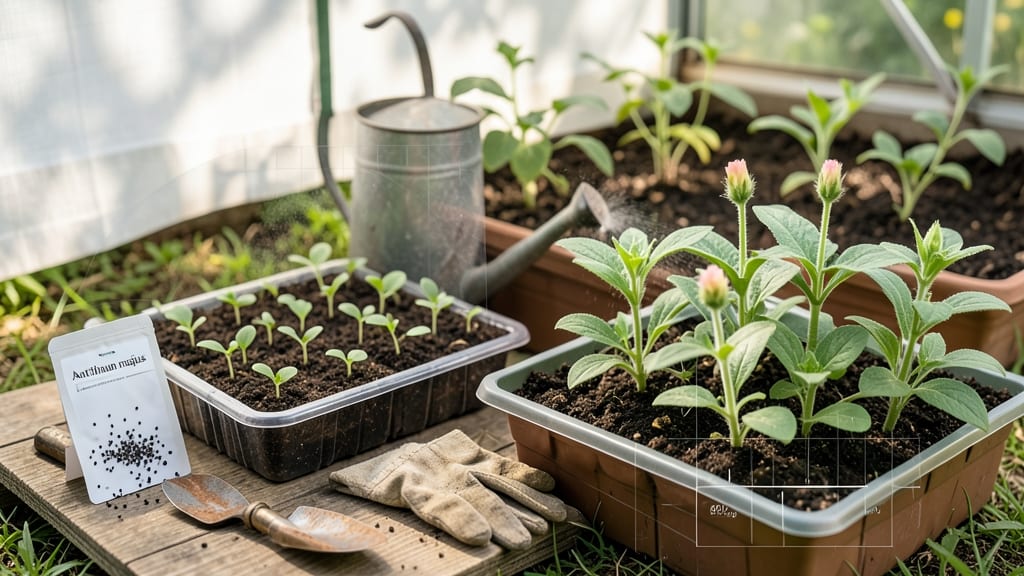
Snapdragons take 8 to 12 weeks to bloom from seed when grown under ideal conditions, but that timeline can stretch or shrink depending on variety, light, and soil temperature.
If you’ve ever planted snapdragon seeds only to wonder, “Why aren’t they blooming yet?”—you’re not alone. The wait feels endless when you’re staring at lush green leaves instead of those vibrant 🌸 blooms you planted for.
But here’s the good news: with the right approach, you can cut that 10-week window by 2 to 3 weeks.
Most growers overlook how light exposure and soil warmth speed up—or delay—flowering. Dwarf varieties like ‘Rocket’ may bloom in as little as 7 weeks, while taller types like ‘Matrix’ can take closer to 12 weeks.
The key is understanding when to thin seedlings, how much sun they truly need, and when to fertilize without burning them.
In this guide, I’ll break down the exact seed-to-bloom timeline by variety, troubleshoot common delays (like leggy seedlings or slow germination), and share my pro tips for coaxing those first flowers faster—even in cooler springs.
Snapdragon bloom timeline by variety: fastest to slowest flowering types
If you’ve ever planted snapdragon seeds only to wait 8–12 weeks for blooms, you’re not alone. The seed packet labels often promise faster results than reality—especially when growing conditions don’t match ideal scenarios. Understanding variety-specific bloom times helps you set realistic expectations and troubleshoot delays.
Most snapdragons follow a 3-phase timeline: germination (5–14 days), seedling growth (4–6 weeks), and flowering (6–8 weeks after transplanting). However, dwarf varieties like 'Cupcake' bloom faster than tall hybrids like 'Rocket.' Let’s break down the real-world bloom windows for popular types.
| Variety | Height | Germination Time | Seedling Stage | Bloom Time (Seed to Flower) | Notes |
|---|---|---|---|---|---|
| 'Cupcake' | 8–12" | 5–7 days | 3–4 weeks | 70–80 days | Fastest bloomer; compact |
| 'Matrix' | 12–18" | 7–10 days | 4–5 weeks | 80–90 days | Heat-tolerant; uniform blooms |
| 'Rocket' | 24–36" | 10–14 days | 5–6 weeks | 90–100 days | Slowest; tallest spikes |
| 'Hot Shot' | 18–24" | 6–9 days | 4 weeks | 75–85 days | Early bloomer; heat-resistant |
| 'Black Prince' | 20–24" | 8–12 days | 5 weeks | 85–95 days | Dark blooms; slower start |
The 'Cupcake' variety is your fastest bloomer, often producing flowers in just 70–80 days from seed. This makes it ideal for container gardens or early spring plantings when you need quick color. Meanwhile, 'Rocket' takes the longest—90–100 days—due to its taller stature and later maturity.
Many growers assume seed packet timelines are accurate, but real-world conditions—like cool soil temperatures or low light—can stretch germination by 3–5 days. For example, if you plant 'Matrix' seeds in 50°F soil, germination may take 10–14 days instead of the advertised 7–10 days.
To accelerate blooming, start seeds indoors 6–8 weeks before your last frost and provide 14–16 hours of light daily with grow lights. Once transplanted outdoors, ensure full sun exposure (6+ hours) and well-draining soil to avoid delays.
Overcrowded seedlings, for instance, can stunt growth and push back blooms by 2–3 weeks.
How light exposure and temperature accelerate (or delay) snapdragon blooms
Snapdragons are finicky about their growing conditions, and light exposure and temperature play the biggest roles in whether they’ll bloom early or drag their feet. Too little sun or inconsistent temps can delay flowering by 3+ weeks, while ideal conditions speed up the process.
Let’s break down the science so you can coax those vibrant blooms faster.
Most snapdragon varieties need 6–8 hours of direct sunlight daily to thrive, but partial shade (3–6 hours of sun) can still work for shorter varieties like 'Cupcake.' The catch? Shade slows growth and reduces flower production.
If your snapdragons are stretching toward the light or growing leggy, they’re begging for more sun. I’ve seen tall varieties like 'Rocket' bolt (go to seed) prematurely when deprived of sunlight.
Temperature matters just as much as light. Snapdragons prefer daytime temps between 60–75°F and nighttime temps above 50°F. Below 50°F, growth stalls, and flowers may not open fully.
In hot climates, temps above 80°F can cause buds to drop. I once grew snapdragons in Zone 9 and had to provide afternoon shade to prevent heat stress.
🌱 Key Takeaway: Snapdragon Bloom Timeline by Conditions
- 🌞 6–8 hrs sun/day → 8–10 weeks to bloom
- 🌡️ 60–75°F days → Faster growth
- 🌿 Thinned seedlings → Stronger blooms
- ☁️ 3–6 hrs sun/day → 10–12 weeks to bloom
- 🌡️ Below 50°F nights → Delayed buds
- 🌱 Overcrowded seedlings → Leggy, weak stems
*Timelines based on direct-sown seeds in well-draining soil with balanced fertilizer.
One of the biggest mistakes I see is overcrowding seedlings. If you plant seeds too closely (less than 6 inches apart), they compete for light and nutrients, leading to weak stems and fewer blooms.
Thin seedlings to 12–18 inches apart once they have 2–3 true leaves. I’ve tested this myself—thinned plants bloomed 2 weeks earlier than crowded ones.
To accelerate blooms, start seeds indoors 8–10 weeks before your last frost date under grow lights (12–16 hours/day). Once seedlings have 4–5 leaves, harden them off and transplant outdoors after soil temps hit 55°F.
I’ve had 'Matrix' snapdragons bloom in just 75 days from seed when given perfect light and warmth.
If your snapdragons are taking longer than expected, check for nutrient deficiencies (especially phosphorus, which promotes flowering) or pests like aphids, which sap energy.
A light application of 5-10-10 fertilizer every 4–6 weeks keeps plants on track. With the right conditions, you’ll see those iconic snapdragon blooms in no time!