
Propagation
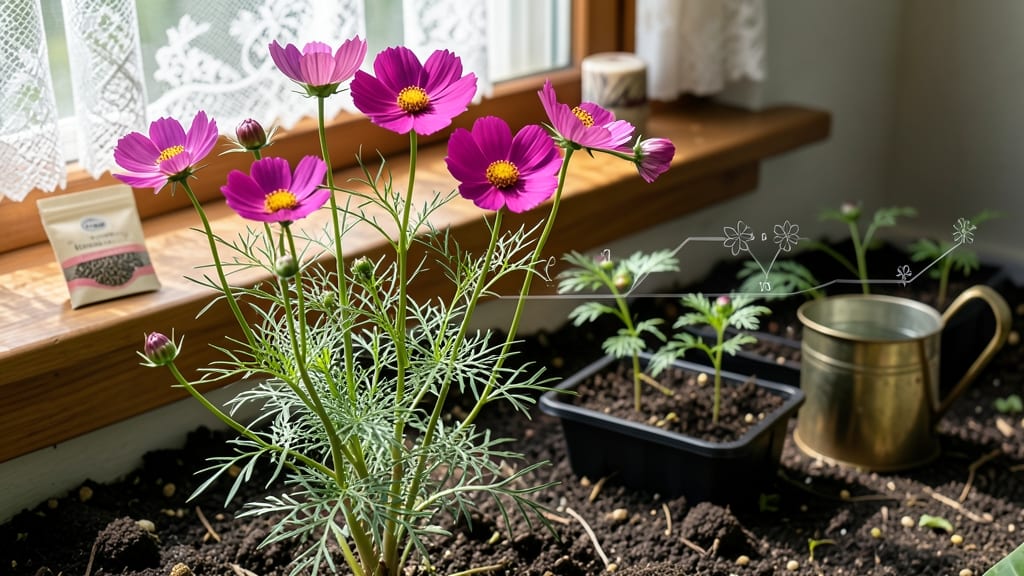
Blooming cosmos from seed takes about 60 to 75 days under ideal conditions, but the exact timeline depends on your variety, climate, and a few key growing tricks.
Picture this: you’ve just tucked those delicate cosmos seeds into warm soil in April, and now you’re waiting for those first 🌸 to pop up. The excitement builds as you watch them grow, but why does it sometimes feel like forever—or why do some varieties bloom faster than others?
In warmer climates like Zone 8+, cosmos often flower in as little as 45 days, while cooler regions (like Zone 6a) may stretch that to 90 days or more. The secret? Planting at the right time, giving them enough sunlight, and avoiding common pitfalls like overcrowding.
Below, I’ll break down the exact growth stages for popular cosmos varieties, how to speed up blooming in short seasons, and the one mistake that delays flowers the most—so you can enjoy your garden’s star show sooner.
Cosmos bloom timelines from seed: variety-specific growth stages explained
Understanding the cosmos bloom timeline from seed helps you plan your garden for maximum impact. Whether you're growing the classic Cosmos bipinnatus or the bold Cosmos atrosanguineus, each variety has distinct growth stages that determine when you'll see those cheerful blooms.
From seed germination to first flowers, timing varies by variety and climate—let's break it down.
Most cosmos varieties follow a predictable pattern: 5-14 days to germinate, 30-45 days to reach transplant size, and 60-90 days to bloom. However, dwarf varieties like 'Purity' may flower in just 50 days, while tall types like 'Bright Lights' can take up to 90 days.
The key is matching your planting time to your local frost dates and variety traits.
🌱 Here's your visual guide to cosmos bloom timelines by variety:
| Variety | Germination | Seedling Stage | First Bloom | Height | Color Notes |
|---|---|---|---|---|---|
| Cosmos bipinnatus | 5-14 days | 30-45 days | 60-80 days | 1-5 ft | Pink, white, red |
| Cosmos sulphureus | 7-21 days | 35-50 days | 55-75 days | 2-4 ft | Yellow, orange |
| Cosmos atrosanguineus | 10-21 days | 40-55 days | 70-90 days | 3-6 ft | Deep red, burgundy |
| 'Bright Lights' | 7-14 days | 30-40 days | 60-70 days | 1-2 ft | Multi-colored |
| 'Purity' | 5-10 days | 25-35 days | 50-60 days | 1-1.5 ft | White |
The germination stage is where timing starts. Most cosmos seeds sprout quickly in warm soil (60°F+), but Cosmos atrosanguineus may take longer due to its larger seed size. For fastest results, plant after your last frost date when soil temperatures consistently stay above 60°F.
In cooler climates (Zones 5-7), consider starting seeds indoors 4-6 weeks before transplanting.
Once seedlings emerge, they grow rapidly—expect 1-2 inches per week under ideal conditions. The seedling stage (30-55 days) is critical for establishing strong roots. Thin seedlings to 12-18 inches apart to prevent competition and ensure robust stems that support heavy blooms.
This spacing also improves airflow, reducing the risk of powdery mildew.
Most cosmos varieties reach first bloom between 60-90 days from seed, but this can shift based on your planting time. For example, sowing in late spring (June) may delay blooms until late summer or fall, while early spring planting (April) often yields flowers by mid-summer.
The Bright Lights series is particularly fast, often blooming in 60 days—perfect for container gardens or cut flower arrangements
How climate and planting time affect cosmos flowering speed
If you’ve ever planted cosmos seeds only to watch them bloom in record time—or struggle through a slow summer—your climate zone is likely the culprit. Cosmos thrive in warmth and sunlight, but cooler regions (like Zone 5-7) can stretch their 60-75 day blooming timeline to 90+ days.
The key? Planting timing and understanding your local frost patterns. In Zone 8+, cosmos often flower in just 50-60 days from seed, while gardeners in Zone 5 may need to start seeds indoors or use row covers to accelerate growth.
Cosmos are frost-sensitive seedlings, meaning they won’t tolerate temperatures below 40°F. In northern climates, direct-sowing too early can stall germination entirely. Meanwhile, southern gardeners can often sow seeds as early as March, giving cosmos a head start for summer-long blooms.
The difference? 1-2 months in flowering speed between regions. Let’s break down how to optimize your planting strategy for your specific climate.
Why? Cooler soils delay germination (10-14 days vs. 5-7 days in warmth). Start seeds indoors 4-6 weeks before last frost or use row covers after transplanting.
Why? Warm soil (60°F+) speeds germination. Direct-sow as early as March in mild winters. Succession plant every 2-3 weeks for continuous blooms.
Solution: Use black plastic mulch to warm soil or plant in containers for mobility. In Zone 5, wait until May 15+ to sow outdoors.
Do this: Place seedlings in full sun (6+ hours) and use reflective mulch (e.g., white gravel) to boost warmth. In containers, move pots to south-facing spots.
For gardeners in Zone 5-7, the secret to faster cosmos blooms lies in starting seeds early indoors. Use grow lights to simulate long days, and transplant hardened-off seedlings after the last frost date.
In my Zone 6 garden, I’ve found that sowing seeds in late April (instead of May) cuts blooming time by 10-14 days by leveraging warmer soil temperatures.
Another pro tip: Succession planting every 2 weeks ensures a steady supply of blooms. In Zone 8+, where frost isn’t a concern, you can even sow cosmos year-round in mild winters.
Just remember—cosmos are self-seeding annuals, so they’ll often pop up unexpectedly in spring if left undisturbed. This natural regeneration can give you a head start on the blooming timeline!
If you’re in a short-season climate, focus on dwarf varieties like ‘Sensation Mixed’, which mature in 50-60 days even in cooler zones. Pair them with tall varieties like ‘Bright Lights’ for a layered effect.
With the right timing, you can enjoy cosmos blooms from mid-summer to frost, no matter where you garden.
🌸