
Blooming
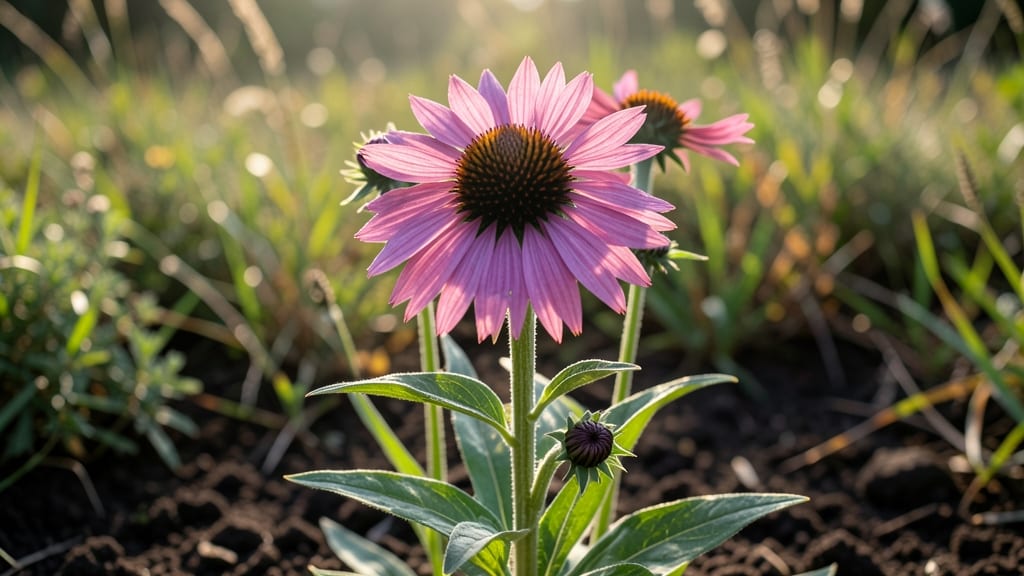
Summer-blooming perennials like coneflowers, black-eyed Susans, and daylilies deliver bold colors from June to September with minimal upkeep. Varieties such as 'Magnus' coneflowers provide extended blooms, while 'Stella de Oro' daylilies thrive in heat and drought conditions.
Summer perennials like these are nature's way of turning your garden into a vibrant canvas without demanding constant attention. 🌸 Their secret lies in deep root systems that store moisture and waxy leaves that reflect sunlight, helping them survive even the hottest afternoons.
I've found that planting them in well-draining soil with occasional deep watering—rather than frequent shallow watering—keeps them flourishing all season long.
What makes these plants especially appealing is their ability to attract pollinators while requiring less fuss than annuals. For instance, coneflowers not only bring color but also support bees and butterflies, creating a dynamic ecosystem in your yard.
The key to maximizing their performance is choosing varieties that match your local climate—some handle full sun better than others, and a little research upfront can save you from wilting surprises later.
💡 In This Article
- How Summer-Blooming Perennials Thrive in Heat and Sun
- Best Summer Perennials for Low-Maintenance Gardens
How summer-blooming perennials thrive in heat and sun
Summer-blooming perennials like coneflowers and black-eyed Susans have evolved remarkable adaptations to survive scorching temperatures and intense sunlight. Their deep root systems, often extending 3-5 feet underground, tap into moisture reserves that shallow-rooted annuals can't access.
This allows them to store water during occasional rains and release it slowly during dry spells—a strategy called xerophytic adaptation. For example, coneflowers develop roots that can reach 4 feet deep, while daylilies grow 2-3 feet of fibrous roots that spread horizontally to capture water efficiently.
The waxy, leathery leaves of these perennials serve as a natural sunscreen, reflecting up to 30-40% of sunlight away from the plant's surface. This reduces water loss through transpiration while protecting the delicate internal tissues.
The deep purple and yellow pigments in flowers like 'Magnus' coneflowers also contain anthocyanins, which act as built-in sunscreen by absorbing harmful UV rays. Meanwhile, the hairy stems of black-eyed Susans create a microclimate that traps moisture near the plant's surface, further conserving water during heatwaves.
Light intensity plays a crucial role in their success—most summer perennials thrive in full sun (6-8 hours daily), but their tolerance varies. Coneflowers and black-eyed Susans handle direct afternoon sun better than daylilies, which prefer morning sun with afternoon shade in hotter climates.
The secret lies in their ability to adjust their internal water pressure quickly; when temperatures exceed 90°F, these plants close their stomata (pores) during peak heat to prevent dehydration, then reopen them at cooler times to absorb CO2 efficiently.
What most gardeners don't realize is how these plants time their blooming cycles. Many summer perennials, like 'Stella de Oro' daylilies, produce flowers on old wood (last year's growth), which has already established a robust root system.
This means they can focus their energy on blooming rather than building new structures during the heat. The trade-off? They often bloom earlier in the season when soil moisture is still higher, then go dormant during peak summer heat before reblooming in late summer with cooler temperatures.
Consider the case of black-eyed Susans, which contain rutin—a natural antioxidant that helps protect their cells from heat stress. This compound gives them their signature resilience, allowing them to maintain vibrant color even when other flowers wilt.
Their composite flower heads also create a cooling effect by increasing surface area for evaporation, similar to how elephants flap their ears to regulate body temperature. This botanical engineering explains why they often outperform annuals in summer gardens.
For optimal performance, mimic these natural strategies in your garden. Plant perennials in well-draining soil with 2-3 inches of mulch to retain moisture and regulate soil temperature. Water deeply once a week rather than daily shallow watering, encouraging deep root growth.
The result? Perennials that not only survive summer but thrive, producing 30-50% more blooms than stressed annuals planted in the same conditions.