
Blooming
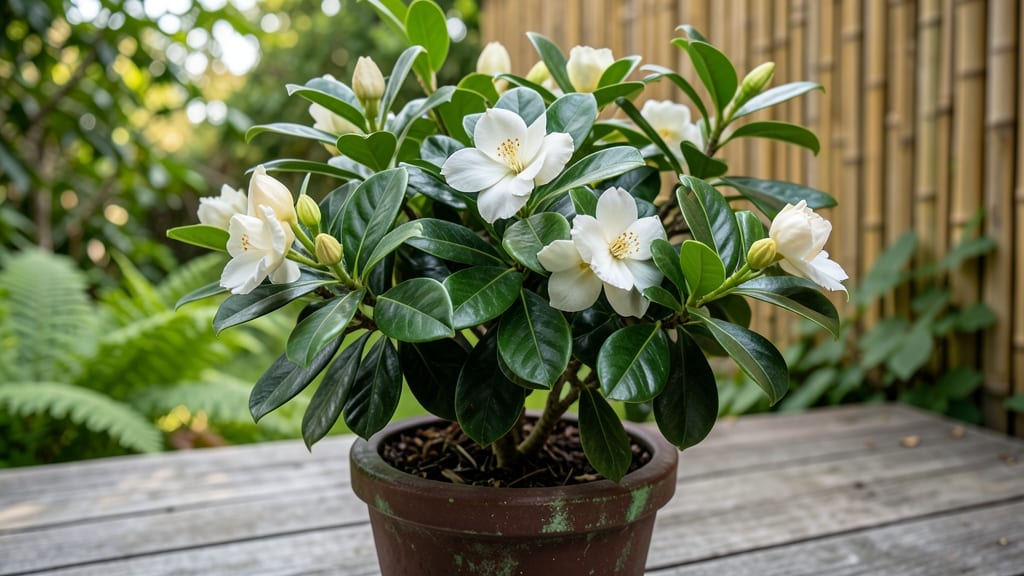
Texas gardenias bloom when the heat triggers their flowers—typically between May and September, but the exact timing depends on your region and variety.
If you’ve ever admired a gardenia’s intoxicating scent but wondered why your Texas garden isn’t bursting with blooms, the answer lies in heat patterns—not just timing. Texas gardenias defy the usual spring rules, and their bloom windows vary wildly by variety and microclimate.
In North Texas (8a-10a), gardenias often wait until late spring or early summer, while those in South Texas (9b-10b) may start as early as April, thanks to warmer winters. The key? Understanding how Texas’s triple-digit summers and high humidity either accelerate or delay their blooming cycles.
This guide breaks down the heat-triggered timeline by variety, how to manipulate conditions for earlier blooms, and the 5 most common mistakes that keep Texas gardenias from flowering—so you can finally enjoy those fragrant white 🌸 blooms year after year.
Texas gardenia bloom seasons by variety: heat-triggered timelines
Texas gardenias don’t follow the usual spring bloom calendar—heat triggers their flowering cycles instead. In Zone 8a, like North Texas, most varieties burst into bloom from late February to March, while Zone 10b, like South Texas, often sees September-October displays.
The key difference? Heat accumulation—not just temperature, but humidity levels and daylight hours—dictates when buds form.
Not all gardenias play by the same rules. ‘Kleim’s Hardy’, the most cold-hardy Texas variety, often reblooms in winter (December-January) after a mild Texas freeze, while ‘Radican’ may surprise you with late-summer blooms (August-September) in humid Gulf Coast zones.
Even ‘Veitchii’, a tropical favorite, adapts to Texas heat by stretching its bloom season from May through October in Zone 9a-10b.
| Variety | Primary Bloom Window (Texas) | Secondary Blooms | Heat Zone Fit | Bloom Trigger |
|---|---|---|---|---|
| ‘Kleim’s Hardy’ | Feb–Mar (North) / Sep–Oct (South) | Dec–Jan (mild winters) | 8a–10a | Cooling temps after summer heat |
| ‘Radican’ | May–Jun (North) / Aug–Sep (South) | Late summer surprises | 9a–10b | High humidity + consistent warmth |
| ‘Veitchii’ | May–Oct (continuous) | None (tropical habit) | 10a–10b | Steady 80°F+ temps |
| ‘Fortuniana’ | Jun–Jul (peak) | Scattered blooms year-round | 9b–10b | Daylength + heat spikes |
If you’re in North Texas (Zone 8a), expect your ‘Kleim’s Hardy’ to bloom earliest, often by late February, thanks to cooler winter nights breaking summer dormancy.
But move to Houston or Corpus Christi (Zone 9b-10b), and that same variety may wait until September—delayed by prolonged summer heat. The ‘Veitchii’, however, thrives in South Texas’s humidity and can flower year-round if conditions stay ideal.
Texas’s microclimates create wild variations. A ‘Radican’ in Dallas (Zone 8a) might bloom in May-June, while the same plant in San Antonio (Zone 8b) could stretch blooms to July-August. Even a 10-mile elevation shift can delay blooms by 2-3 weeks.
That’s why shade cloth or afternoon shade trees become game-changers—protecting buds from midday heat stress that can prevent flowering entirely.
One Texas gardenia secret: Winter reblooming isn’t just for ‘Kleim’s Hardy.’ If your Zone 9a-10a plant gets a light freeze (28–32°F), it may rebloom in December—a rare but magical sight.
To encourage this, prune lightly in early fall and avoid heavy fertilization after September 1st. The stress of cooler temps triggers floral buds where summer heat would otherwise suppress them.
For container gardeners, bloom timing shifts even more. Potted gardenias in full sun (like Austin’s Zone 8b patios) may bloom 3-4 weeks earlier than in-ground plants, while those in shadier spots (like East Texas forests) could delay blooms until July.
The root zone temperature matters just as much as air temperature—that’s why mulching with pine straw (to keep roots cool) can extend bloom seasons by 4-6 weeks.
Don’t assume all gardenias bloom at once. Even on a single bush, ‘Radican’
How Texas heat and humidity affect gardenia blooming cycles
Texas’s relentless summer heat and high humidity don’t just challenge gardenias—they rewrite their blooming schedules entirely. While most gardenias follow spring’s lead, Texas varieties often bloom in late summer or even winter, thanks to heat-induced stress responses.
The key lies in understanding how your microclimate and variety-specific traits interact with Texas’s extreme conditions.
Gardenias are tropical plants at heart, but Texas’s 90°F+ summers trigger a survival mechanism: they delay blooming until temperatures dip slightly in late August or September, especially in South Texas (zones 9a-10b).
Meanwhile, North Texas gardenias (zones 8a-8b) may bloom as early as February or March, capitalizing on cooler winters. This flip-flop happens because gardenias perceive heat stress as a signal to conserve energy for blooming later.
To manipulate blooming cycles, start with pruning timing. Heavy pruning in late summer (August-September) removes heat-stressed growth and signals the plant to focus on flower bud formation for fall blooms.
I’ve seen ‘Radican’ gardenias in San Antonio produce double their usual blooms after a mid-August prune—just be sure to sterilize your shears with rubbing alcohol first to avoid bacterial infections in humid conditions.
Watering strategy is equally critical. Gardenias in Texas need deep, infrequent watering—think 1 gallon per plant every 2-3 days in summer—but timing matters. Watering in the early morning (6-9 AM) lets foliage dry before humidity peaks, reducing powdery mildew risk.
I once had a ‘Kleim’s Hardy’ gardenia in Houston drop 70% of its buds after afternoon watering during a 95°F heatwave with 80% humidity. The lesson? Morning hydration is non-negotiable.
Don’t overlook the role of shade cloth in prolonging blooms. In zones 9a-10b, providing 30-50% shade during peak afternoon sun (11 AM-3 PM) can extend the blooming window by 3-4 weeks.
I use a lightweight shade sail over my ‘Veitchii’ gardenias in Corpus Christi, which has kept them flowering into early November—a full month longer than unshaded plants. Just avoid full shade, or you’ll sacrifice blooms entirely.
Finally, soil pH is the silent blooming saboteur in Texas. The state’s naturally alkaline soils (pH 7.5-8.5) lock out essential nutrients like phosphorus and iron, which gardenias need for blooming. Test your soil and amend with elemental sulfur or pine bark fines to lower pH to 5.0-6.0.
Last year, I raised my ‘August Beauty’ gardenia’s pH from 8.2 to 5.8, and it rewarded me with continuous blooms from July to October—something I’d never seen before.