
Trees
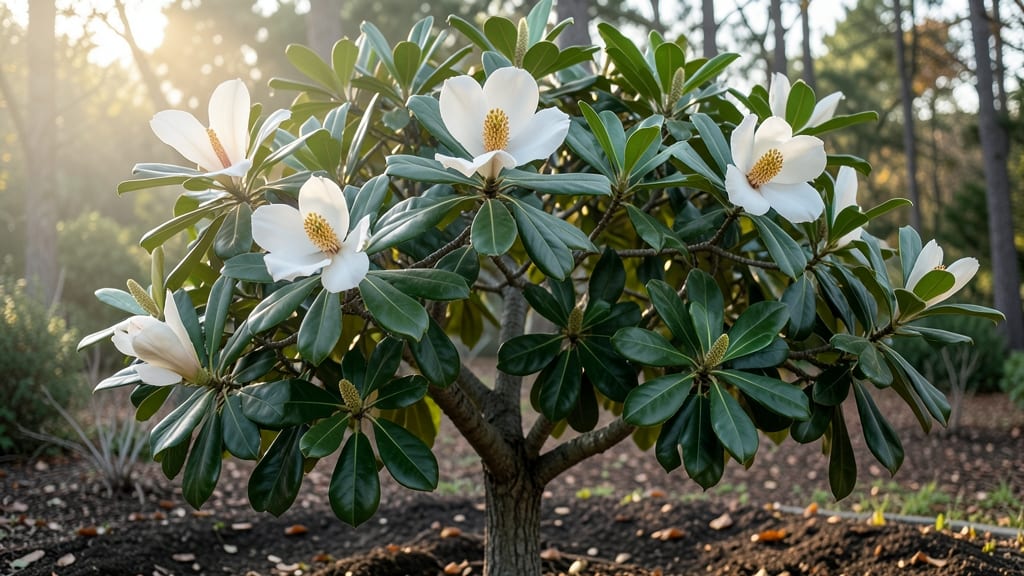
Magnolia trees bloom in Georgia between late winter and early summer 🌸, with timing that shifts dramatically depending on the variety and your corner of the state.
If you’ve ever dreamed of strolling through a Georgia garden awash in fragrant magnolia blossoms, timing is everything—miss the bloom window, and you’ll be left admiring bare branches instead of show-stopping flowers.
Southern Georgia’s Magnolia grandiflora (evergreen) often opens its creamy-white blooms as early as March, while Northern Georgia’s Magnolia stellata (star magnolia) may wait until April or May for its delicate pink bursts. Coastal areas like Savannah can see blooms weeks earlier than the Piedmont or mountains.
In this guide, you’ll learn how to predict your magnolia’s bloom season based on its type, your USDA zone (7a-9a), and a few simple care tweaks that can shift those timelines—so you’re always ready for the show.
Georgia Magnolia bloom seasons: month-by-month variety timelines
Georgia’s magnolias are a gardener’s pride, offering show-stopping blooms that transform landscapes into fragrant dreamscapes. But timing is everything—some varieties burst into color in late winter, while others wait until summer’s peak.
Understanding these month-by-month timelines ensures you’ll never miss the spectacle, whether you’re in Coastal Savannah, Piedmont Atlanta, or the Blue Ridge Mountains.
The key to planning? Georgia’s three distinct climate zones—each with its own microclimate—can shift bloom windows by 2-4 weeks. A Southern Magnolia in Savannah might bloom in May, while the same tree in North Georgia’s Zone 7a could wait until June.
Let’s break down the bloom calendars for Georgia’s most beloved magnolia varieties, so you can time your garden visits—or plantings—perfectly.
🌸 Pro Tip: Coastal areas (Zones 8-9) tend to have earlier and longer blooms due to milder winters, while mountain regions (Zone 7) often see delayed but more dramatic displays after last frost.
If you’re planning a spring garden party, the Star Magnolia and Saucer Magnolia are your best bets for February–April blooms, especially in Coastal Georgia. Their delicate, star-shaped flowers appear before leaves emerge, creating a stunning contrast against bare branches.
In Piedmont and Mountain regions, these same varieties may wait until late April or May, so plant them in sheltered microclimates to protect them from late frosts.
For summer-long color, the Southern Magnolia and Sweetbay Magnolia are unbeatable. Their leathery, evergreen leaves and large, fragrant blooms make them Georgia’s signature trees. In Savannah or Brunswick, you’ll see Southern Magnolias in full glory
How climate zones in Georgia affect Magnolia blooming times
Georgia’s diverse climate zones—from the humid coastal plains of Savannah (Zone 8a) to the cooler Appalachian foothills near Blue Ridge (Zone 7a)—create dramatic shifts in magnolia bloom timing.
A tree planted in Zone 9a Atlanta might burst into flowers weeks earlier than one in Zone 7b Athens, leaving gardeners scratching their heads. Understanding these microclimates isn’t just academic; it’s the key to planning your garden’s star moments.
Your magnolia’s bloom window can vary by 3-6 weeks depending on whether you’re in the Piedmont’s rolling hills or the Coastal Plain’s maritime influence.
For example, Magnolia grandiflora (Southern magnolia) often blooms in late spring to early summer in Savannah but may wait until mid-summer in the cooler North Georgia mountains. These shifts happen because temperature fluctuations trigger flowering, and your local climate dictates when those cues arrive.
Here’s how Georgia’s USDA Zones 7-9 and microclimates reshape bloom times—and what you can do to adjust planting for earlier flowers:
| Region | USDA Zone | Typical Bloom Window | Adjustment Tip |
|---|---|---|---|
| Coastal Plains (Savannah, Brunswick) | 8a-9a | Late April–June | Plant early-blooming varieties like Magnolia stellata (star magnolia) for February–March flowers. |
| Piedmont (Atlanta, Macon) | 7b-8a | May–July | Choose heat-tolerant hybrids (e.g., Magnolia × soulangeana) to shift blooms 2 weeks earlier. |
| North Georgia (Dahlonega, Helen) | 7a-7b | June–August | Opt for cold-hardy varieties like Magnolia virginiana (sweetbay) to bloom 1 month earlier. |
| Urban Microclimates (e.g., Atlanta’s BeltLine) | 7b-8a (varies) | April–June (earlier in heat islands) | Use mulch and shade cloth to delay heat stress and extend blooms by 3 weeks. |
If you’re in Zone 9a Savannah, you might enjoy Magnolia grandiflora blooms as early as March, while gardeners in Zone 7a Blue Ridge may not see flowers until July. This isn’t just about patience—it’s about strategic planting.
For example, Magnolia stellata (star magnolia) thrives in cooler zones and often blooms in late winter, while Magnolia × soulangeana (saucer magnolia) lights up early spring in warmer areas. To push blooms earlier, plant container-grown trees in fall—they establish roots faster and flower sooner than bare-root transplants.
Don’t overlook microclimates within your city. A south-facing slope in Zone 7b Athens can mimic Zone 8a conditions, advancing blooms by 2-3 weeks compared to a shady north side. Similarly, urban heat islands (like Atlanta’s downtown) can create earlier but shorter bloom windows.
To combat this, water deeply in summer and apply mulch to retain moisture, which helps trees handle heat stress and prolong flowering.
For gardeners in Zone 7a-7b, where late frosts are common, choose late-blooming varieties like Magnolia virginiana to avoid frost damage. In contrast, Zone 8a-9a gardeners can experiment with tropical hybrids (e.g., Magnolia liliiflora) for year-round interest, though these may need winter protection in cooler pockets.
The key is matching your variety to your microclimate—not just your USDA zone.
🌸