
Blooming
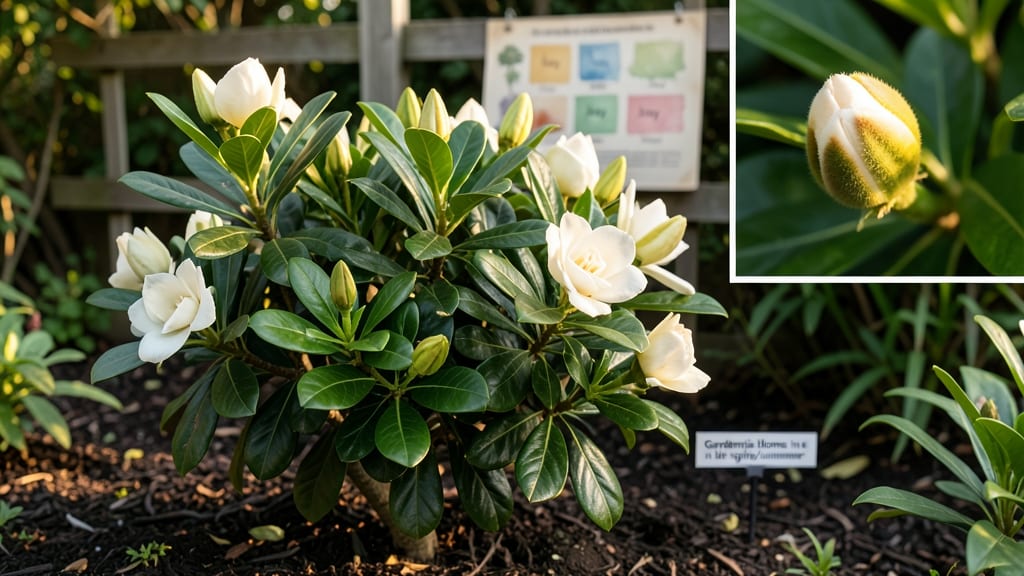
Gardenias bloom between late spring and early fall, typically from May to September, with Gardenia jasminoides reaching peak bloom in summer months. Warmer climates may extend flowering into October, while cooler zones often see blooms concentrated in June and July.
Timing varies dramatically based on both the gardenia variety and your local climate. For instance, tropical varieties like Gardenia jasminoides thrive in USDA zones 8-11, where they can produce continuous blooms from June through September, sometimes lasting until October with proper care.
In contrast, hardier types like Gardenia augusta may bloom earlier in spring and again in late summer, adapting better to zones 7-9. The key difference lies in temperature sensitivity—warmer regions encourage longer flowering periods, while cooler climates often trigger a more concentrated bloom window. 🌸
What's fascinating is how gardenias respond to environmental cues. In my experience, plants in zone 7 with proper winter protection can still produce stunning summer blooms, though they may take a brief rest in early fall.
The secret? Consistent moisture, partial shade during peak sun hours, and avoiding heavy pruning during the bloom cycle. Even a slight adjustment in soil pH (aiming for 5.5-6.5) can make a noticeable difference in bloom duration.
💡 In This Article
- Gardenia Bloom Timing by Variety and Climate Zones
- Tips to Extend Gardenia Flowering Season
Gardenia bloom timing by variety and climate zones
Gardenia blooming windows are primarily dictated by two factors: the specific cultivar and your local climate zone. The most popular variety, Gardenia jasminoides, typically bursts into flower between June and August in warmer regions (USDA zones 9-11), where temperatures consistently stay above 70°F.
This tropical species evolved to thrive in humid, heat-rich environments, which explains why it produces its signature creamy-white, intoxicatingly fragrant blooms during these peak summer months.
In contrast, Gardenia augusta—a slightly hardier variety—often blooms earlier, starting in late May and continuing through July, making it a better fit for zones 7-9 where summers are hot but winters can dip below freezing.
The difference between early and late bloomers comes down to temperature sensitivity. Gardenias are native to tropical and subtropical regions, so they've developed a natural response to rising temperatures as a trigger for flowering.
In cooler climates (zones 7 and below), gardenias may enter a state of dormancy during winter, requiring at least 60 days of temperatures above 55°F before they'll reliably produce blooms. This is why you'll often see shorter bloom periods—sometimes just 4-6 weeks—in these areas, concentrated during the warmest months.
The fragrance intensity also varies by climate: plants in warmer zones produce more abundant blooms with a stronger floral scent, while those in cooler areas may have fewer but equally fragrant flowers due to the plant's energy conservation strategies.
Here's what happens under the surface: Gardenias rely on a process called vernalization, where exposure to cooler temperatures (but not freezing) helps trigger flower buds. However, once buds form, they need consistent warmth to open fully.
This dual requirement explains why gardenias in zone 8 might bloom in two distinct waves: first in late spring after winter dormancy breaks, and again in early fall as days shorten but temperatures remain mild.
The key takeaway is that while gardenias are often associated with summer, their bloom timing is far more flexible than many gardeners realize—with the right care, you can coax flowers in nearly any season.
Let's look at specific examples: In Miami (zone 10b), Gardenia jasminoides may bloom from May through October, while in Atlanta (zone 7b), the same variety might only produce flowers between June and July.
The visual difference is striking—Miami gardenias develop dense clusters of blooms along their branches, whereas Atlanta plants often have fewer but larger individual flowers. This variation isn't just about quantity; it's also about the plant's physiological response to daylight hours.
Gardenias are short-day plants, meaning they flower in response to shorter daylight periods, which explains why late summer blooms often appear as days begin to shorten.
For those in transitional zones (like zone 8), the challenge becomes managing this dual flowering cycle. The first wave of blooms typically appears after the last frost, while the second wave emerges as temperatures begin to drop in early fall.
This creates a 6-8 week window where gardenias can dominate your landscape with their creamy-white, waxy petals and intense citrusy fragrance. The secret to maximizing this in cooler climates?
Providing afternoon shade during peak summer heat—gardenias can handle morning sun but will drop buds if stressed by afternoon temperatures above 90°F.
This careful balance between light exposure and temperature management is what separates a gardenia that produces a few sporadic blooms from one that becomes a continuous floral display.
What most gardeners don't realize is how much the plant's age affects bloom timing. Young gardenias (under 3 years old) often produce fewer blooms as they focus energy on root and foliage development. It's not until they reach maturity at 3-5 years that they'll reliably produce their signature floral displays.
This delayed gratification is why many gardeners give up too soon—patience is key when growing gardenias. Once established, a mature plant can produce hundreds of blooms per season, with each flower lasting 5-7 days before wilting, creating a continuous cycle of fresh fragrance.