
Pruning
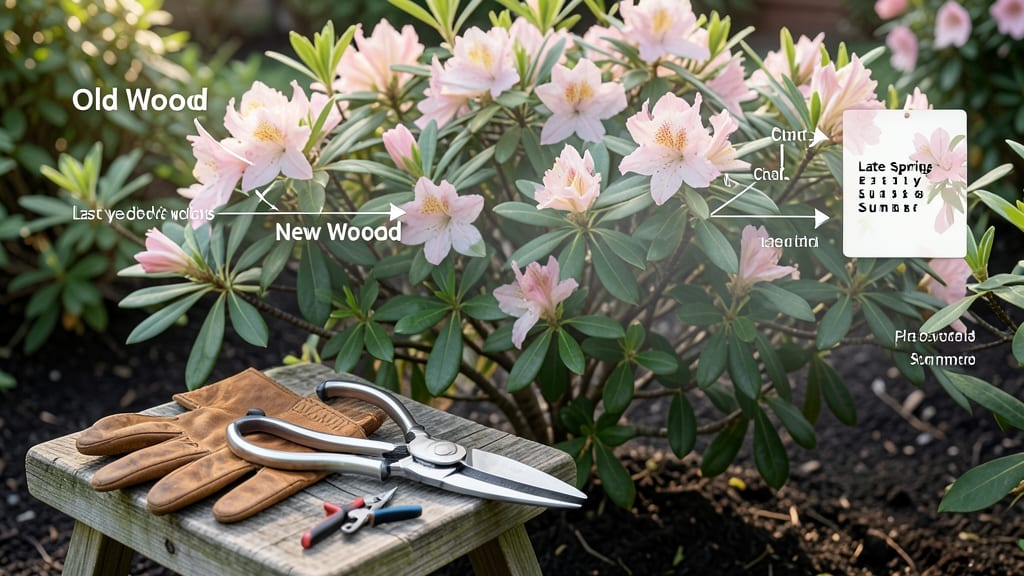
Pruning azaleas that bloom twice a year requires precise timing to preserve both spring and fall flowers while keeping your shrubs healthy.
If your azaleas produce stunning blooms twice a year, pruning at the wrong time could mean sacrificing one—or both—of those floral displays. Timing is everything when it comes to maintaining vibrant spring and fall flowers while keeping your shrubs healthy.
Most gardeners focus on pruning after spring blooms, but azaleas that flower twice need a different approach. The key is to prune right after the first bloom but before the second set of buds forms, ensuring you don’t accidentally cut off next year’s flowers.
In this guide, you’ll discover the exact seasonal windows for pruning, how to avoid common mistakes, and simple steps to encourage both blooming seasons. Let’s get your 🌸 azaleas thriving year-round!
Critical pruning timing for spring-blooming azaleas after fall flowers
Azaleas that bloom twice a year—once in fall and again in spring—require precise pruning timing to maintain both floral displays. The key is understanding how your plant sets buds. Spring-blooming azaleas form their next year's buds after their fall flowers fade.
Pruning too early or too late can disrupt this delicate process.
Most gardeners make the mistake of pruning right after spring blooms, but this removes the fall buds that are already forming. Instead, wait until late winter or early spring, just before new growth begins.
This ensures you don’t accidentally cut off potential fall blooms while shaping your shrub for the upcoming season.
Here’s the critical step-by-step guide to pruning after fall blooms to preserve spring flowers, including the ideal timing, tools needed, and common mistakes to avoid:
Prune 4-6 weeks after fall flowers completely fade and drop. This ensures all spring buds have fully formed. For most regions, this falls between mid-December and early February.
Gather clean, sharp pruners (bypass pruners for small branches, loppers for thicker stems). Disinfect tools with rubbing alcohol to prevent disease spread.
Start by cutting out dead, diseased, or crossing branches. These compete with healthy growth and can reduce flowering potential. Aim for a 20-30% reduction in overall size.
Thin out interior branches to improve air circulation and sunlight penetration. Avoid shearing (cutting uniformly across the top), as this encourages dense, non-flowering growth.
Once spring buds appear (typically March-April), stop pruning. Cutting new growth now removes potential fall buds, leaving you with only spring blooms next year.
Apply a balanced, acid-loving fertilizer (e.g., 10-10-10) 4-6 weeks after pruning. This supports new growth and bud formation for the next blooming cycle.
One common mistake is pruning azaleas during dormancy (late winter). While this is technically safe, it’s better to wait until early spring when the plant is actively preparing for growth. This timing aligns with the plant’s natural cycle and reduces stress.
If you’re unsure whether your azaleas bloom in fall or spring, observe their flowering pattern. Spring-blooming varieties (like Rhododendron hybrids) often have larger, showier flowers in spring, while fall blooms are smaller. Pruning after fall blooms ensures you don’t accidentally remove next year’s spring flowers.
For potted azaleas, the same rules apply, but be extra cautious with pruning. Over-pruning can stress the plant, leading to root loss or poor recovery. If your potted azalea is small, limit pruning to 10-15% of its size to avoid weakening it.
Finally, always prune on a dry, overcast day to minimize stress. Wet conditions can introduce fungal diseases, while direct sunlight can cause leaf scorch on freshly cut branches.
With the right timing and technique, your azaleas will reward you with vibrant blooms twice a year for seasons to come. 🌸
How to prune azaleas for fall blooms without losing spring flowers
Azaleas that bloom twice a year—once in spring and again in fall—require precision timing to avoid cutting off next year's flowers. The key is understanding when spring buds form and how fall blooms develop.
Late summer is your window to encourage fall flowers, but you must protect spring buds that are already forming.
Most azaleas set spring buds in late summer, typically around mid-August to early September in most climates. If you prune too late, you risk removing those buds before they fully develop.
For fall blooms, you'll need to prune just after the spring flowers fade, usually in May or early June, to give the plant time to develop new growth for fall.
Here’s the critical balance: prune too early and you sacrifice spring blooms; prune too late and you miss fall flowers. The solution? Use degree-day calculations to time your cuts perfectly. Most azaleas need 1,000–1,500 degree-days after spring blooming to set fall buds.
⚠️ WARNING: The Danger Zone for Azalea Pruning
Pruning at the wrong time can mean losing both spring AND fall blooms.
Avoid pruning between mid-August and mid-September—this is when spring buds form. If you must shape your azalea, do it right after spring blooms fade (May–early June) to encourage fall flowers without harming next year's spring buds.
Start by pruning immediately after spring flowers fade, typically in May or June. Remove dead or crossing branches first, then thin out 1/3 of the oldest stems to encourage new growth.
Use clean, sharp pruners to make cuts just above a bud or leaf node at a 45-degree angle to promote faster healing.
For fall blooms, focus on light pruning in late summer—just enough to shape the shrub without removing more than 10% of the foliage. This minimal approach allows the plant to redirect energy to new flower buds while preserving existing ones.
Monitor your azalea’s growth and adjust pruning based on local climate—cooler regions may need earlier cuts.
After pruning for fall blooms, fertilize lightly with an acid-loving plant food (like a 10-10-10 NPK blend) to support new growth. Water deeply to reduce stress, and mulch around the base to retain moisture and regulate soil temperature.
Avoid heavy pruning in fall—this can stimulate tender new growth that won’t survive winter.
With the right timing and technique, your azaleas will reward you with vibrant spring and fall blooms year after year. Keep a pruning journal to track what works best for your specific variety and climate—this helps refine your approach over time. Happy pruning! 🌸✂️