
Blooming
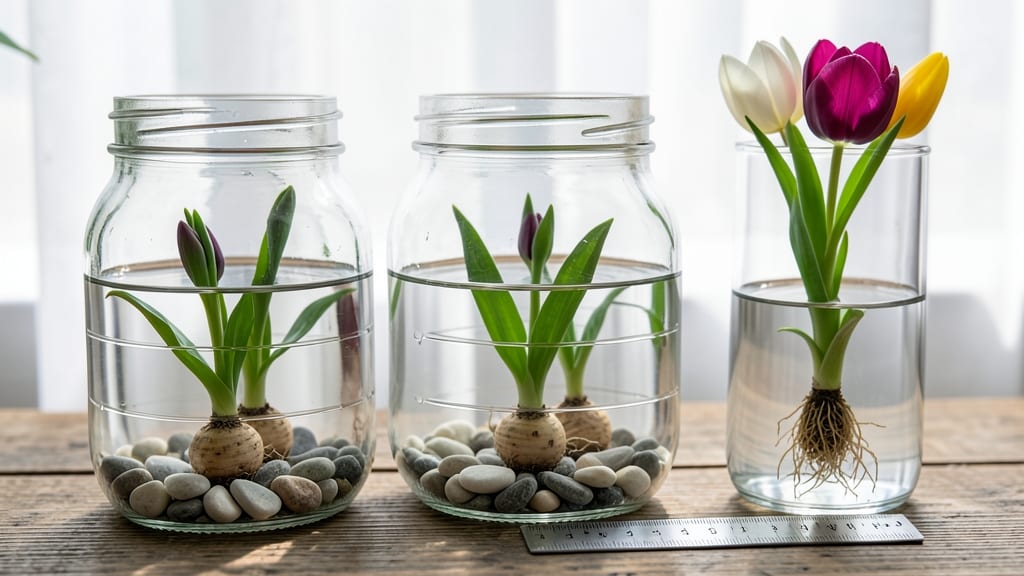
Tulip bulbs forced in water generally won't bloom again indoors because the process drains their stored energy reserves, leaving them unable to support another flowering cycle. To revive them, replant bulbs in soil outdoors where they can recover and potentially rebloom in future seasons.
Forcing tulips in water tricks bulbs into thinking spring has arrived, but this rapid growth burns through their energy reserves faster than they can replenish. 🌱 The bulbs' natural dormancy cycle gets disrupted, and without proper soil conditions, they simply don't have the strength to bloom again.
Even if you replant them, it often takes a full growing season for bulbs to rebuild enough energy for another display of flowers.
What's interesting is that some gardeners report success with reblooming by carefully managing the bulbs' environment after forcing. Providing consistent moisture, well-draining soil, and adequate sunlight helps bulbs gradually recover their energy stores. However, patience is key—expect to wait at least a year before seeing any signs of new blooms.
💡 In This Article
- Why Forced Tulip Bulbs Rarely Rebloom: The Science Behind Energy Depletion
- How to Maximize Tulip Bulb Longevity After Forcing
Why forced tulip bulbs rarely rebloom: the science behind energy depletion
Forcing tulip bulbs in water mimics spring conditions by exposing them to warmth and light, but this rapid growth comes at a steep metabolic cost. Tulip bulbs store energy primarily as starches in their scales, which convert to sugars during growth.
When forced indoors, bulbs burn through these reserves at an accelerated rate—typically 3-4 times faster than they would in natural outdoor conditions—because they're not photosynthesizing to replenish energy. 🌱 This creates an energy deficit that prevents future blooming unless the bulbs can recover in soil.
The forcing process also disrupts the bulbs' natural dormancy cycle, which is critical for energy conservation. In their native environment, tulips enter dormancy after blooming to rebuild starch reserves over summer and fall. Indoors, this cycle gets skipped entirely, leaving bulbs with no opportunity to recharge.
Studies show that bulbs forced in water lose 50-70% of their starch reserves during flowering, compared to just 20-30% in outdoor conditions where they have time to recover.
Another key factor is the lack of root development in water-forced bulbs. Roots are essential for absorbing nutrients and water from soil, which helps bulbs rebuild energy stores. When grown in water, bulbs develop minimal root systems, limiting their ability to recover post-forcing.
Even after replanting, these bulbs may take 2-3 years to fully regenerate their energy reserves and potentially bloom again, if ever.
Temperature also plays a role in energy depletion. Forcing typically occurs at 60-65°F, which is warmer than ideal for tulips' natural growth cycle. Higher temperatures increase metabolic activity, causing bulbs to expend energy faster.
This is why gardeners in cooler climates sometimes see better reblooming success—their outdoor temperatures naturally slow down the energy burn rate during recovery.
What's fascinating is how bulbs prioritize energy allocation. When forced, they focus all their resources on producing flowers and leaves, often at the expense of root growth and future energy storage. This explains why even well-cared-for water-forced bulbs rarely rebloom—they've essentially "spent their savings" on the first flowering cycle. 💫
For comparison, outdoor-planted tulips typically lose only 15-25% of their starch reserves per year because they have time to photosynthesize and rebuild energy through their foliage. This natural cycle allows them to bloom reliably for 3-5 years before declining, whereas forced bulbs often never recover enough to bloom again.