
Blooming
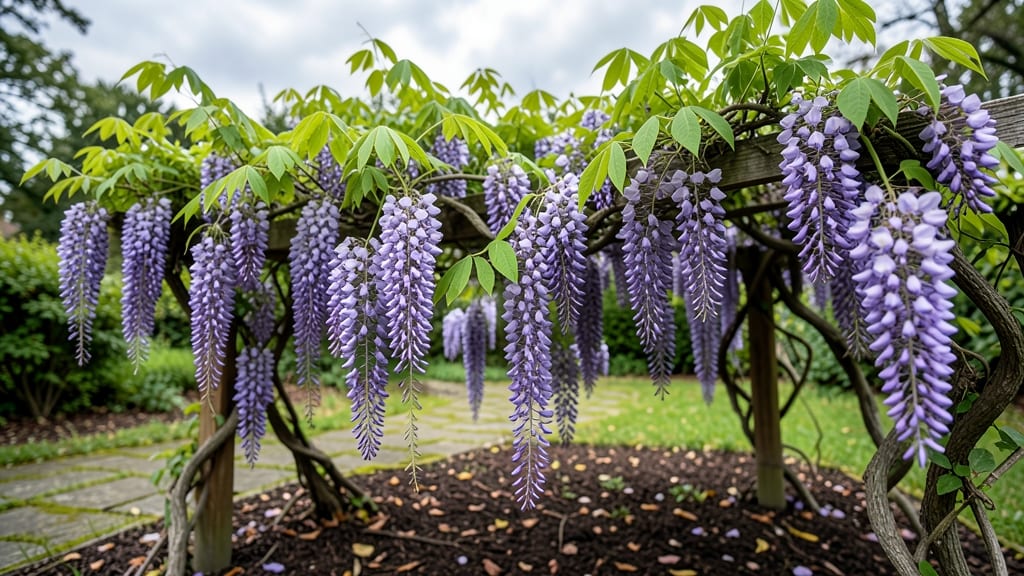
Wisteria blooms in late spring 🌸, but timing varies wildly depending on your zone and variety—some explode with color in May, while others wait until June.
If you’ve ever dreamed of a cascading canopy of purple, white, or blue flowers but struggled with timing, understanding your wisteria bloom time is the key to unlocking that vision—before the blooms vanish in weeks.
In USDA Zone 6a, where chilly nights are the norm, wisteria often waits until after the last frost (around mid-April) to burst into bloom. But in warmer zones like 8 or 9, the flowers might appear as early as March, while late-season varieties could linger into July.
Below, I’ll break down exactly when to expect blooms in your area, how to coax earlier flowers with simple pruning tricks, and what to do if your wisteria plays hard to bloom.
When does wisteria bloom? USDA Zone-by-Zone bloom timing guide
Timing your wisteria bloom time depends entirely on your USDA zone and the specific variety you’re growing. While most wisterias burst into color in late spring, the exact window shifts dramatically from Zone 3 to Zone 10.
In colder zones, buds need 600–1,000 chilling hours below 45°F to trigger blooms, while warmer zones may see flowers as early as February or as late as June. Understanding these patterns helps you plan pruning, fertilizing, and even where to plant for maximum impact.
For example, my Chinese wisteria (Wisteria sinensis) in Zone 7 typically blooms in mid-April, while a Japanese wisteria (Wisteria floribunda) in Zone 9 might start in late February.
The difference? Chilling requirements and heat exposure. Let’s break down what to expect in your zone—and how to adjust care to ensure those fragrant cascades appear reliably every year.
🌸 Key Trigger: Wisteria blooms depend on two critical factors: chilling hours (cold winter exposure) and warmth thresholds (spring temperatures). Without enough cold, buds won’t set; without enough heat, they’ll bloom late or poorly. Here’s how your zone affects timing:
📊 Zone-Specific Bloom Windows: Use this guide to pinpoint when your wisteria will flower based on your climate. Varieties like Amethyst Falls (early) or Royal Purple (mid-season) may shift timing by 2–4 weeks depending on your location.
| USDA Zone | Typical Bloom Window | Chilling Hours Needed | Key Varieties | Care Tip |
|---|---|---|---|---|
| Zones 3–5 | Late May–Early June | 800–1,000 hours | ‘Prolific’, ‘Black Dragon’ | Prune in late winter to avoid frost damage. |
| Zones 6–7 | Mid-April–Mid-May | 600–800 hours | ‘Amethyst Falls’, ‘Japonica’ | Fertilize in early spring for bud set. |
| Zones 8–9 | Late February–March | 400–600 hours | ‘Royal Purple’, ‘Blue Moon’ | Mulch heavily in winter to retain cold. |
| Zones 10 | January–February | 200–400 hours | ‘Multijuga’, ‘Shiro-Nodake’ | Prune lightly to avoid heat stress. |
If you’re in Zones 3–5, your wisteria likely needs the longest chilling period, which is why blooms arrive later. In contrast, Zone 10 wisterias bloom earliest because they experience milder winters. This is why Japanese wisteria thrives in warmer climates—it requires fewer chilling hours than Chinese wisteria.
For example, my friend in Zone 9 grows ‘Blue Moon’ and sees flowers by late February, while I wait until mid-April in Zone 7.
Temperature thresholds also play a role. Wisteria buds typically need consistent daytime temps above 60°F to open fully. In Zones 6–7, this often coincides with April showers, while Zone 10 gardeners might see blooms before the rainy season starts.
Watch for bud swelling—a sure sign blooms are 3–4 weeks away. If buds swell but fail to open, your plant may need more sunlight or balanced fertilizer.
Pro tip: Track your local frost dates. Wisteria blooms are frost-sensitive, so planting near a south-facing wall can delay frost exposure by 1–2 weeks. In Zones 3–5, this might mean the difference between <
How to predict your wisteria’s first flowers: 5 pro tips
Wisteria’s bloom time can feel like a mystery, especially if your plant seems to take its sweet time. The good news? With the right strategies, you can accelerate blooming and predict when those fragrant clusters will appear.
Start by understanding your USDA zone—colder climates (like Zone 5) may see blooms in late May, while warmer zones (like Zone 8) often bloom as early as March.
Timing isn’t just about the calendar, though—it’s also about seasonal care adjustments that trigger those buds to open.
One of the first signs your wisteria is preparing to bloom is a color change in leaves. Look for new growth turning a deeper green or even a slight purple tint—this indicates the plant is shifting energy toward flower production.
Pair this with bud swelling, where clusters of buds elongate and develop a pinkish hue. If you’re in Zone 6-7, these signs typically appear in late April, giving you a heads-up that blooms will follow in May.
Miss these cues, and you might end up pruning right before the flowers appear!
- Prune in late winter (just before buds swell) to encourage stronger blooms the following year. Use sharp bypass pruners to cut back dead or weak stems by 1/3 of their length.
- Amend soil with compost or bone meal in early spring to boost phosphorus levels, which promotes flowering. Aim for 1 cup per 10 sq ft of soil.
- Monitor leaf color: Deep green or purple leaves signal pre-bloom energy shift. Pair this with bud swelling to predict bloom timing within 2-3 weeks.
- Adjust watering in late winter: Reduce frequency to bi-weekly to mimic dormancy conditions, which triggers flower buds to form.
- Fertilize in early spring with a balanced 10-10-10 formula to support new growth and blooms. Apply after pruning, when roots are active.
If your wisteria is over 3 years old but still hasn’t bloomed, it might need a reset. Try a hard pruning in late winter, cutting back all stems to 2-3 buds from the base.
This drastic approach forces the plant to redirect energy into new, vigorous growth—and often results in abundant blooms the following spring. Just be patient; it may take 1-2 years to see flowers again after such a prune.
For young wisteria (under 3 years), focus on light pruning to shape the vine without stunting blooms.
Soil health plays a critical role in bloom timing. Wisteria thrives in well-draining, slightly acidic soil (pH 6.0-7.0). If your soil is clay-heavy or alkaline, amend it with peat moss or sulfur to improve drainage and acidity. A simple soil test (available at garden centers) can reveal deficiencies.
For example, low phosphorus (indicated by poor root growth) can delay blooms—add bone meal to correct this. Even over-fertilizing with nitrogen can shift energy toward leaves instead of flowers, so balance is key.
Don’t overlook the power of seasonal care adjustments. In winter, wisteria enters dormancy, but this is when flower buds form. Protect young plants from freezing temperatures (below 10°F) with mulch or burlap wraps
In spring, as temperatures rise, increase watering frequency to weekly deep soaks to support bud development. If you’re in a warmer zone (Zone 9-10), blooms may appear in February, but watch for heat stress—wisteria needs cool nights (50-60°F) to trigger flowering. Finally, keep an eye on pests and diseases, which can stress your wisteria and delay blooms. Aphids or spider mites suck sap, weakening the plant, while powdery mildew (common in humid climates) can stunt growth. Treat aphids with a soapy water spray and mildew with neem oil. A healthy vine is a blooming vine, so stay vigilant—your efforts will pay off with dramatic, fragrant cascades of color.