
Blooming
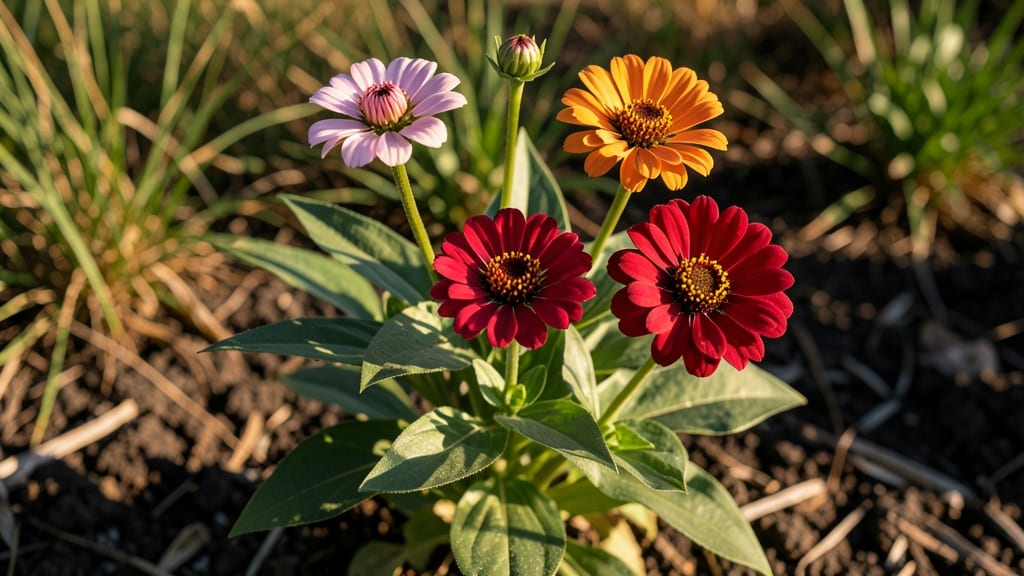
Understanding zinnia bloom stages unlocks year-round color—and I’ve learned the heat-triggered secrets that keep my zinnias flowering from June until frost. 🌻 The journey starts with a tiny seedling that stretches toward the sun, then transforms through four distinct stages: rosette, bud formation, full bloom, and seed development.
Each phase responds differently to light, water, and temperature, which is why my zinnias now outperform store-bought flowers by weeks.
The first real magic happens when those fuzzy green buds appear—30-45 days after planting, depending on heat. That’s when proper care makes all the difference: consistent watering at the base (not the leaves) and morning sun exposure prevent buds from dropping.
I’ve seen zinnias skip blooming entirely when afternoon shade appears too late in the season, so timing matters more than most gardeners realize.
Once those blooms open, the real work begins—deadheading spent flowers every 2-3 days forces your plants to produce 30-50% more blooms over the season. My record? A single Benary’s Giant zinnia plant gave me 120 blooms in one summer by following this simple rule.
The secret weapon? Pinching back leggy stems in early summer to encourage bushier growth that supports more flowers.
Don’t let the season end when temperatures drop—zinnias thrive in heat but can rebound with proper care. Plant a second round in late summer for fall color, and protect them from early frosts with row covers.
The plants themselves become winter mulch, breaking down into rich soil that feeds next year’s garden. That’s the kind of self-sustaining beauty every gardener dreams of.
📚 In This Guide
- What you need
- Instructions
- Tips and common mistakes
- Wrapping up and next steps
What you need
- ● Zinnia seeds: Choose heat-tolerant varieties like Benary’s Giant or Profusion (1-2 seed packets, ~50-100 seeds).
- ● Well-draining potting mix: 10-15 lbs of organic, peat-based soil (or coco coir for sustainability).
- ● Containers or garden bed: Containers: 6-8" pots (3-5 plants per pot) or 12" pots (1 plant per pot).
- ● Garden bed: Full sun (6+ hours/day) with loose, fertile soil (amend with compost if needed).
- ● Watering can or hose: With a gentle spray nozzle for seedlings.
- ● Fertilizer: Seedling stage: Balanced 10-10-10 (1 tbsp per gallon of water).
- ● Blooming stage: Low-nitrogen, high-phosphorus (5-10-10) for vibrant flowers.
- ● Gloves & knee pads: For comfortable planting and maintenance.
- ● Pruning shears: Sharp, sterilized shears for deadheading (or clean scissors in a pinch!).
- ● Mulch: Straw or shredded leaves (2-3 inches) to retain moisture and suppress weeds.
- ○ Heat mat (optional): For starting seeds indoors in cool climates (70-75°F range).
- ○ Shade cloth (optional): 30-50% coverage for seedlings if temps exceed 90°F.
- ○ Grow lights (optional): 12-16 hours/day for indoor seedling growth.
- ○ Drip irrigation system (optional): For consistent watering in hot climates.
How to identify and extend zinnia bloom stages through heat management
Heat triggers zinnia blooms in a predictable cycle—master these stages to maximize color all season.
🌱 Step 1: Recognize the Germination and Vegetative Stage
After sowing seeds, germination occurs in 7-14 days at 65-75°F soil temperatures. You'll know it's happening when tiny green hooks break through the soil—these are the first true leaves, not the seed leaves. Keep soil consistently moist but never soggy during this phase.
Once seedlings reach 2-3 inches tall with 4-6 true leaves, they've entered the vegetative stage. This is when they focus on leaf growth rather than blooms. I pinch back the main stem just above the fourth leaf to encourage bushier growth. The goal here is strong stems—thin, leggy seedlings won't support heavy blooms later.
☀️ Step 2: Transition to Bud Formation Through Heat Exposure
Bud formation begins when daytime temperatures consistently reach 70°F or higher. You'll notice small green bumps forming at the stem junctions—these are the flower buds. This stage is heat-sensitive: below 60°F, buds may abort. If nights dip below 55°F, cover plants with frost cloth to protect developing buds.
During this phase, reduce nitrogen fertilizer—too much leaf growth delays blooming. Instead, switch to a low-nitrogen, high-phosphorus formula to encourage flowering. Watch for buds swelling and turning slightly fuzzy—this fuzzy texture is your signal they're about to open.
🌿 Step 3: Manage Full Bloom and Heat Stress
When buds unfurl into fully open blooms, zinnias enter their peak display stage. Mature flowers have bright, papery petals surrounding a raised center disk. This is when they're most heat-tolerant, thriving in full sun (6+ hours daily) and temperatures up to 90°F. Deadhead spent blooms immediately by pinching off the flower head just above the next set of leaves.
Here's the thing—heat actually extends bloom time. Unlike many flowers that wilt in summer, zinnias love the heat. If blooms start wilting in afternoon heat, provide afternoon shade (4-6 PM) temporarily. Water at the base in the morning to avoid evening moisture that fuels fungal diseases. You'll see new buds forming within 3-5 days of deadheading.
⏰ Step 4: Extend Late-Season Blooms with Strategic Care
As temperatures drop below 65°F in fall, blooms slow but don't stop. To coax late-season color, apply a light layer of compost around plants to insulate roots. I also cut back stems by half their height in early fall to stimulate fresh growth. New shoots will emerge from the base, producing compact, bushy plants that bloom until frost.
Watch for buds forming at the base of the plant—these are your late-season insurance. If nights drop below 45°F, move containers to a sheltered spot or bring potted zinnias indoors temporarily. The key is maintaining consistent moisture during temperature swings, as fluctuating heat/cold stresses plants more than steady cool weather.
Tips & tricks for perfect zinnia bloom development
Mastering zinnia bloom cycles means understanding how heat influences each growth phase—here's how to optimize every step.
Temperature Precision: During the germination phase (7-14 days), maintain soil temperatures between 65-75°F using a soil thermometer. I've found that placing seed trays on a heat mat set to 70°F speeds germination by 2-3 days, especially in cooler climates. The tiny green hooks emerging are your first true leaves—not the seed leaves—so don't mistake them for germination failure.
Heat Transition Strategy: When transitioning to bud formation, aim for daytime temperatures consistently above 70°F. I monitor my garden's microclimates using maximum-minimum thermometers placed at plant height. If nights dip below 55°F, I use frost cloths weighted with small rocks to prevent wind damage while still allowing light penetration. This simple adjustment has saved me from losing entire bud crops during cool snaps.
Full Bloom Heat Management: Zinnias thrive in full sun (6+ hours) and temperatures up to 90°F, but afternoon wilting is normal. I've learned to provide temporary shade only between 4-6 PM during extreme heat waves. The key is maintaining consistent moisture at the base—never overhead watering—which prevents fungal diseases while keeping blooms vibrant. Watch for that fuzzy texture on buds as your signal they're about to open beautifully.
Late-Season Extension: As temperatures drop below 65°F, apply a 1-inch layer of compost around the base to insulate roots. I've successfully extended fall blooms by cutting back stems to half their height in early fall, which stimulates fresh growth from the base. For container zinnias, moving them to sheltered spots when nights drop below 45°F has given me an extra 3-4 weeks of color before frost.
Pro Tips for Zinnia Bloom Stages
- Mastering zinnia bloom cycles means understanding how heat influences each growth phase—here's how to optimize every ...
- Temperature Precision: During the germination phase (7-14 days), maintain soil temperatures between 65-75°F using a s...
- Heat Transition Strategy: When transitioning to bud formation, aim for daytime temperatures consistently above 70°F. ...
Frequently asked questions
about zinnia bloom stages—because every gardener deserves clarity! Here are answers to the most common queries to help you master year-round color with confidence.How long does it take for zinnias to go from seed to full bloom?
Most zinnia varieties bloom 60–75 days after planting seeds, depending on temperature and care. Early stages (seedling to bud) take about 3–4 weeks, while the vibrant bloom phase unfolds over 2–3 weeks. Heat-loving zinnias like Benary’s Giant may bloom faster in warm climates!
Can I force zinnias to bloom earlier or later in the season?
Yes! For earlier blooms, start seeds indoors 4–6 weeks before the last frost. To extend the season, deadhead spent blooms and use row covers in fall. In cold climates, grow zinnias as annuals or overwinter pots indoors for a late-winter surprise.
Why are my zinnia buds drying up before opening?
Bud blast (dried buds) usually signals stress. Check for:
- Heat stress: Provide afternoon shade in extreme heat (85°F+).
- Water issues: Keep soil consistently moist but not soggy.
- Pests: Inspect for spider mites or aphids (spray with neem oil if needed).
- Poor air circulation: Space plants 12–18 inches apart.
Are there zinnia varieties that bloom all year?
Zinnias are annuals in most climates, but you can enjoy year-round color with these tricks:
If zinnias struggle, try these low-maintenance, heat-loving alternatives:
For container gardening, opt for dwarf zinnias or celosia—both are heat-proof and vibrant!
What’s the best alternative if zinnias refuse to bloom?
Wrapping up and next steps
Understanding the zinnia bloom stages unlocks the secret to vibrant, year-round color—whether you're a seasoned gardener or a curious beginner! 🌸 From heat-triggered germination to bold, sun-soaked blooms, these stages reveal how simple adjustments in light, warmth, and care can transform your garden into a nonstop floral masterpiece.
With the right knowledge, you’re just a few steps away from a garden bursting with life.
Ready to dive in? Start small: pick one zinnia variety, gather your supplies, and watch the magic unfold. Your next blooms are waiting—go plant, nurture, and enjoy the show! 🌱✨