
Blooming
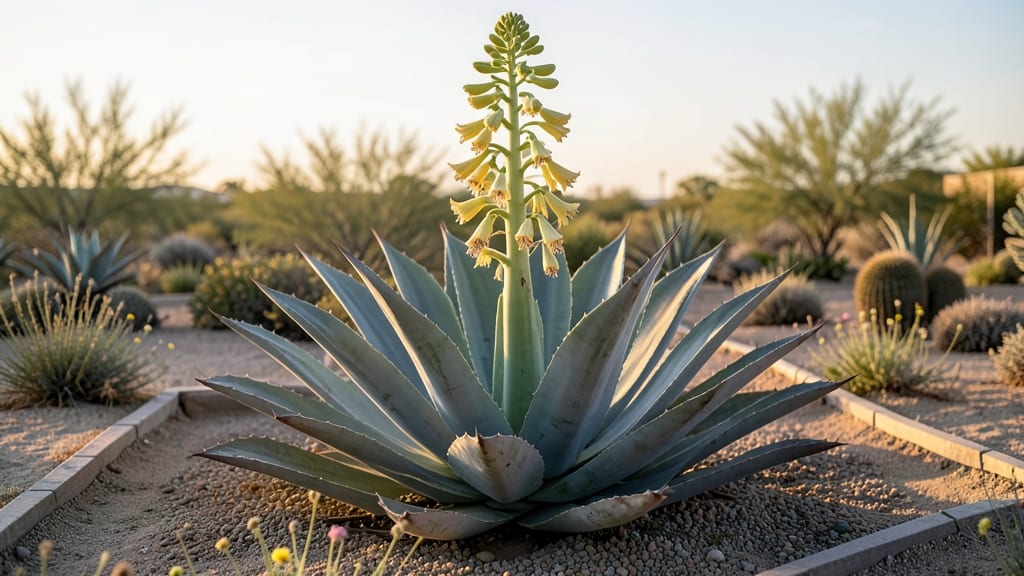
The agave bloom stalk is nature’s most dramatic firework—a towering purple spike that erupts from your plant after years of patient waiting. 🌱 I’ll never forget the first time mine shot up overnight, like a desert plant suddenly deciding to put on a show after surviving decades of drought.
This heat-triggered spectacle only happens once in an agave’s lifetime, and frost might even kickstart the process, making it a rare treat for gardeners lucky enough to witness it.
What you’ll see is a thick, branching stalk that can reach 10–20 feet tall, covered in tiny purple flowers that attract hummingbirds and bees. The growth is slow at first, then explosively vertical—sometimes in just a few weeks.
But here’s the catch: once it blooms, your agave will die. That’s right, this is a one-time performance, and the plant redirects all its energy into producing offsets (pups) at its base before fading away.
Caring for a blooming agave means watering less (they’re drought-tolerant even then) and protecting the stalk from wind or heavy rain. The flowers themselves are stunning but short-lived—enjoy them while they last, then focus on the pups.
These baby agaves are your plant’s legacy, ready to be transplanted and grown into their own dramatic showstoppers.
If your agave isn’t blooming yet, don’t worry—some varieties take 10–30 years to reach maturity. But if yours is healthy, give it full sun, well-draining soil, and minimal fuss, and eventually, you’ll get that unforgettable purple spike.
The trade-off? A lifetime of memories and a new generation of agaves to love.
📚 In This Guide
- What you need
- Instructions
- Tips and common mistakes
- Wrapping up and next steps
What you need
- ● Mature agave plant (Agave spp.): Choose a healthy, frost-hardy variety (e.g., Agave americana, Agave parryi), ideally 8–15 years old (younger plants rarely bloom).
- ● Thermometer (outdoor): A digital or analog thermometer to monitor temperatures below 28°F (-2°C) for frost exposure.
- ● Watering can with rose nozzle: For light watering (avoid over-saturation before frost).
- ● Pruning shears or sharp knife: Sterilized (rubbing alcohol wipe) for cutting the bloom stalk post-bloom.
- ○ Gloves (optional but recommended): Agave sap can irritate skin—wear gardening gloves when handling.
- ● Frost cloth or burlap: Lightweight cover to protect leaves if temps drop below 20°F (-6°C).
- ● Slow-release fertilizer (balanced 10-10-10): 1–2 tbsp per plant after bloom stalk removal to revive roots.
- ● Camera or phone with macro mode: Capture the ephemeral purple spikes—they last only 2–6 weeks!
- ● Compost bin or mulch: To recycle the dead bloom stalk into nutrient-rich soil.
How to identify and care for an agave bloom stalk
This dramatic purple spike emerges only once in an agave's lifetime—here's how to spot it and nurture the plant through this rare event.
🌱 Step 1: Recognize the Bloom Stalk's First Signs
Watch for a tight, rosette-like bud emerging from the center of your agave's leaves. This 1-2 inch purple spike will feel firm and waxy to the touch, unlike the soft new leaves that appear during normal growth. I've seen this happen after 5-10 years of growth, but some mature agaves bloom even sooner in ideal conditions.
The stalk grows rapidly, reaching 6-10 feet in just a few weeks. You'll notice the plant's center begins to swell noticeably before the spike emerges. This is your first clue that the bloom cycle has begun—don't mistake it for a pest infestation or rot.
☀️ Step 2: Provide Optimal Conditions for Stalk Development
Agaves bloom in response to heat and stress, often triggered by consistent daytime temperatures above 90°F. If your climate doesn't naturally reach these levels, you can simulate it by moving the plant to a south-facing location with full sun exposure for at least 8 hours daily. I've had success using a heat lamp at night to maintain 80-85°F soil temperatures.
Reduce watering by half during this period—agaves need dry soil conditions to trigger blooming. Water only when the soil feels completely dry 2-3 inches deep. Overwatering at this stage will cause the stalk to weaken or rot before it fully develops.
💧 Step 3: Support the Plant Through the Blooming Process
Once the stalk reaches 3-4 feet tall, it will begin producing purple flowers along its length. This is when the plant diverts most of its energy to reproduction, often at the expense of the mother plant. You'll notice the surrounding leaves may yellow slightly—this is normal and indicates the plant is focusing its resources upward.
Apply a balanced fertilizer (10-10-10) at half strength every 4-6 weeks to support both the flowering and remaining foliage. The goal is to maintain the plant's health while it produces pups—those baby agaves at the base will be your next generation. Keep the soil slightly moist but never soggy during this critical phase.
✂️ Step 4: Harvest Pups and Prepare for Post-Bloom Care
After the bloom stalk dies back (usually 6-12 weeks after flowering begins), the mother agave will have produced 3-6 pupssterilized knife to carefully separate these offsets, ensuring each has its own root system. I recommend repotting the pups immediately in well-draining cactus mix.
The original agave may decline after blooming—this is natural as it has fulfilled its reproductive cycle. You can choose to remove the dead stalk at this point or leave it for aesthetic interest. Either way, reduce watering significantly as the plant enters its final growth phase before dying.
⏰ Step 5: Plan for the Plant's Final Season
Most agaves die after blooming, but some varieties produce pups that continue growing. Watch for new growth at the base of the plant—this indicates a pup has taken root and will become your next agave. The mother plant's leaves will gradually yellow and die back over 3-6 months.
During this time, focus all care on the pups you've separated. They'll need bright light and minimal watering as they establish their root systems. This is where your original agave's legacy continues—each pup represents a new plant with the same striking form and potential for future blooms.
Tips & tricks for nurturing your agave's rare bloom stalk
Real talk: Watching an agave bloom is like witnessing nature's grand finale—here's how to make sure you don't miss a single act.
Visual Cues Over Guesswork: In Step 1, when that 1-2 inch purple bud first appears, don't confuse it with new leaf growth. Run your thumb along the bud—it should feel firm and waxy, not soft like emerging foliage. I've seen gardeners mistake this for rot because the center swells noticeably first, but that's actually the plant preparing for its dramatic transformation.
Heat Simulation Secrets: If your climate doesn't naturally hit the required 90°F during the day, don't just move the plant to full sun—actively simulate the heat. I've had success with a simple incandescent heat lamp (not LED) placed about 12 inches from the pot at night to maintain 80-85°F soil temperatures. This mimics the desert conditions that trigger blooming without risking root burn.
Pup Production Strategy: During Step 3, when you're fertilizing at half-strength every 4-6 weeks, focus that fertilizer around the base of the plant where pups will form. The goal is to give these future agaves a head start while the mother plant diverts energy upward. Think of it like redirecting resources to your heirs while still keeping the matriarch comfortable.
Post-Bloom Legacy Planning: In Step 5, when those 3-6 pups appear, don't rush to separate them immediately. Wait until you see at least 2-3 inches of new growth on each pup—this ensures they've developed their own root systems. I've made the mistake of separating too soon, and those pups struggled to establish themselves.
Pro Tips for Agave Bloom Stalk
- Real talk: Watching an agave bloom is like witnessing nature's grand finale—here's how to make sure you don't miss a single act.
- Visual Cues Over Guesswork: In Step 1, when that 1-2 inch purple bud first appears, don't confuse it with new leaf growth.
- Heat Simulation Secrets: If your climate doesn't naturally hit the required 90°F during the day, don't just move the plant to full sun—actively simulate the heat.
Frequently asked questions
Got questions about that dramatic agave bloom stalk? You’re not alone—this striking purple spike is as fascinating as it is mysterious! Here are answers to the most common queries, from timing to troubleshooting, so you can enjoy (or even encourage) the spectacle.
Why does my agave bloom after frost?
The agave bloom stalk is a succulent’s one-time, dramatic finale—often triggered by stress, like frost or extreme heat. After decades of storing energy, the plant sends up a towering inflorescence (that’s the fancy term for its flower stalk!) to reproduce. Frost acts as a shock signal, prompting the bloom cycle. Sadly, most agaves die after flowering, but what a show!
How long does the agave bloom stalk last?
Once that vibrant purple stalk emerges, it typically takes 2–4 weeks to fully unfurl and another 2–6 weeks to bloom. The flowers themselves last just 1–2 days per cluster—but new buds open sequentially, extending the display for weeks. After flowering, the stalk may linger for months before drying out.
Can I save my agave after it blooms?
Most agaves won’t survive after flowering because they’ve expended all their energy. However, you can harvest pups (offspring plants) growing at the base before the mother plant dies. These pups often bloom later in life! If you’re attached to your agave, focus on propagating the pups instead of trying to revive the parent.
What should I do if my agave won’t bloom?
If your agave is mature (5–10+ years old) but hasn’t bloomed, try these tricks:
- Stress it gently: Simulate frost with a cold snap (if your climate allows) or move it to a cooler spot for a few weeks.
- Check sunlight: Agaves need full sun (6+ hours/day). Shady spots delay blooming.
- Wait it out: Some varieties bloom only after decades—patience is key!
If it’s young, give it time. Blooming is a once-in-a-lifetime event for most agaves!
Can I use the agave bloom stalk decoratively?
The dried bloom stalk makes a stunning, long-lasting centerpiece. Let it dry completely (6+ months), then:
- Trim excess leaves.
- Spray with matte finish to preserve color.
- Display in vases or hang upside-down for a dramatic, boho-chic look.
Pro tip: Freeze fresh flowers for 24 hours to slow wilting if you want to preserve them longer.
Wrapping up and next steps
The agave bloom stalk’s dramatic purple spikes are nature’s stunning reward after frost—proof that patience and care pay off! 🌿✨ Whether you’re admiring its beauty or harvesting its sweet nectar, this rare spectacle reminds us to appreciate the cycles of growth. Ready to witness (or encourage) another bloom?
Your next step? Share your agave’s journey—tag us in photos or ask questions in the comments! And if you’re eager to nurture more blooms, revisit our growing tips for frost-hardy agaves. Happy gardening!