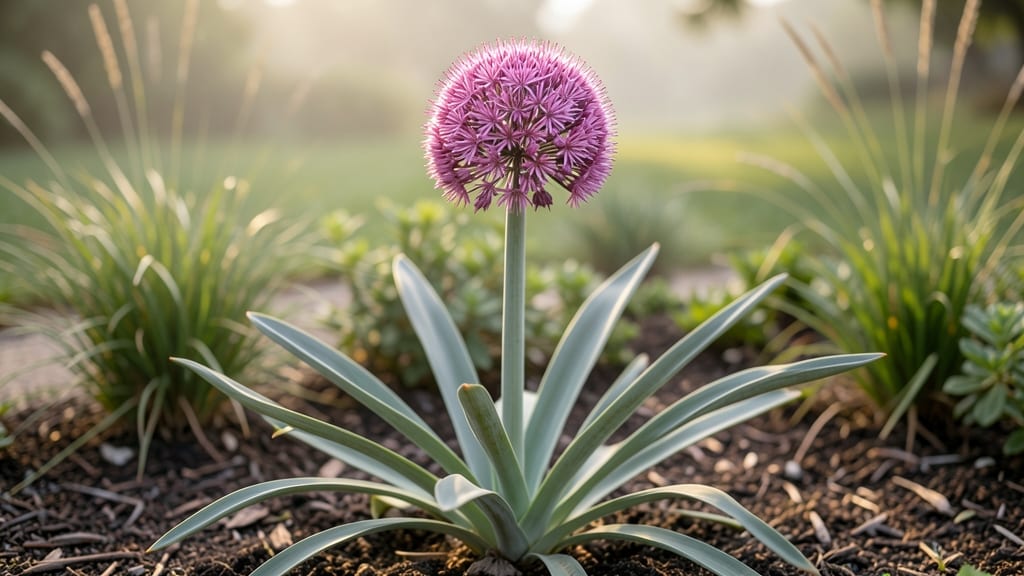
Allium flowers bloom in late spring to early summer 🌷, but the exact timing depends on your variety, climate, and planting strategy.
Picture this: you’ve spent months planning your garden, and then—just as the alliums are about to pop—your neighbor’s already got theirs in full bloom. Don’t let that happen to you!
The key to stunning allium displays lies in knowing when to plant and how your local climate shifts those bloom windows.
Some varieties, like Allium giganteum, burst into 3-foot-tall globes by May, while others, such as Allium sphaerocephalon, wait until June. In colder zones like 6a, early spring plantings might push blooms back by weeks, while warmer areas see them arrive sooner.
I’ll break down the exact months for popular cultivars and how to adjust for your growing conditions.
Ready to time your alliums perfectly? You’ll learn how to nudge bloom periods forward or back, which varieties play well together, and the simple care tricks that keep those dramatic flowers lasting longer. Let’s get those globe-shaped blooms on your schedule.
Allium flower bloom time by variety: exact months for popular cultivars
Allium flowers are like nature's fireworks—dramatic, globe-shaped blooms that transform gardens from ordinary to extraordinary. But timing is everything! Planting too early or late can mean missing their stunning displays entirely. The good news?
Allium varieties bloom at different times, giving you early, mid, and late-season options to extend your garden's color palette. Let's dive into exact bloom schedules for 12+ popular cultivars, so you can plan your garden like a pro.
Most alliums thrive in USDA zones 3-9, but bloom times shift based on variety and climate. For example, Allium giganteum (giant allium) might bloom in May-June in cooler zones but stretch to June-July in warmer areas.
Meanwhile, Allium moly (lambs' ears allium) often blooms earlier, from March-April, making it a perfect early-season showstopper. Understanding these differences helps you create a sequential bloom schedule for year-round interest.
Pro Tip: Alliums are perennial bulbs, meaning they return year after year. Once established, they’ll bloom reliably if given the right conditions—full sun, well-draining soil, and minimal fuss. Now, let’s break down the exact bloom times for your favorite varieties in an easy-to-reference table.
Variety
Common Name
Bloom Time (USDA Zone 6)
Height
Color
Notes
Allium giganteum
Giant Allium
May-June
2-3 ft
Purple
Late bloomer; dramatic focal point
Allium sphaerocephalon
Round-Headed Allium
June-July
1-2 ft
Pink
Fragrant; attracts pollinators
Allium moly
Lambs' Ears Allium
March-April
8-12 in
Yellow
Early bloomer; great for borders
Allium christophii
Christoph's Allium
April-May
1-2 ft
Purple
Drought-tolerant; long stems
Allium roseum
Rose-Colored Allium
May-June
12-18 in
Pink
Soft pink blooms; great for cut flowers
Allium schubertii
Schubert's Allium
May-June
1-2 ft
Purple
Star-shaped flowers; deer-resistant
Allium karataviense
Karatav Allium
June-July
How climate zones affect Allium bloom time: USDA zone adjustments
Allium flowers thrive in diverse climates, but their bloom timing shifts dramatically across USDA zones 3-10. In colder zones (3-5), hardy varieties like Allium giganteum bloom as early as late April, while heat-sensitive types in zones 9-10 may wait until June or July.
Understanding these patterns lets you time plantings for peak seasonal displays.
The key difference lies in chilling requirements. Most alliums need 60-90 days below 40°F to trigger blooms. In zone 3, this happens naturally by March, but zone 9 gardeners may need to pre-chill bulbs in the fridge for 8-10 weeks before planting.
This simple trick can shift blooms by 3-4 weeks in warmer climates.
USDA Zone
Cold-Hardy Varieties
Heat-Sensitive Varieties
Typical Bloom Window
Adjustment Tip
3-5
Allium cernuum, A. cristophii
None (avoid)
Late April - Early June
Plant bulbs in fall for earliest blooms
6-7
Allium giganteum, A. moly
Allium sphaerocephalon
Early May - Mid June
Use black fabric mulch to warm soil 1-2 weeks earlier
8-9
Allium karataviense
Allium roseum, A. schubertii
Mid May - July
Pre-chill bulbs for 8 weeks before planting
10
Allium senescens
Allium christophii (limited)
June - August
Plant in partial shade to delay heat stress
Microclimates offer another powerful tool. A south-facing wall can advance blooms by 2 weeks in zone 5 by trapping heat, while elevated beds in zone 9 prevent soil overheating, preserving moisture for Allium schubertii.
Even urban gardeners can use container growing—move pots between shaded and sunny spots to fine-tune timing.
For late-season blooms, try fall planting in zones 6-8. Varieties like Allium sphaerocephalon often bloom in October-November when planted in late summer, creating a winter interest display. Just ensure bulbs have 6 weeks of root growth before first frost.
Pro tip: Track your local last frost date and count backward. Most alliums need 90-120 days from planting to bloom. In zone 4, this means planting in September for spring blooms, while zone 10 gardeners should aim for January plantings to avoid summer heat.
Experiment with successive plantings—space out bulbs every 3 weeks to stretch your allium season from May to July. This technique works especially well for mixed allium varieties in containers or garden beds, ensuring continuous color.