
Blooming
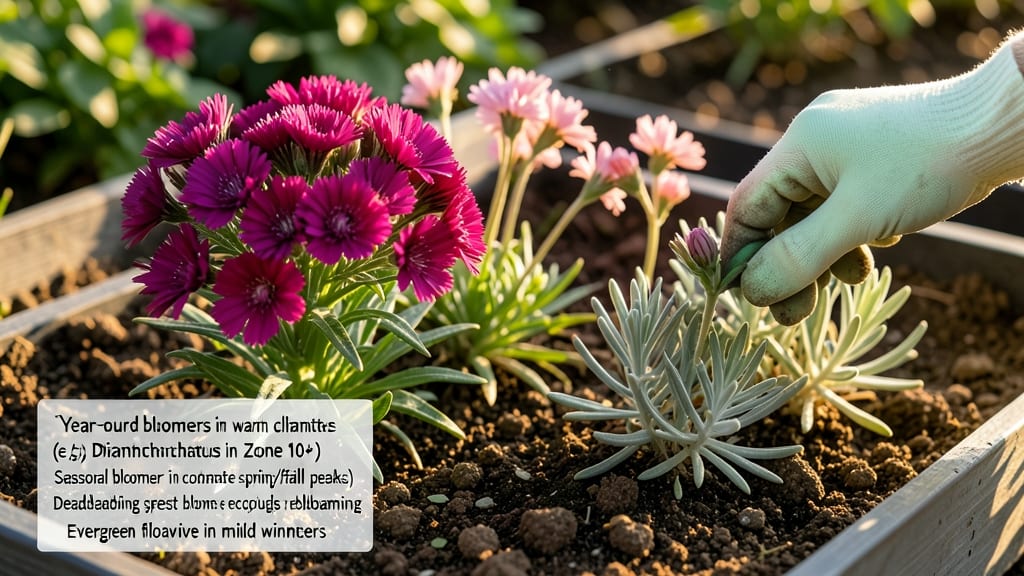
Dianthus don't bloom all year—they naturally produce flowers primarily in spring and summer, with some varieties showing limited fall reblooming. Strategic care can extend their flowering season but won't create year-round blooms.
Dianthus are seasonal bloomers by nature, with their flowering cycles triggered by daylight length and temperature shifts. 🌸 Many gardeners assume these cheerful flowers will keep blooming continuously, but their biology is actually quite precise—most varieties enter a natural dormancy period during winter months.
The good news? With consistent deadheading (removing spent blooms) and proper fertilization, you can encourage some varieties to produce a second, smaller flush of flowers in early fall before winter sets in.
What makes this even more interesting is how different dianthus types respond. For example, sweet william dianthus often blooms later in the season compared to carnation varieties, which tend to be more summer-focused. Understanding your specific variety's tendencies is key to maximizing your blooming window.
💡 In This Article
- Understanding Dianthus Blooming Seasons and Climate Needs
- Pro Tips to Prolong Dianthus Flowering Beyond Summer
Understanding dianthus blooming seasons and climate needs
Dianthus flowering cycles are primarily governed by photoperiodism—their response to daylight length. Most varieties are short-day plants, meaning they bloom when daylight hours shorten in late summer and fall, or long-day plants that flower when days lengthen in spring.
This explains why you typically see peak blooms in May through July in temperate climates, as the increasing daylight triggers their natural flowering mechanism. The sweet william dianthus variety, for instance, often blooms slightly later than carnations because its optimal daylight threshold sits around 14-16 hours of daylight.
The temperature plays an equally critical role. Dianthus require cool nights (50-60°F) and warm days (70-75°F) to initiate and maintain blooming. When nighttime temperatures exceed 75°F or remain below 50°F for extended periods, the plant's energy shifts toward survival rather than flower production.
This is why dianthus in hot climates often show reduced blooming—their metabolic processes prioritize heat tolerance over reproductive efforts. In contrast, carnation varieties tend to handle slightly warmer conditions better, making them more reliable in southern gardens.
Another key factor is the plant's vernalization requirement—a cold period that helps reset the flowering cycle. Many perennial dianthus need 4-6 weeks of temperatures below 50°F during winter to break dormancy and prepare for spring blooming. Without this cold exposure, they may produce fewer flowers or bloom erratically.
This biological need explains why dianthus grown in frost-free climates often have less predictable flowering patterns. 🌡️ Understanding these climate triggers helps explain why year-round blooming is biologically impossible for most varieties.
Let's examine how different varieties respond to these conditions. Sweet william dianthus typically blooms in late spring to early summer, with some reblooming in fall if given proper care. Carnation varieties, on the other hand, often produce their main flush in mid-summer and may show minimal fall blooming.
The China pink dianthus is an exception, sometimes producing scattered blooms throughout warmer months, but even these varieties show clear seasonal peaks. These differences stem from their ancestral adaptations to specific climates.
Soil conditions also interact with these seasonal patterns. Dianthus prefer well-draining, slightly alkaline soil (pH 6.0-7.0) with moderate fertility. Poor drainage or overly rich soil can lead to leafy growth at the expense of flowers, as the plant focuses energy on vegetative growth rather than reproductive structures.
This is why many gardeners report fewer blooms in spring after a particularly wet winter—the plant's energy was diverted to root and foliage development rather than flower buds.
What most gardeners don't realize is how light intensity affects blooming quality. While dianthus thrive in full sun, direct afternoon sun in hot climates (above 90°F) can cause flower buds to abort before opening.
This explains why dianthus in southern gardens often show more blooms in spring and fall when temperatures are milder, while summer blooming may be sparse. The solution? Providing afternoon shade during peak heat can sometimes extend the blooming window by preventing bud drop.