
Blooming
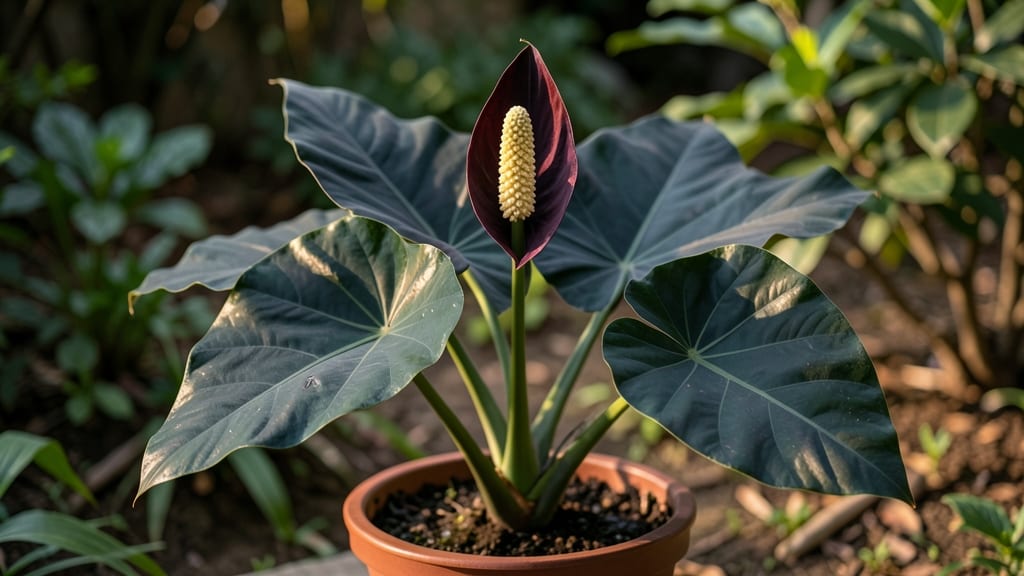
Elephant ears (Colocasia and Alocasia) bloom flowers only under specific conditions: mature plants in ideal climates may produce tall, dramatic spathes, but many garden varieties prioritize foliage growth over flowering. Reblooming is rare unless the plant is well-established and undisturbed.
Elephant ears focus their energy on growing those stunning, heart-shaped leaves rather than producing flowers—it's all about their survival strategy. 🌿 In tropical climates where these plants thrive naturally, they'll sometimes reward gardeners with dramatic spathes (those showy flower bracts) after 2-3 years of growth.
However, most common varieties grown in temperate zones never bloom because they're bred primarily for their foliage. Even when they do flower, it's usually just once per season, and only after reaching full maturity.
What's fascinating is how these plants decide where to put their energy. When conditions are perfect—warmth, consistent moisture, and rich soil—they'll allocate some resources to flowering. But if they're stressed (like during transplanting or drought), they'll conserve energy for leaf production instead.
This is why you might see one plant in your garden blooming while another identical one nearby never does.
💡 In This Article
- Why Elephant Ears Skip Flowering: Plant Biology and Growth Cycles
- Encouraging Elephant Ear Blooms: Pro Tips for Gardeners
Why elephant ears skip flowering: plant biology and growth cycles
Elephant ears prioritize leaf production because their survival depends on rapid foliage growth to maximize photosynthesis in their native tropical environments. These plants allocate up to 70-80% of their energy to developing large, broad leaves that can reach 2-3 feet wide—far more than what flowering would require.
The dramatic spathes (flower bracts) you sometimes see actually serve a secondary purpose: they attract pollinators to facilitate seed production, but this is a lower priority when resources are limited.
The decision to flower hinges on two critical factors: maturity and environmental stability. Most varieties won't produce flowers until they've established a robust root system, typically after 2-3 growing seasons.
Even then, tropical species like Colocasia esculenta (taro) may bloom only in their native warm climates (75-85°F consistently), while temperate varieties often never flower.
Stressors like transplant shock or drought trigger a survival response where the plant redirects all energy to leaf growth to recover, halting any potential blooming cycle.
There's also a genetic divide between Colocasia and Alocasia species. Colocasia (true elephant ears) are more likely to flower in ideal conditions, producing 1-2 foot tall spathes that resemble calla lilies, while Alocasia (like the polly variety) rarely bloom at all—their focus is purely on foliage.
This difference stems from their evolutionary paths: Alocasia species prioritized leaf diversity over reproductive structures in their competitive jungle environments.
The flowering process itself is energy-intensive. When an elephant ear does produce a spathe, it's often a one-time seasonal event that can temporarily weaken the plant. The spathe itself isn't the flower—it's a modified leaf that protects the actual inflorescence (the tiny flowers inside).
After blooming, the plant may produce a corm or rhizome with stored energy for next year's growth, but reblooming requires perfect conditions year after year.
What most gardeners don't realize is how sensitive these plants are to day length. In their native tropics, they experience 12-hour daylight cycles year-round, but in temperate zones with shorter winter days, their internal clocks may never trigger the hormonal signals needed for flowering.
This photoperiod sensitivity explains why you might see blooms in southern climates but never in northern gardens, even with identical care.
Consider this: A 5-year-old elephant ear in Florida might produce 3-4 spathes in a single season, while an identical plant in New England would focus entirely on leaf growth. The difference isn't just climate—it's the plant's biological response to its perceived survival prospects. 🌱