
Blooming
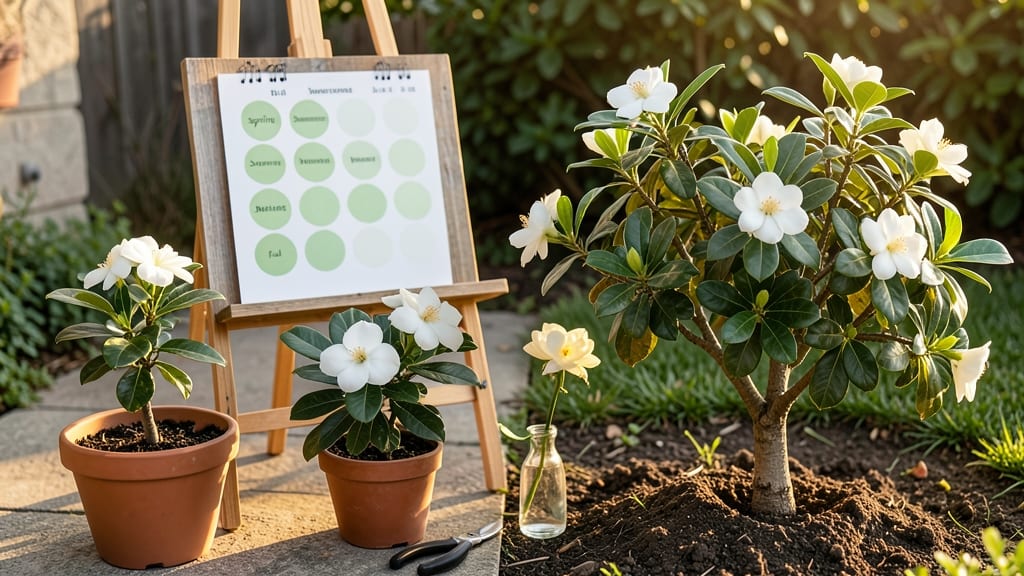
Gardenias don't bloom all year naturally, as their flowering patterns follow seasonal cues like temperature changes, daylight length, and environmental conditions. Most varieties experience peak blooms in spring and summer, with reduced flowering in cooler months unless grown in frost-free tropical climates.
Gardenias are sensitive plants that respond to environmental signals—think of them as nature's seasonal performers. 🌸 In temperate climates, cooler winter temperatures trigger a natural dormancy period where blooming slows or stops completely.
Even in warm regions, gardenias often take breaks between flowering cycles unless you create ideal growing conditions year-round. I've found that maintaining consistent moisture, proper light exposure, and balanced fertilization can help coax extra blooms, but you'll still see natural fluctuations tied to seasonal changes.
What's fascinating is how these plants use daylight as a cue: shorter winter days signal reduced blooming, while longer summer days encourage flowering. This biological rhythm explains why gardeners in cooler zones rarely see continuous blooms—unless they bring plants indoors where they can control light exposure more precisely.
💡 In This Article
- Seasonal Factors That Trigger Gardenia Blooms
- How to Extend Gardenia Blooming with Care Tips
Seasonal factors that trigger Gardenia blooms
Gardenias rely on photoperiodism—the plant's response to daylight length—as their primary blooming trigger. In their native tropical and subtropical regions, these plants experience 12-14 hours of daylight during peak growing seasons, which stimulates flower bud formation.
When daylight drops below 10 hours (common in winter), gardenias receive a signal to conserve energy, often resulting in fewer blooms or complete dormancy. This is why gardeners in USDA Zones 8-10 see continuous blooming, while those in cooler zones (Zones 7 and below) experience seasonal fluctuations.
The temperature plays an equally critical role, with optimal blooming occurring between 65-75°F. Below 50°F, flower buds often fail to open or drop entirely due to metabolic slowdown.
Gardenias native to tropical climates, like Gardenia jasminoides, have evolved to thrive in consistent warmth, which explains why they bloom year-round in Hawaii or Florida but go dormant in New England winters.
The plant's internal clock also responds to temperature shifts—cool nights followed by warm days (70-80°F) create ideal conditions for bud development.
Humidity levels create another layer of control, as gardenias require 50-70% relative humidity to prevent bud drop. Dry air causes buds to shrivel and fall before opening, a common issue in indoor settings with forced-air heating.
This is why gardeners in arid climates often use humidifiers or misting systems to extend blooming seasons. The combination of proper humidity, light exposure, and temperature creates what botanists call a "florigen trigger"—a hormonal signal that initiates flowering, much like how daylight triggers melatonin production in humans.
What most gardeners overlook is how soil temperature affects root activity. Gardenias develop shallow root systems that thrive in 60-70°F soil. When soil temperatures drop below 55°F, root growth slows, reducing nutrient uptake and flowering capacity.
This explains why gardenias planted in containers (which cool faster) often bloom less reliably than those in ground beds. Mulching with 3-4 inches of organic matter helps maintain consistent soil temperatures, creating a more stable environment for continuous blooming.
Daylight spectrum also matters—gardenias prefer full-spectrum light with a balance of red and blue wavelengths. Artificial grow lights with a 12,000-15,000 Kelvin color temperature can supplement natural light in indoor settings, helping maintain blooming cycles year-round.
Without this spectrum, plants may produce foliage but fail to initiate flower buds, a common problem in winter when natural light is limited. 🌿
Regional variations create fascinating exceptions to these rules. In tropical climates, gardenias may bloom continuously if given consistent care, while temperate varieties like Gardenia augusta have adapted to seasonal changes with 6-8 week dormancy periods.
Understanding these natural rhythms helps gardeners set realistic expectations—while you can extend blooming seasons with proper care, gardenias will always follow their biological clocks to some degree.