
Blooming
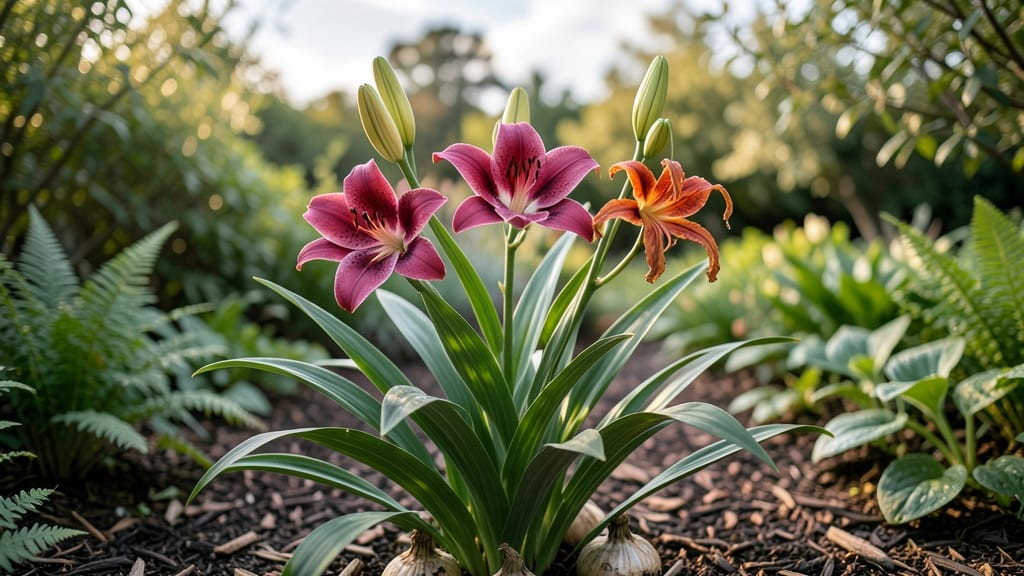
Lilies bloom again each year when you provide them with cold hardiness, regular deadheading of spent blooms, and ongoing soil nutrition. Nearly all varieties will regrow from their bulbs with just basic seasonal care.
Lilies store energy in their bulbs during the growing season, which they use to fuel next year's blooms. 🌸 The key to repeat performance lies in how you prepare them for winter dormancy—most varieties thrive in zones 3-9, where cold temperatures trigger bulb dormancy and energy replenishment.
I've found that removing faded flowers (deadheading) prevents seed production, redirecting the plant's energy back into bulb storage instead.
Proper soil nutrition is equally critical—adding compost or a balanced bulb fertilizer in early spring gives lilies the nutrients they need to recover from winter. Mulching with straw or leaves helps insulate bulbs during cold months, while avoiding overwatering prevents rot.
With these simple steps, your lilies can reliably return with vibrant blooms for years.
💡 In This Article
- Why Lilies Return to Bloom Year After Year
- Deadheading and Care Tips for Repeat Lily Blooms
Why lilies return to bloom year after year
Lilies rely on a natural dormancy cycle where their bulbs act as living batteries. During summer growth, they store carbohydrates, proteins, and nutrients in the bulb's scales—like a plant version of hibernation food.
This stored energy fuels next year's shoots and blooms. 🌱 Cold temperatures (below 40°F) trigger this dormancy, causing the plant to pause growth and redirect resources inward. Without this cold period, lilies may produce weak stems or no flowers at all.
The hardiness zones matter because they determine how well lilies tolerate winter. Most varieties thrive in zones 3-9, where they naturally experience the required cold stratification. For example, Asiatic lilies handle zone 4 winters, while Oriental lilies prefer milder zone 7 conditions.
The colder the winter, the deeper the bulb's dormancy, which actually strengthens the bulb's ability to rebound in spring.
What's fascinating is how lilies prioritize energy storage over flowering when conditions aren't ideal. If you skip deadheading, the plant expends energy producing seeds instead of storing nutrients.
This is why removing spent blooms by cutting stems 2-3 inches above the bulb redirects all that energy back into the bulb's food reserves. 💡 Think of it like saving money in a bank account—every dollar (or nutrient) not spent on seeds goes toward next year's blooms.
Light exposure also plays a crucial role. Lilies need 6-8 hours of sunlight daily to photosynthesize effectively, building up the energy reserves in their bulbs. Insufficient light means weaker bulbs and smaller blooms.
I've noticed that lilies in partial shade often produce fewer flowers because they can't generate enough stored energy. The trade-off? They'll still grow foliage, but the blooms may be sparse or nonexistent.
One common misconception is that lilies need to be dug up and stored indoors over winter. In reality, most varieties can stay in the ground if properly mulched with 3-4 inches of organic matter like straw or leaves.
This insulation mimics natural snow cover, protecting bulbs from extreme temperature swings that can cause damage. The mulch also prevents soil moisture from freezing, which could lead to bulb rot.
For gardeners in warmer climates (zones 9-10), lilies may not get the cold dormancy they need. In these areas, you can simulate winter conditions by placing bulbs in a refrigerator for 8-10 weeks at 35-40°F before replanting in spring.
This trick works because it mimics the natural cold stratification process that triggers regrowth. 🌿