
Blooming
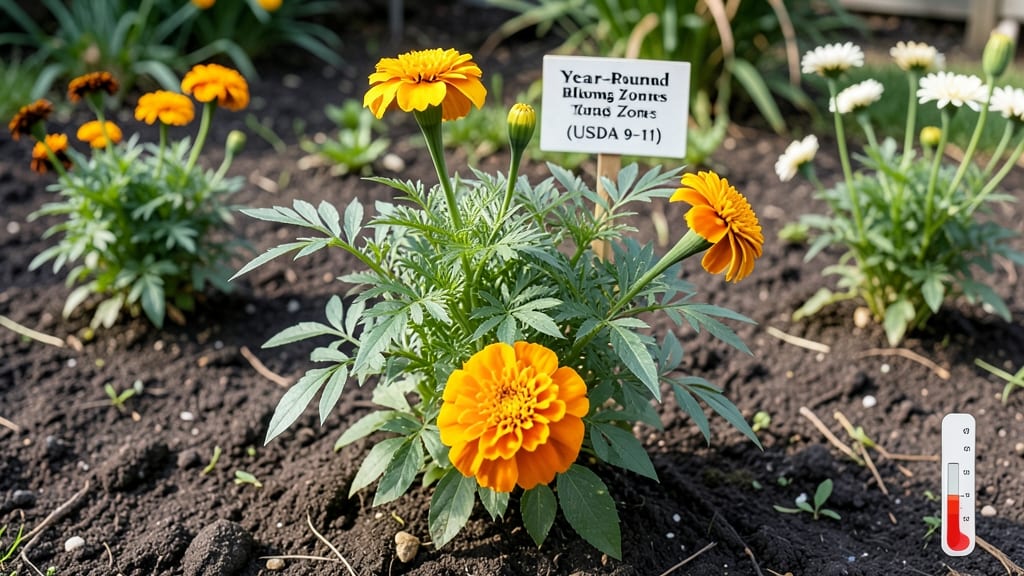
Marigolds do not bloom all year naturally—they thrive seasonally in warm climates (spring to fall) but may go dormant or stop flowering in cold weather. Deadheading spent blooms and adjusting care (light, water, soil) can extend their blooming period in suitable regions.
Marigolds are seasonal bloomers, with their flowering cycles tightly linked to temperature and daylight hours. 🌸 In cooler regions (USDA zones 3-7), they typically pause blooming during winter months, though some varieties like French marigolds may produce sparse flowers in mild winters.
The key to extending their season lies in understanding their natural dormancy triggers—like shorter days and dropping temperatures—which signal them to conserve energy. Even in frost-free zones, overwatering or poor soil nutrition can stress plants, causing them to skip flowering cycles entirely.
What sets marigolds apart is their adaptability—with proper care, you can coax them into blooming up to 10 months in ideal conditions. Container gardening helps, as potted plants can be moved to sunniest spots or brought indoors during cold snaps. The secret weapon?
Regular deadheading (removing spent blooms) redirects energy from seed production back to flower growth, while balanced fertilizers rich in phosphorus boost bloom production. For tropical climates, marigolds may flower year-round, but even there, they often take a brief rest during monsoon seasons when humidity spikes.
💡 In This Article
- Marigold Blooming Seasons by Climate Zone
- Prolonging Marigold Blooms: Pruning and Seasonal Care Tips
Marigold blooming seasons by climate zone
Marigolds are photoperiod-sensitive plants, meaning their blooming cycles are triggered by daylight length and temperature shifts. In USDA zones 8-11 (tropical/subtropical), they often bloom nearly year-round, with only brief pauses during monsoon seasons when humidity exceeds 75% and temperatures hover around 85°F.
The key difference from cooler zones is that tropical marigolds don't experience true dormancy—they simply reduce flowering when environmental stress spikes.
For USDA zones 3-7, the story changes dramatically. Marigolds enter dormancy when daytime temperatures drop below 50°F and nighttime temps fall under 40°F. This triggers a physiological response where the plant redirects energy from flower production to root and stem hardening.
Even in mild winters (zones 7-9), blooming slows significantly when daylight drops below 10 hours—the critical threshold for marigold flowering.
What's fascinating is how marigolds in zone 10 (like coastal California) can bloom 9-10 months with proper care, while identical varieties in zone 6 might only flower 4-5 months.
The difference comes down to heat accumulation—marigolds need at least 1,200 growing degree days (above 50°F) to trigger continuous blooming. In cooler zones, this threshold isn't met during winter months.
Even in tropical zones, marigolds show seasonal preferences. For example, Mexican marigolds (Tagetes erecta) tend to bloom more heavily in dry seasons when temperatures are 75-85°F and rainfall is minimal. The high humidity of wet seasons often causes bud drop, where flowers abort before opening—a phenomenon called "flower blast."
This explains why some gardeners report "year-round" blooming when they're actually seeing staggered seasonal cycles.
Container-grown marigolds offer the most flexibility for year-round blooming in cooler climates. By moving pots to south-facing windows or under grow lights (12+ hours/day) during winter, you can maintain blooming for 8-9 months.
The trade-off? Container plants require 20-30% more frequent watering and weekly fertilization to compensate for root restriction and nutrient leaching.
One common misconception is that marigolds "stop blooming" in winter due to lack of sunlight. In reality, the primary factor is temperature—even with full sun, marigolds won't bloom when nights stay below 55°F.
This is why greenhouse-grown marigolds in zone 5 can bloom year-round: the controlled 60-65°F nighttime temps maintain their metabolic activity.