
Blooming
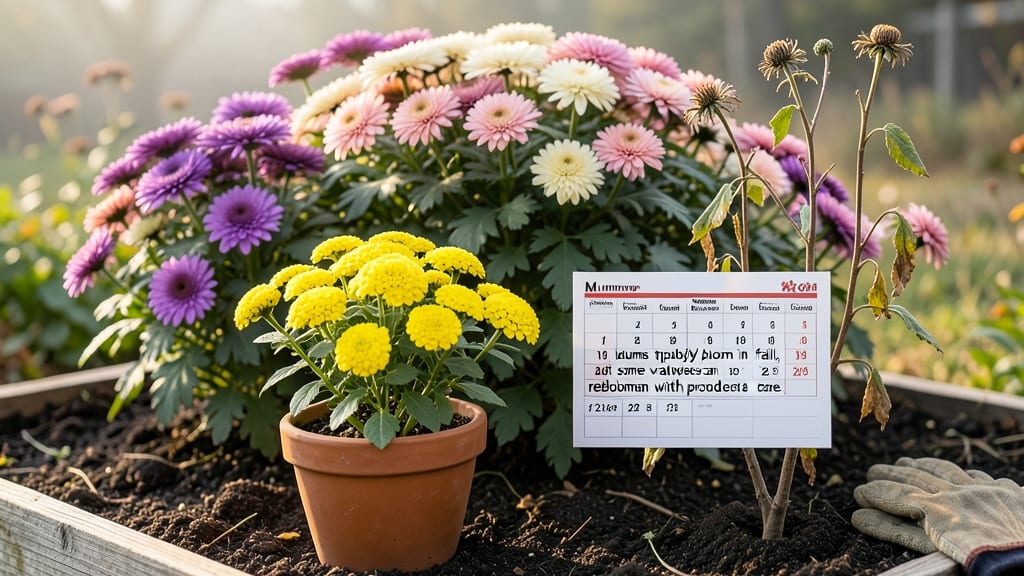
Mums bloom all year only if you trick them into thinking it's fall. 🌸 These hardy plants follow nature's schedule—cool weather and shorter days trigger their famous purple spikes—but most gardeners miss the secret to making them rebloom when they want.
The truth is, mums are seasonal superstars, not year-round performers. Most varieties bloom just once in fall, then go dormant. But heat-tolerant reblooming mums (like 'Dynasity' or 'Bright Lights') can push out flowers again if you deadhead spent blooms and feed them regularly.
Even then, they need cooler nights to really shine.
For true year-round color, choose perennial mums and give them bright light, consistent water, and a fall fertilizer boost. They'll reward you with bursts of blooms in spring too—though never as dramatically as their autumn show.
The key is balancing their natural instincts with just enough care to keep them happy.
Pro tip: Plant them where they get morning sun and afternoon shade—they'll last longer and bloom more reliably. And if you're in a warm climate, mulch heavily in summer to protect their roots from heat stress. That's how you extend their season without forcing them.
📚 In This Guide
- What you need
- Instructions
- Tips and common mistakes
- Wrapping up and next steps
What you need
- ● Heat-tolerant mum varieties: Choose reblooming types like ‘Autumn Joy,’ ‘Beauty of Sulphur,’ or ‘Purple Dome’ (3–5 plants per section).
- ● Slow-release fertilizer: 10-10-10 or 14-14-14 (1 lb per 10 sq ft of garden bed).
- ● Organic mulch: Straw or shredded bark (2–3 inches, spread evenly).
- ● Pruning shears: Sharp, sterilized (for deadheading and shaping).
- ● Watering can or hose with nozzle: For deep, even hydration (1–2 gallons per plant, 2x weekly).
- ○ Thermometer (optional but helpful): To track soil temps (aim for 60–75°F for reblooming).
- ● Epsom salt: 1 tbsp dissolved in 1 gallon of water (foliar spray for magnesium boost).
- ● Garden gloves: To protect hands during pruning.
- ● Reflective mulch or row covers: For extending warmth in cooler climates.
- ● Bloom-boosting sprays: Seaweed extract or fish emulsion (follow label rates).
How to encourage late-season reblooming in purple mums
These hardy perennials can bloom again—here’s how to trigger their second showstopping flush.
🌿 Step 1: Understand the Heat Trigger
Mums bloom when days shorten and temperatures dip after summer’s heat. For a late-season rebloom, you’ll need to mimic these conditions. Start by watching your local forecast—once daytime highs drop to 75°F or below for at least a week, your mums will naturally begin their second bloom cycle. Purple varieties often respond more dramatically to temperature shifts than other colors.
If your summer ran hotter than usual, don’t stress. Mums are tough—they’ll wait for the right cues. Just keep them well-watered and deadhead any spent blooms now to redirect energy toward future flowers. I’ve seen mums hold off blooming until October if summer lingered, but they always come through.
☀️ Step 2: Adjust Light and Water for Stress-Free Growth
Reduce afternoon sun exposure by 20-30% starting in early September. Move pots to partial shade or prune nearby trees to filter light. This gradual shift prevents heat shock while still allowing photosynthesis. Your goal is to create a "cool-down" effect that signals blooming time.
Water deeply but less frequently—aim for 1 inch per week instead of daily. Let the top 2 inches of soil dry out between waterings. Overwatering now can delay blooming by keeping roots too cool. You’ll know you’re on track when new leaf growth appears along the stems, signaling the plant is preparing for its second bloom.
✂️ Step 3: Prune Strategically to Encourage New Growth
Cut back any leggy stems by one-third in early September, but avoid heavy pruning after mid-month. This removes old growth while leaving enough foliage to support photosynthesis. Use clean, sharp shears and make cuts just above a leaf node or bud. I like to prune on a cloudy day to reduce stress on the plant.
Remove any remaining spent blooms immediately after pruning. This prevents the plant from wasting energy on seed production. Watch for new shoots emerging from the base—these are your rebloom indicators. If you see purple buds forming by mid-October, you’ve timed it right.
🌱 Step 4: Feed for a Strong Second Bloom
Apply a low-nitrogen, high-phosphorus fertilizer (like 5-10-10) in early September. Phosphorus encourages root and flower development, which is exactly what you want for a second bloom. Mix it into the top 2 inches of soil around the base, then water thoroughly to help it absorb.
Avoid nitrogen-heavy fertilizers now—they promote leafy growth at the expense of flowers. You’ll know the feeding worked when you see fresh, vibrant leaves and new flower buds forming within 2-3 weeks. Purple mums often produce smaller but equally stunning blooms in their second flush, so don’t expect identical size to the first round.
⏰ Step 5: Protect from Early Frost
Once buds form, monitor nighttime temperatures. If frost threatens before blooms open, cover plants with a lightweight frost cloth at dusk. Secure the edges with rocks or stakes to prevent wind damage. Purple mums are hardy but can’t withstand freezing while in bloom.
Remove the cloth during the day to allow sunlight. You’ll see the buds open fully within 3-5 days of protection. If frost hits after blooms open, the flowers may wilt but the plant will rebound. I’ve had mums bloom beautifully in November with this method—just be patient and watchful.
Tips & tricks for late-season purple mum reblooming
These little tricks will help you coax that second burst of purple beauty from your mums—even when the calendar says it's time to quit.
Temperature Matters: That 75°F threshold isn't just a number—it's your cue to start preparing. I've noticed purple mums respond best when temperatures drop gradually rather than suddenly. If your area has hot September days lingering, create shade with sheer curtains or temporary shade cloths during peak afternoon sun. This mimics the natural cooling trend that triggers blooming.
Pruning Precision: When you're cutting back those leggy stems in Step 3, aim for clean cuts just above leaf nodes. I've learned the hard way that jagged cuts can invite disease, and mums are particularly sensitive to fungal issues when stressed. Use sterilized shears and make the cuts at a 45-degree angle if possible—this helps water run off rather than pool on the stem. The goal is to remove old growth while preserving the plant's energy reserves for new blooms.
Fertilizer Timing: That early September feeding window is critical. I've seen mums miss their second bloom entirely when fertilized too late. The 2-3 weeks mentioned for bud formation starts from your application date, not from when you first notice new growth. If you're in a cooler climate, you might need to apply fertilizer slightly earlier—around late August—to give the roots time to absorb nutrients before the cooler weather sets in.
Frost Protection: Don't wait until the last minute to cover your mums! I've had buds open beautifully only to get frosted because I delayed putting on the frost cloth. Start monitoring nighttime temperatures when your local forecast predicts dips below 32°F. Purple mums can handle brief cold snaps, but prolonged freezing will damage the delicate petals. A lightweight frost cloth is your best friend here—it allows sunlight while protecting against frost damage.
Pro Tips for Do Mums Bloom All Year
- These little tricks will help you coax that second burst of purple beauty from your mums—even when the calendar says it's time to quit.
- Temperature Matters: That 75°F threshold isn't just a number—it's your cue to start preparing.
- Pruning Precision: When you're cutting back those leggy stems in Step 3, aim for clean cuts just above leaf nodes.
Frequently asked questions
about keeping mums blooming year-round—because every gardener deserves a showstopper purple display!Can I make my mums rebloom in winter?
Traditional mums typically bloom in fall, but with heat-triggered varieties (like 'Autumn Joy' or 'Purple Dome'), you can coax reblooms in late summer/early fall. Avoid winter blooms—mums need 10-14 hours of daylight and cooler nights (50–60°F) to set buds. Use row covers or grow lights if needed!
How long does it take for mums to rebloom?
Reblooming usually takes 6–8 weeks after pinching back dead blooms (late spring/early summer). Start with healthy plants, fertilize with balanced 10-10-10 every 2 weeks, and keep soil moist. Patience pays off! Watch for new buds forming at the base of stems.
What if my mums don’t rebloom at all?
Check these fixes:
- Overcrowding: Thin plants to 12–18" apart for airflow.
- Poor soil: Amend with compost and ensure drainage.
- Wrong variety: Some mums (like 'Snowball') are one-and-done. Opt for reblooming hybrids.
- Stress: Avoid transplant shock—water deeply after pinching.
Do mums need full sun to rebloom?
Yes! 6+ hours of direct sun daily is critical for bud formation. If your mums are in shade, move them or prune nearby trees. Partial shade (morning sun) may delay blooms but won’t prevent them entirely. Just expect smaller, fewer flowers.
Can I grow mums in containers for year-round blooms?
Container-grown mums thrive with:
- Well-draining mix (add perlite).
- Larger pots (12"+ diameter) for root space.
- Winter protection: Move pots to a sheltered spot or use frost cloth.
- Fertilizer boost: Use half-strength blooming formula monthly.
Pro tip: Deadhead spent blooms and pinch back stems in late summer to encourage a second flush!
Wrapping up and next steps
So, do mums really bloom all year? The answer is a yes—with the right care! 🌸 By understanding heat-triggered rebloom secrets, proper pruning, and seasonal adjustments, you can enjoy those vibrant purple spikes well beyond their typical fall display.
The key is patience, consistency, and a little extra TLC—your garden will thank you!
Ready to extend your mums' blooming magic? Start with one plant this season—test your new techniques, observe what works, and soon, your garden will be bursting with color year-round. Happy gardening!