
Blooming
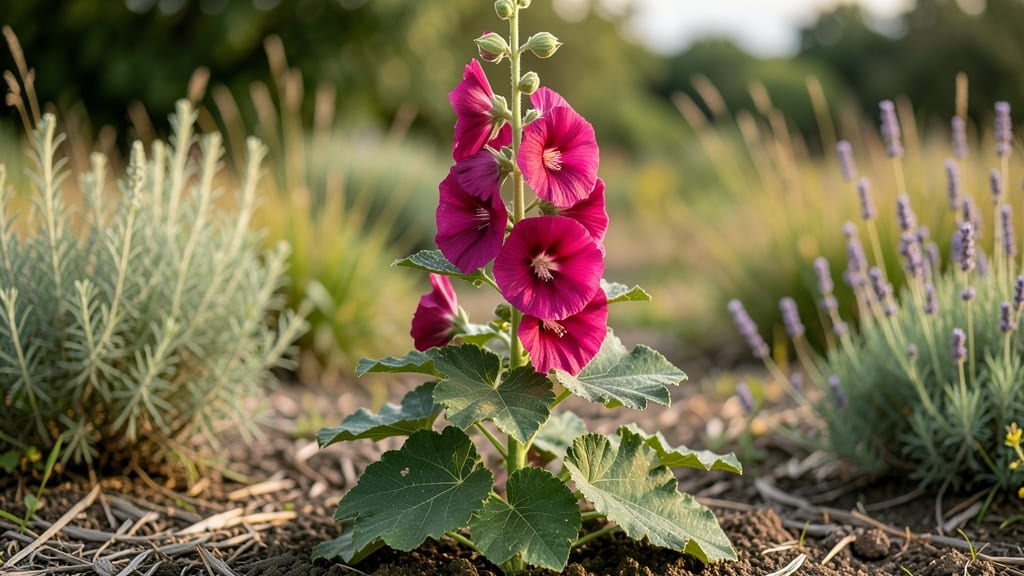
When do hollyhocks bloom: perennial vs biennial bloom time explained
Understanding hollyhock bloom time starts with recognizing the key difference between biennial and perennial varieties. Biennials like 'Chater's Double' focus their energy on foliage growth in the first year, storing nutrients for a summer bloom in their second year.
Perennials, such as 'Black Prince', grow continuously and produce flowers annually, often peaking in mid-to-late summer.
Climate plays a major role in bloom timing. In cooler zones (USDA 3-6), biennial hollyhocks may bloom as early as June, while warmer climates (USDA 7-9) can delay blooming until July or August. Perennials adapt more flexibly but still need consistent conditions to thrive.
Key factors influencing bloom time include: - Planting season (spring vs fall) - Sunlight exposure (6+ hours daily) - Soil fertility (well-draining, nutrient-rich) - Watering consistency (deep, infrequent watering)
| Type | First Year | Second Year | Annual Bloom Window | Climate Impact |
|---|---|---|---|---|
| Biennial | Foliar growth only | Flowering stems (June-August) | Mid-summer peak | Cooler zones bloom earlier |
| Perennial | Moderate growth + flowers | Continuous flowering | June-September | Warmer zones extend season |
| Hybrid Varieties | Year-round growth | Extended blooms | May-October | Resilient to heat |
For biennial hollyhocks, the first year is all about establishing a strong root system. Plant seeds in early spring (March-April) for a summer bloom the following year. In Zone 5, this typically means flowers appear in July, while Zone 8 gardens may see blooms in August.
Perennial varieties like 'Helen Campbell' offer more flexibility. They can bloom as early as late spring if planted in fall, but most gardeners see peak flowering from July through September. The key is consistent care—deadheading spent blooms encourages continuous flowering through the season.
Regional differences matter. In the Pacific Northwest, biennials often bloom in late June due to cooler temperatures, while Southern gardens may delay blooming until mid-July because of slower initial growth. Perennials in arid climates (like Arizona) may require extra watering to maintain bloom time.
Soil quality directly impacts bloom timing. Hollyhocks thrive in well-draining, slightly alkaline soil (pH 6.5-7.5). Amend heavy clay with compost to prevent root rot, which can delay flowering. A balanced fertilizer (5-10-10) applied in early spring gives plants the nutrients they need for robust blooms.
Light exposure is non-negotiable. Hollyhocks need full sun (6+ hours daily) to produce their signature tall flower spikes. In shady conditions, blooms will be sparse and leggy. If your garden lacks full sun, consider dwarf varieties like 'Ladybird' for smaller spaces.
Deadheading—removing spent blooms—is the secret to prolonged hollyhock bloom time. For biennials, this ensures energy isn’t wasted on seed production. For perennials, it encourages new flower buds to form. I recommend deadheading every 2-3 weeks during peak bloom season to keep your hollyhocks looking their best.
If you're planning a cut flower garden, time your planting for a continuous bloom cycle. Start biennials in spring for summer cuts, and plant perennials in fall to extend your harvest into early autumn.
With the right care, hollyhocks can provide cut flowers for 6-8 weeks—a gardener’s dream!
How to extend hollyhock bloom time with proper care
If you love the romantic, cottage-garden charm of hollyhocks, you’ll want their blooms to last as long as possible. The secret lies in a few simple but powerful care techniques that keep your plants thriving.
Whether you’re growing biennial varieties (which bloom in their second year) or perennial types (which rebloom yearly), these methods work wonders. Let’s dive into the practical steps to maximize your hollyhock’s flowering season.
First, understand that hollyhocks reward consistent care with longer, more abundant blooms. Neglect even one key step—like proper deadheading or balanced fertilization—and you’ll see fewer flowers.
But with the right approach, your plants can keep producing stunning blooms from early summer through fall. Ready to transform your garden? Here’s how.
🌸 5 Key Steps to Extend Hollyhock Bloom Time
- 1. Deadhead Regularly Remove spent blooms weekly to prevent seed formation and redirect energy to new flowers.
- 2. Feed with Balanced Fertilizer Use a 5-10-10 NPK mix every 4-6 weeks during the growing season for vibrant blooms.
- 3. Water Deeply in Morning Provide 1-2 inches of water weekly, soaking roots to encourage deep growth and disease resistance.
- 4. Prune for Airflow Trim overcrowded stems in early spring to reduce fungal risks and improve sunlight penetration.
- 5. Mulch for Soil Health Apply 2-3 inches of mulch to retain moisture, regulate soil temperature, and deter weeds.
Let’s start with deadheading, the simplest yet most effective way to prolong blooms. Hollyhocks produce flowers along their stems, but once a bloom fades, the plant shifts energy to seed production instead of new flowers.
Grab your pruners or gloves and snip off spent blooms just above a leaf node. This trick works for both biennial and perennial types, though perennials benefit even more from consistent deadheading.
Next, fertilization plays a crucial role in extending bloom time. Hollyhocks thrive with a balanced fertilizer (like 5-10-10 NPK) applied every 4-6 weeks during the growing season. Avoid heavy nitrogen—it promotes foliage over flowers.
For biennials, focus on feeding in their second year to encourage robust blooms. Perennials, meanwhile, appreciate a light spring feed and summer top-ups to sustain flowering.
Don’t overlook watering techniques, which directly impact bloom duration. Hollyhocks need deep, consistent watering—about 1-2 inches per week. Water in the early morning to reduce fungal risks like powdery mildew, a common hollyhock nemesis.
During hot summers, increase frequency to every 5-7 days, but always let the soil dry slightly between waterings to prevent root rot.
Finally, seasonal pruning keeps your hollyhocks healthy and blooming longer. In early spring, trim back any dead or diseased stems to improve airflow. For biennials, avoid heavy pruning in their first year—let them focus on root and foliage growth.
Perennials, however, can handle a light pruning in late summer to encourage a second flush of blooms before winter.
With these hollyhock care tips, you’ll enjoy longer, more abundant blooms and a garden that stays dramatic from summer through fall. Happy gardening! 🌿