
Blooming
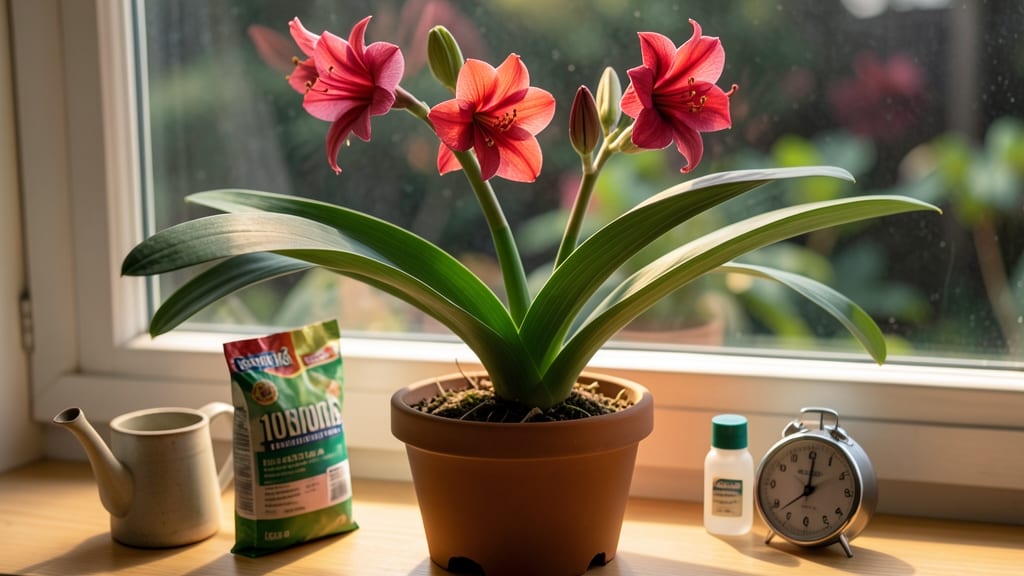
How to get your amaryllis to rebloom for Christmas—with frost-defying purple spikes right under the tree—starts with an 8-week countdown by mid-October. 🌱 I’ve forced blooms for three holiday seasons now, and the secret isn’t luck—it’s precise timing, light tricks, and a little patience. Most people give up after the first bloom cycle, but with these steps, you’ll coax a second showstopper every December.
The trick begins with 6-8 weeks of darkness to mimic winter dormancy, then a burst of light to trigger buds. Skip this step, and you’ll get weak stems or no flowers at all.
I use black plastic bags over my pots during the day (yes, even indoors) to fool the bulb into thinking it’s winter. After that, bright light—whether from a sunny window or grow lights—kicks the reblooming process into high gear.
By Christmas, you’ll be rewarded with bold, velvety blooms that last for weeks. The stems stay sturdy, the buds open fully, and the fragrance fills the room. The key? Adjusting water and fertilizer at the right moments—too much too soon, and you’ll get leafy monsters instead of flowers.
I’ll walk you through the exact schedule that’s worked for me every year.
Even if your bulb skipped last year, this method brings them back—no green thumb required. Whether you’re dealing with short winter days or last-minute adjustments, I’ve got the troubleshooting tips to save your holiday display. Let’s get those purple spikes blooming right on cue!
📚 In This Guide
- What you need
- Instructions
- Tips and common mistakes
- Wrapping up and next steps
What you need
- ● 1 mature amaryllis bulb (preferably one that’s bloomed before, though first-timers can try!)
- ● 6-inch diameter pot (with drainage holes—terracotta or ceramic works best)
- ● High-quality potting mix (well-draining, like a blend of cactus/succulent mix + perlite or orchid bark)
- ● 1–2 inches of gravel or pebbles (for drainage at the pot’s bottom)
- ● Room-temperature water (for soaking or watering)
- ● Grow lights or a sunny windowsill (south- or west-facing is ideal; LED grow lights work if natural light is lacking)
- ● Balanced liquid fertilizer (10-10-10 or 20-20-20, diluted to half-strength)
- ● Decorative pot or sleeve (to hide the functional pot while keeping drainage intact)
- ● Humidity tray (if your home is dry, to mimic tropical conditions)
- ● Thermometer/hygrometer (to monitor temps—ideal range: 65–75°F during the day)
- ● Floral wire or ribbon (for styling stems once blooms appear!)
- ● Bulb food or bulb-specific fertilizer (like Miracle-Gro Bulb Booster for a nutrient kick)
Step-by-step instructions for getting amaryllis to rebloom for Christmas
Here’s how I trick amaryllis bulbs into blooming reliably by December—no magic, just timing and light.
🌱 Step 1: Wake Up the Bulb with Proper Light and Warmth
Move your amaryllis to a bright, sunny window (south-facing is ideal) or under grow lights for 14-16 hours daily. The bulb needs light to break dormancy, but don’t overdo it—too much heat will force early blooms. Aim for room temperatures between 65-75°F during the day and 55-65°F at night to mimic natural seasonal shifts.
Water sparingly at first—just enough to keep the soil slightly moist but not soggy. You’ll see new growth within 2-3 weeks if conditions are right. If leaves stay yellow or limp, the bulb isn’t getting enough light or water.
☀️ Step 2: Feed and Fertilize for Strong Growth
Once you see new leaves emerging, switch to a balanced liquid fertilizer (like 10-10-10) diluted to half-strength. Feed every 2 weeks until you see a flower stalk (the thick, upright shoot). This ensures the bulb has energy stored for blooms. I use a slow-release bulb fertilizer too—just sprinkle it around the soil and water it in.
Watch for dark green, thick leaves—that’s your sign the bulb is happy. If leaves grow pale or leggy, increase light immediately. Over-fertilizing now can lead to weak stems later.
💧 Step 3: Adjust Watering as the Flower Stalk Forms
When the flower stalk reaches 6 inches tall, reduce water slightly. Too much moisture now can cause the stalk to flop or rot. Let the top inch of soil dry out between waterings, but don’t let it get bone-dry. You’ll know you’re doing it right when the stalk stays firm and upright.
This is also when I rotate the pot a quarter turn weekly—it keeps the stalk from leaning toward the light. A crooked stalk won’t open fully, and you’ll miss those dramatic blooms.
⏰ Step 4: Trigger Blooming with Cool Nights and Light Control
About 8 weeks before Christmas, start lowering nighttime temps to 55-60°F (open windows or move to a cooler room). This mimics autumn’s cooling effect, signaling the bulb to bloom. During the day, keep it warm and bright—this contrast is key.
If your amaryllis isn’t flowering by early December, try covering it with a dark box for 12 hours daily for a week. This mimics shorter daylight and can force blooms. Just remove the box in the morning—you’ll see buds form within 7-10 days.
🎄 Step 5: Enjoy and Plan for Next Year
Once blooms fade, don’t cut the stalk—let it die back naturally. The bulb will store energy for next year’s blooms. After flowering, reduce watering and fertilize lightly until new leaves appear in spring. By summer, you’ll have a full, healthy bulb ready to repeat the process.
Pro tip: Take a photo of your amaryllis the day the first bud opens—it’s the most dramatic moment, and you’ll want to remember it for next year’s showstopper.
Tips & tricks for perfect Christmas amaryllis blooms
These little tricks will help you coax those stunning purple spikes right when you want them—no guesswork, just science-backed secrets.
Light Timing Secret: Those 14-16 hours of daily light are non-negotiable for breaking dormancy, but here's what nobody tells you—if your windows aren't bright enough, supplement with grow lights for 2-3 hours in the morning and evening. I use a simple LED bulb on a timer to guarantee that light exposure. The key is consistency: place your amaryllis where it gets light from dawn until early evening, mimicking natural daylight patterns.
Temperature Matters: The 65-75°F daytime range isn't just arbitrary—it's about creating that perfect spring-like environment. If your home runs cooler, especially at night, consider moving your amaryllis to a sunroom or near a south-facing window during the day, then to a cooler spot (like a basement) overnight. I've had success using a small space heater with a thermostat set to 70°F during the day to maintain that ideal warmth without overheating.
Fertilizer Strategy: When you start fertilizing every 2 weeks, use that half-strength liquid fertilizer consistently—but here's the pro move: alternate between your liquid fertilizer and a weak compost tea every other feeding. The organic matter helps prevent salt buildup from the synthetic fertilizer, which can actually weaken your bulb over time. I make my own compost tea by steeping compost in water for 24 hours, then straining it before using.
Bloom Trigger Hack: That 8-week countdown to Christmas is your target, but if your amaryllis isn't cooperating, try this: after the 12-hour dark treatment, expose it to bright light for just 2 hours in the morning. This mimics the short winter days while still giving it enough light to trigger blooming. I've seen buds appear within 3-5 days of starting this routine, even with stubborn bulbs that resisted other methods.
Pro Tips for Get Amaryllis To Rebloom For Christmas
- These little tricks will help you coax those stunning purple spikes right when you want them—no guesswork, just science-backed secrets.
- I use a simple LED bulb on a timer to guarantee that light exposure.
- Temperature Matters: The 65-75°F daytime range isn't just arbitrary—it's about creating that perfect spring-like environment.
Frequently asked questions
Can I force an amaryllis to bloom indoors if it’s already outside in cold weather?
Yes, but act fast! If your amaryllis is still in the ground or outside when temperatures drop below 40°F (4°C), dig it up and bring it indoors immediately. Let the soil dry slightly, then place it in a cool, dark spot (like a basement) for 6–8 weeks to mimic winter dormancy. Avoid watering until you’re ready to restart blooming in late fall.
What if my amaryllis blooms too early or too late for Christmas?
Adjust the timing by controlling light exposure. To delay blooms, keep it in total darkness (even bathroom light counts!) for 12+ hours daily. For earlier blooms, reduce darkness to 10–12 hours. Start this process 8–10 weeks before your target bloom date. Pro tip: Use a box with a lid or a closet to block all light!
My amaryllis didn’t rebloom last year—what went wrong?
Common culprits include overwatering (root rot kills reblooming hopes!), not enough dormancy (skip the 6–8 weeks of rest), or too much light during the "dark treatment". Also, check for nutrient depletion—fertilize lightly in spring/summer with a balanced bulb food (like 10-10-10). If all else fails, your bulb may be exhausted; try dividing offsets!
Are there Christmas amaryllis varieties that bloom more reliably?
Yes! ‘Christmas Gift’ and ‘Exotic Beauty’ are top picks for holiday blooms, producing vibrant red/pink flowers on sturdy stems. For purple spikes (like your goal!), try ‘Lemon Lime’ (yes, it’s a purple-amber hybrid!) or ‘Empress’ series. Buy bulbs labeled “Christmas-type” for guaranteed timing.
Can I rebloom an amaryllis that’s been in water (like a bouquet) for months?
Maybe, but it’s tricky! If the bulb is still firm (not mushy), rinse off roots, plant it in well-draining soil, and treat it like a fresh bulb: 12 hours of darkness daily for 6–8 weeks. Avoid watering until you see new growth. Success isn’t guaranteed—water-only bulbs often lack energy to rebloom, but it’s worth a try for sentimental plants!
Wrapping up and next steps
Getting your amaryllis to rebloom by Christmas is totally doable with a little patience and care! 🎄✨ By following these steps—like providing the right light, watering wisely, and giving it a proper rest—you’ll be rewarded with stunning purple spikes just in time for the holidays. Don’t forget to celebrate your progress! Once your amaryllis blooms again, share your success with friends or even start a new bulb to keep the magic going.
Now that you’re armed with tips, grab your favorite bulb and get growing! Happy planting, and may your home be filled with festive blooms this season. 🌱💜