
Blooming
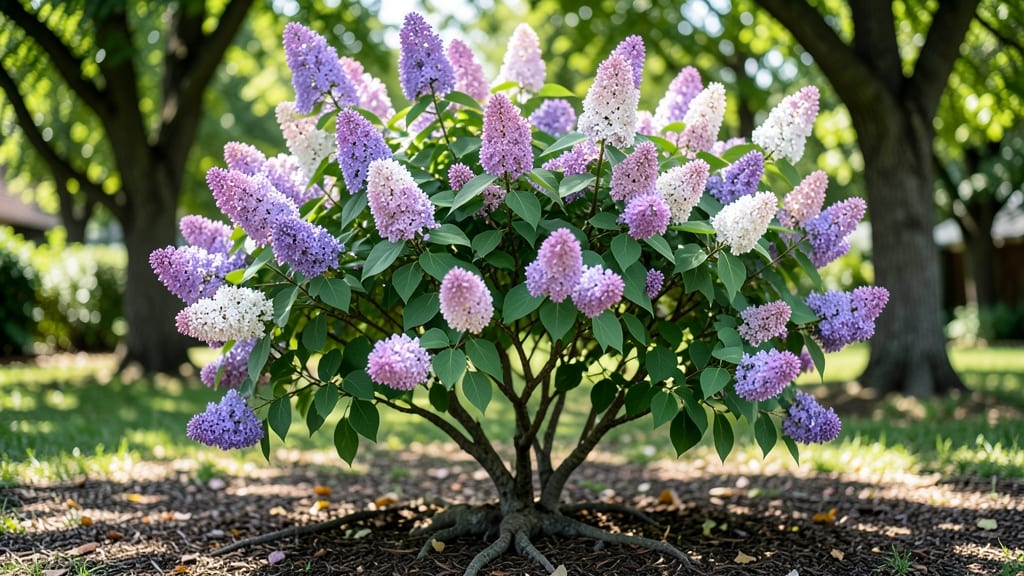
Lilac bushes burst into bloom between late April and early June, but the exact timing depends on your hardiness zone and last winter’s chill hours. 🌸 I’ve watched my Zone 5 lilacs wake up in mid-May, their purple spikes signaling spring’s arrival—sometimes weeks earlier or later depending on frost dates.
The key to predicting their bloom window lies in understanding how cold winters and early springs shift their schedule.
Most lilacs need 600-1,000 hours of chill below 45°F to set buds properly, so late-winter freezes can delay blooms while mild winters might trigger early (but weaker) flowers. Pruning after blooming is critical—cutting back too early removes next year’s buds, while waiting too long sacrifices shape.
My lilacs in full sun bloom 2-3 weeks earlier than those in partial shade, and container-grown bushes often lag behind in-ground plants.
To maximize flowering, feed them in early spring with a balanced fertilizer and mulch to protect roots from temperature swings. You’ll reward yourself with 2-3 weeks of fragrant blooms that attract bees and fill your yard with color.
The trade-off? Heavy pruning after blooming keeps them bushy but cuts next year’s flowers by half—so plan ahead if you love those purple clouds.
For gardeners in Zones 3-7, use your local frost dates as a guide: lilacs bloom when forsythia finishes and before roses peak. In warmer Zones 8-9, expect later blooms or even fall flowering—just adjust your pruning timing accordingly.
The secret to perfect lilac bloom time? Pay attention to last winter’s cold snap and this spring’s warmth.
📚 In This Guide
- What you need
- Instructions
- Tips and common mistakes
- Wrapping up and next steps
What you need
- ● Lilac bush (common varieties): Choose based on your zone (e.g., Syringa vulgaris for Zones 3-7, Syringa meyeri for Zones 3-8). Quantity: 1-3 bushes for optimal bloom impact.
- ● Well-draining soil: Mix of garden soil, compost (50%), and sand/perlite (20%) for loose, fertile beds.
- ● Pruning tools: Bypass pruners (for clean cuts)
- ● Loppers (for thicker branches)
- ● Garden saw (if pruning mature bushes)
- ● Fertilizer: Slow-release balanced 10-10-10 or rose/lilac-specific fertilizer (apply in early spring).
- ● Mulch: 2-3 inches of wood chips or shredded bark to retain moisture and regulate soil temp.
- ● Watering can/hose with adjustable nozzle: For deep, even hydration (1-1.5 gallons per bush, 2-3x/week during bloom season).
- ● Gloves & long sleeves: Lilac thorns can be sharp—protect yourself!
- ● Soil pH test kit: Lilacs prefer slightly alkaline soil (pH 6.5-7.5). Adjust with lime if needed.
- ● Bloom-time tracker: A garden journal or app (e.g., Gardenate) to log frost dates and bloom cycles.
- ● Epsom salt (magnesium sulfate): 1 tbsp per bush in early spring for vibrant blooms.
- ● Decorative stakes or trellis: For supporting tall varieties (e.g., Syringa josikaea).
- ● Pest deterrents: Neem oil or insecticidal soap (if aphids or borers are a local issue).
Instructions: how to time lilac blooms by your hardiness zone
Here's how I predict bloom dates down to the week—no guesswork, just science and your local climate.
☀️ Step 1: Pinpoint Your Last Frost Date
First, find your USDA hardiness zone (zones 3-8 grow lilacs best) and check your local average last frost date. I use the National Weather Service or my county extension office for precise numbers. Lilacs need at least 100 chill hours below 45°F to set buds properly, so if you're in zone 7, expect buds to form by mid-November.
Write this date down—it's your starting point. For example, in zone 5, last frosts typically fall around April 15, while zone 8 gardeners see them by March 1. This date determines when buds will swell and when blooms will arrive.
⏰ Step 2: Count Back 8-10 Weeks for Bud Swelling
Lilac buds take 8-10 weeks to mature after the last frost. If your last frost is April 15, start watching for bud swell around February 15. This is when the buds go from tight and dormant to plump and fuzzy—like tiny green golf balls.
Here's the thing—if buds swell but then shrivel, you've got bud blast (a fungal issue). I've seen this in wet springs, so if that happens, prune out affected buds immediately and avoid overhead watering.
🌿 Step 3: Track Temperature Fluctuations for Bloom Trigger
Lilacs bloom when daytime temps hit consistently 60°F for 3-5 days. I check the 7-day forecast and wait for that steady warmth. In zone 4, this usually lands in late May, while zone 6 sees blooms by mid-May. If temps dip below 50°F after buds swell, blooms may delay or drop entirely.
Watch for new leaf growth on nearby trees—when forsythia blooms, lilacs are usually 2-3 weeks behind. This natural calendar helps me adjust my expectations without stressing over the thermometer.
🌱 Step 4: Prune After Blooms Fade (But Before Buds Form Next Year)
Once blooms fade, lilacs set next year's buds. I prune within 4-6 weeks after flowering to avoid cutting off new growth. For example, if your lilac blooms in late May, prune by early July. Remove 1/3 of the oldest stems at the base—these are the ones that flowered this year and won't bloom again.
Never prune in fall or winter. You'll cut off next year's flowers before they even form. I mark stems with a ribbon if I'm unsure which ones bloomed—it saves confusion later.
🌸 Step 5: Extend the Bloom Season with Simple Care
To encourage longer, more abundant blooms, water deeply once a week during dry spells (soil should be 2-3 inches dry before watering). I also add 2-3 inches of mulch in early spring to retain moisture and cool roots.
For repeat bloomers (like 'Katherine Havemeyer'), deadhead spent flowers immediately to prompt a second flush. Regular feedings of 10-10-10 fertilizer in early spring also boosts vigor—just follow the package rate for shrubs.
Tips & tricks for perfect lilac bloom timing
Timing lilac blooms isn't about luck—it's about reading your climate like a pro. Here's what I've learned from years of tracking these fragrant shrubs.
Chill Hours Matter: That 100 chill hours below 45°F requirement in Step 1 isn't just a suggestion—it's non-negotiable for bud formation. I've seen gardeners in zone 6 skip this and wonder why their lilacs never bloom. Use a weather station or your local extension office's records to verify your chill hours if you're in doubt. For example, zone 5 might need 120 chill hours for reliable blooms, while zone 7 can get by with the minimum.
Bud Swell Observation: When counting back 8-10 weeks from your last frost date in Step 2, don't just guess at February 15. Actually check your buds weekly starting in late January. Healthy buds should feel firm and plump—not soft or mushy. I use a magnifying glass to inspect buds on cloudy days when they're less visible from a distance. This early check helps you spot bud blast before it spreads.
Temperature Tracking: The 60°F for 3-5 days threshold in Step 3 is your magic number, but don't rely solely on forecasts. I set up a maximum-minimum thermometer near my lilacs to track actual daytime highs. If temps dip below 50°F after buds swell, move potted lilacs to a sheltered spot or cover them with frost cloth. I've saved entire blooms this way during late spring cold snaps.
Pruning Precision: That 4-6 week window after flowering in Step 4 is tighter than it sounds. If you prune too early, you risk cutting off next year's flower buds. I mark stems with colored ribbons right after blooms fade to track which ones need removal. For large shrubs, I prune in stages over two years—removing 1/3 of oldest stems one year and the rest the following year to avoid shocking the plant.
Pro Tips for Lilac Bush Bloom Time
- Timing lilac blooms isn't about luck—it's about reading your climate like a pro.
- Chill Hours Matter: That 100 chill hours below 45°F requirement in Step 1 isn't just a suggestion—it's non-negotiable for bud formation.
- Bud Swell Observation: When counting back 8-10 weeks from your last frost date in Step 2, don't just guess at February 15.
Frequently asked questions
Got questions about lilac bloom time? You’re not alone! Here are some of the most common inquiries—plus quick answers to help you plan your spring garden like a pro.
When do lilacs typically bloom in my area?
Lilac bloom time varies by hardiness zone. In Zones 3-4, expect blooms in late April to early May. Warmer zones (5-7) see flowers from mid-April to June. Check your zone and local frost dates for the most accurate timing!
Why did my lilac bush bloom early (or not at all) this year?
Early blooms often mean mild winter weather or over-fertilizing last fall. No blooms? It could signal underwatering, poor sunlight, or old age (lilacs peak at 10–15 years). Prune in late summer/fall to encourage next year’s flowers!
Can I extend my lilac’s bloom time?
Yes! Plant in full sun (6+ hours/day) and water deeply during droughts. For repeat blooms, prune right after flowering (not in fall) to remove spent blooms. Deadheading also redirects energy to new buds. Choose reblooming varieties like ‘Bloomerang’ for extra show!
Are there lilac alternatives that bloom earlier or later?
For earlier blooms, try winter daphne (February–March) or forsythia (March–April). Later bloomers include mock orange (June–July) or deutzia (May–June). All thrive in similar zones as lilacs but offer staggered color!
What should I do if my lilac blooms look sickly or sparse?
Sparse blooms often mean nutrient deficiency (try a balanced fertilizer in early spring). Yellow leaves? Check for overwatering or chlorosis (fix with iron supplements). Pests like borers can also weaken bushes—inspect stems and treat with neem oil if needed.
Still stumped? Drop your lilac questions in the comments—we’re happy to help troubleshoot!
Wrapping up and next steps
Understanding your lilac bush bloom time is all about timing, location, and a little patience!
Whether you’re in Zone 3 or Zone 8, knowing when to expect those fragrant purple blooms lets you plan ahead—whether it’s for pruning, admiring, or even harvesting lilac-infused treats. 🌸 With the right care, your lilac will reward you with years of stunning spring displays.
Ready to enhance your garden’s charm? Start by marking your calendar with your zone’s bloom window, then check out our pruning tips to keep your lilac thriving. Happy gardening!