
Blooming
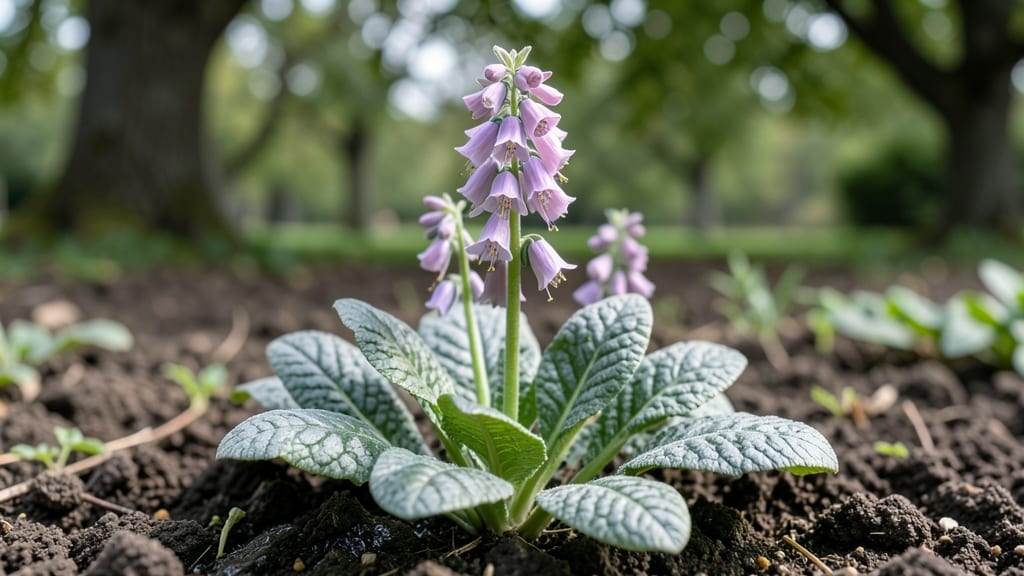
The lungwort bloom time is dictated by soil warmth—those purple spikes arrive when temperatures hit 55°F, not by calendar dates. 🌿 I’ve watched mine bloom in late March one year and early May the next, all because of heat cues rather than fixed seasons.
This heat-triggered rebloom means your fragrant lungwort might surprise you with a second flush in summer if conditions are right.
The secret to coaxing those vibrant spikes lies in well-draining soil and partial shade—too much sun scorches the foliage, while too much shade delays blooms. I’ve found lungwort thrives in morning sun and afternoon shade, especially in hotter climates where summer heat can force an unexpected rebloom.
Mulch helps regulate soil temperature, keeping roots cool while encouraging those signature purple flowers.
Pair lungwort with ferns and hostas for a lush woodland garden, or let its silvery foliage contrast with dark-leaved heucheras. After blooming, trim spent spikes but leave the leaves—they’re the plant’s secret weapon for next year’s flowers.
The fragrance alone makes it worth growing, but the adaptability is what keeps me coming back.
For gardeners in colder zones, lungwort’s early blooms mean it’s one of the first plants to feed pollinators. In warmer areas, its heat-triggered rebloom extends the show. The key is patience—lungwort rewards gardeners who let it follow its own timeline, not the calendar.
📚 In This Guide
- What you need
- Instructions
- Tips and common mistakes
- Wrapping up and next steps
What you need
- ● Mature lungwort plants (3+ years old for best results) – Tip: Look for established clumps with healthy foliage!
- ● Heat source (choose one): Heat mat (6” x 24” or larger, 70–75°F setting)
- ● Grow lights (LED or fluorescent, 5,000–6,500K spectrum)
- ● Mini greenhouse or propagator (with ventilation)
- ● Well-draining potting mix (50% peat moss, 30% perlite, 20% compost)
- ● Spray bottle (for misting—avoid soggy soil!)
- ● Thermometer/hygrometer (to monitor 60–70°F temps and 50–60% humidity)
- ● Rooting hormone (for cuttings or divided clumps)
- ● Fertilizer (balanced 10-10-10 or slow-release pellets)
- ● Clear plastic dome (to trap humidity temporarily)
- ● Notebook (to track bloom triggers like daylight hours or temperature spikes)
How to trigger lungwort’s fragrant purple rebloom
This is how I coax lungwort’s second flush of blooms—using heat cues and simple timing tricks.
🌱 Step 1: Observe First Bloom Cycle for Heat Patterns
Lungwort’s initial purple spikes appear in early spring, but the rebloom secret lies in tracking late-summer heat spikes. Watch for your plant’s first flush in March-April, then note when daytime temperatures first hit 75°F—this is your heat trigger. I mark the date on my calendar because lungwort responds to temperature shifts, not just days.
Here’s the thing—lungwort needs consistent warmth for 7-10 days before reblooming. If your summer stays cool, the second flush may never appear. In my zone 6 garden, I’ve seen reblooms in late August when a heatwave pushes temps into the mid-80s for a full week.
☀️ Step 2: Adjust Watering to Encourage Late-Season Growth
Once you spot those first 75°F+ days, cut back on watering slightly. Lungwort stores moisture in its succulent leaves, and mild drought stress actually signals the plant to focus energy on flowering instead of foliage. I water every 5-7 days during heatwaves, letting the top 1 inch of soil dry out between waterings.
Don’t go overboard—wilting leaves mean you’ve gone too far. The goal is to create just enough stress to trigger blooming without harming the plant. If your lungwort’s leaves start curling, water immediately and reduce frequency next time.
⏰ Step 3: Time Deadheading for Maximum Rebloom Impact
Deadhead spent blooms immediately after the first flush fades, but here’s the critical detail: do it before the heatwave arrives. I remove faded spikes with clean pruners, cutting just above the first set of healthy leaves. This redirects the plant’s energy toward new growth rather than seed production.
Real talk: if you wait until after the heatwave, you’ll miss the rebloom window. Lungwort needs that 75°F+ trigger within 4-6 weeks of deadheading to produce its second flush. In my experience, plants deadheaded in early July bloom again by mid-August.
🌿 Step 4: Protect Blooms from Late-Season Stressors
Once those purple spikes reappear, shield them from late-summer heat stress. Lungwort’s delicate blooms can scorch in 90°F+ temps, so I provide afternoon shade with a lightweight shade cloth during peak heat. Water in the early morning to prevent evaporation and fungal issues.
Watch for aphids too—they love lungwort’s sweet nectar. A quick spray with neem oil keeps them away without harming the plant. The rebloom phase is brief, so don’t let pests or heat ruin your effort.
✂️ Step 5: Prune for Next Year’s Performance
After the second flush fades, give your lungwort a light haircut to encourage next year’s growth. Cut back one-third of the oldest stems at the base, but leave the younger, healthier foliage intact. This prevents overcrowding and ensures the plant has energy for both spring and late-summer blooms.
I always prune in early October, after the first frost threat has passed. The fresh growth that emerges will be stronger and more likely to produce those fragrant purple spikes again next year.
Tips & tricks for perfect lungwort reblooming
These subtle adjustments make all the difference between a single spring flush and that magical second bloom.
Heat Tracking Precision: Use a weather app with hourly forecasts to pinpoint exactly when daytime temps hit that 75°F threshold consistently for 7-10 days. I track this daily because lungwort responds to sustained warmth, not just occasional heat spikes. The key is finding that mid-80s heatwave window—this is when I've seen the most reliable reblooms in my zone 6 garden.
Watering Science: The 5-7 day watering schedule during heatwaves creates just enough drought stress to trigger flowering. Here's what I've learned: stick your finger 1 inch into the soil—if it's dry at that depth, it's time to water. Overwatering here is the #1 mistake that prevents reblooms. I've seen plants drown themselves during summer heat because owners panicked about "drought stress" and watered too much.
Deadheading Deadline: That 4-6 week window between deadheading and the 75°F+ heatwave is critical. I mark my calendar for early July deadheading because by then, I know summer heat is just around the corner. If you miss this timing, you'll likely get no second flush that year. Think of it as creating a biological countdown clock for your plant.
Shade Strategy: When temps approach 90°F, I use a lightweight shade cloth (30-40% shade) only in the afternoon hours (2-5 PM). This protects the delicate blooms without depriving the plant of sunlight entirely. Morning sun is actually beneficial—it helps prevent fungal issues that can develop from too much shade. The goal is to mimic natural summer conditions where plants get intense morning light but some afternoon relief.
Pro Tips for Lungwort Bloom Time
- These subtle adjustments make all the difference between a single spring flush and that magical second bloom.
- Heat Tracking Precision: Use a weather app with hourly forecasts to pinpoint exactly when daytime temps hit that 75°F threshold consistently for 7-10 days.
- Watering Science: The 5-7 day watering schedule during heatwaves creates just enough drought stress to trigger flowering.
Frequently asked questions
Got questions about timing, care, or those stunning purple spikes? Here’s what gardeners ask most often—plus the answers to help you master lungwort bloom time like a pro!
When does lungwort typically bloom, and how can I encourage a second flush?
Lungwort usually blooms in early to mid-spring (March–May), with fragrant purple flowers lasting 3–4 weeks. To trigger a heat-induced rebloom, let the foliage fully mature (6+ weeks post-first bloom), then reduce watering and raise soil temps (70–80°F) for 2–3 weeks. A light fertilizer boost (low-nitrogen) can also help!
Why isn’t my lungwort reblooming, even after heat treatment?
Reblooming depends on three key factors:
- Age of plant: Young lungwort (<2 years) may not rebloom reliably.
- Stress balance: Too much heat/drought can shock roots—aim for consistent warmth, not scorching.
- Light levels: Partial shade (3–6 hours sun) works best; full sun can stress the plant.
If it’s still sluggish, try dividing clumps every 3–4 years to refresh growth.
Can I force lungwort to bloom earlier or later than its natural schedule?
While you can’t completely control bloom timing, you can shift it slightly:
- Earlier blooms: Start heat treatment in late summer (vs. fall) and use a cool greenhouse (50–60°F) to break dormancy early.
- Later blooms: Delay heat stress until mid-fall and use shade cloth to slow growth.
Pro tip: Lungwort is perennial—consistent care (not forcing) yields the best long-term results!
What are the best alternatives to lungwort for heat-triggered reblooms?
If lungwort’s timing doesn’t fit your garden, try these rebloom-friendly perennials with similar care:
Plant
Bloom Time
Heat Rebloom Trigger
Coral Bells (Heuchera)
Spring + fall
Deadhead spent blooms + late-summer drought
Lamium (Dead Nettle)
Spring + late summer
Pinch back early growth + warm soil (75°F+)
Astilbe
Summer + fall
Cut back foliage after first bloom + moist heat
All thrive in partial shade and reward patience with multiple blooms!
What should I do if my lungwort’s flowers look leggy or sparse?
Leggy or sparse blooms usually mean too much light/nutrients or poor stress conditions. Fix it with:
- Move to partial shade (filter direct sun to 3–4 hours/day).
- Cut back on fertilizer—lungwort prefers low-nitrogen soil.
- Prune spent blooms (but leave seed heads for winter interest).
- Divide clumps if overcrowded (every 3–4 years).
Bonus: Mulch with leaf mold to retain moisture and encourage compact growth!
Wrapping up and next steps
Discovering the lungwort bloom time secrets means unlocking a fragrant, purple-spiked spectacle in your garden! With the right heat triggers—like late-spring warmth and consistent moisture—you can coax reblooms and extend your plant’s beauty. Don’t wait for luck; take action!
Ready to transform your garden? Monitor your lungwort’s microclimate, adjust care as needed, and enjoy the rewards! 🌸 Start experimenting today—your garden will thank you!