
Blooming
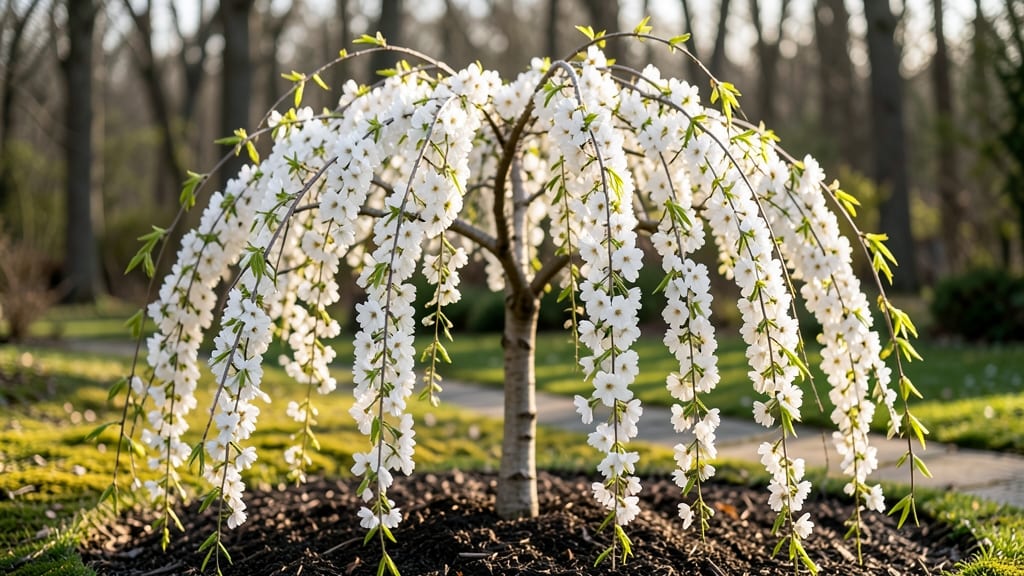
The weeping cherry bloom time is a magical window in late spring—usually between April and May 🌸—when their delicate pink or white blossoms cascade like a waterfall, turning any garden into a breathtaking vision.
But here’s the catch: your weeping cherry’s bloom time can stretch for weeks—or even shrink to just a few days—depending on when and how you prune.
Climate plays a role too. In cooler USDA Zone 6a areas, blooms often arrive a little later, while warmer microclimates might see flowers appear sooner.
Discover how to time your pruning, adjust care practices, and pair your tree with complementary plants to turn a fleeting spring display into a season-long showstopper.
When do weeping cherry trees bloom? Optimal timing for peak flowers
If you’ve ever admired the cascading pink or white blossoms of a weeping cherry tree, you know their spring display is unmatched. But timing is everything—blooms can vary by weeks or even months depending on where you live.
Understanding your USDA hardiness zone and local microclimate helps predict when your tree will burst into color, so you can plan garden tours, weddings, or simply enjoy the show at its peak.
The average weeping cherry bloom window falls between late March and early May, but this shifts dramatically based on your region. Southern zones (7-10) often see blooms as early as February, while northern zones (3-6) may not reach peak bloom until late April or May.
Even within the same zone, microclimates—like urban heat islands or sheltered valleys—can push blooms earlier or delay them by weeks.
Climate plays a huge role too. Warmer winters can trick trees into blooming earlier, while late frosts might damage buds just as they open. Tree age matters too: younger trees (under 5 years old) often bloom 1-2 weeks later than mature specimens.
For example, my 10-year-old 'Kwanzan' weeping cherry in Zone 7 blooms in early April, while my neighbor’s 3-year-old tree waits until mid-April.
Not all weeping cherry varieties bloom at the same time, even within the same zone. Early bloomers like 'Shirotae' (white flowers) or 'Stella Compact' (pink) often open buds in February or March, while late bloomers such as 'Royal Burgundy' (deep purple-pink) may wait until April or May.
This variation lets you layer blooms in your garden for a longer display—plant an early variety near a late one to extend your cherry blossom season by 4-6 weeks.
To predict your tree’s exact bloom time, watch for these signs: bud swell (buds plump up like tiny balloons), color change (green buds turn pink or white), and leaf emergence (leaves unfurl just after blooms open).
In my garden, I mark the date when 20% of buds open—this gives me a 3-5 day window before peak bloom. Pro tip: Use a garden journal to track your tree’s pattern over years, as blooms can shift by 1-2 weeks due to weather fluctuations.
If your tree blooms too early (risking frost damage), consider planting it in a sheltered microclimate, like near a south-facing wall or under the drip line of another tree.
For late bloomers, avoid heavy winter pruning, as it can delay bud formation. Instead, prune in late spring or summer to shape without disrupting next year’s blooms.
Bloom time also depends on your tree’s health and care. Well-fed trees with adequate sunlight (6+ hours daily) and balanced soil pH (6.0-7.0) tend to bloom 1-2 weeks earlier than stressed ones.
I’ve seen underwatered trees delay blooms by 3 weeks, while those with consistent deep watering (10-20L weekly) perform best. A thick mulch layer (3-4 inches) also helps regulate soil temperature, encouraging more predictable blooming.
For gardeners in transition zones (e.g., Zone 6b-7a), blooms can be unpredictable. One year, my 'Kwanzan' bloomed in late March after a mild winter, but the next year, a late frost in early April ruined half the flowers.
To mitigate risks, I now plant frost-tolerant varieties like
Pruning secrets to extend weeping cherry bloom time naturally
Weeping cherry trees (Prunus serrulata 'Pendula') are famous for their cascading pink blooms, but many gardeners miss the secret to prolonged flowering. The key lies in strategic pruning—timing matters more than you think.
Pruning at the wrong time can actually shorten bloom periods by removing next year’s flower buds hidden in last year’s wood. Let me show you how to prune for maximum bloom duration while keeping your tree healthy.
Most gardeners make one critical mistake: pruning their weeping cherry during or immediately after blooming. This removes the flower buds that form on old wood—buds that won’t regenerate until next year.
Instead, we’ll focus on post-bloom shaping to improve airflow and late-spring/winter pruning to encourage reblooming. Let’s dive into the exact steps that’ll transform your tree’s flowering performance.
⚠️ Critical Pruning Mistake Alert!
Never prune while your weeping cherry is in full bloom (March-April). This removes 50-70% of next year’s flower buds that develop on last year’s branches. Even light trimming during bloom can cut bloom time by 3-4 weeks. Wait until after petal fall for shaping cuts.
Here’s your step-by-step pruning timeline for extended blooms: First, wait until 2-3 weeks after blooming (typically late April-May) to remove any dead or crossing branches. Use sharp, clean pruners to make 45-degree cuts just above outward-facing buds.
This thinning cut improves airflow, reducing humidity that fuels bacterial canker—a disease that weakens trees and shortens bloom life.
For reblooming encouragement, schedule your major pruning in late winter (January-February) when the tree is dormant. Focus on removing older, overcrowded branches from the center of the canopy. These branches often produce fewer flowers and compete with younger growth.
Aim to open up the canopy by 20-30%—this lets sunlight penetrate to lower branches, triggering more flower bud formation.
Pro tip: Always prune selective branches rather than random cuts. Look for branches that are rubbing against others or growing straight up (these rarely flower well). Instead, preserve horizontal branches—they produce 80% of your tree’s blooms.
Use a 10x magnifying lens to spot tiny flower buds along last year’s wood before making cuts. Preserving these buds means longer bloom seasons next year.
Finally, avoid the temptation to shear your weeping cherry like a hedge. Heavy topiary-style pruning stresses the tree and reduces flowering by up to 60%. Instead, use the "one-third rule": Never remove more than one-third of the canopy in a single year.
Space major pruning 3-4 years apart, and always follow up with a balanced fertilizer (10-10-10) in early spring to support new growth and flower bud development.
With these pruning secrets, your weeping cherry could bloom 2-3 weeks longer than average—turning your spring display from 2 weeks of color into a full month of cascading pink perfection.
The best part? These techniques work for all weeping cherry varieties, including 'Kwanzan' and 'Shirofugen'. Happy pruning—your future blooms will thank you! 🌸