
Blooming
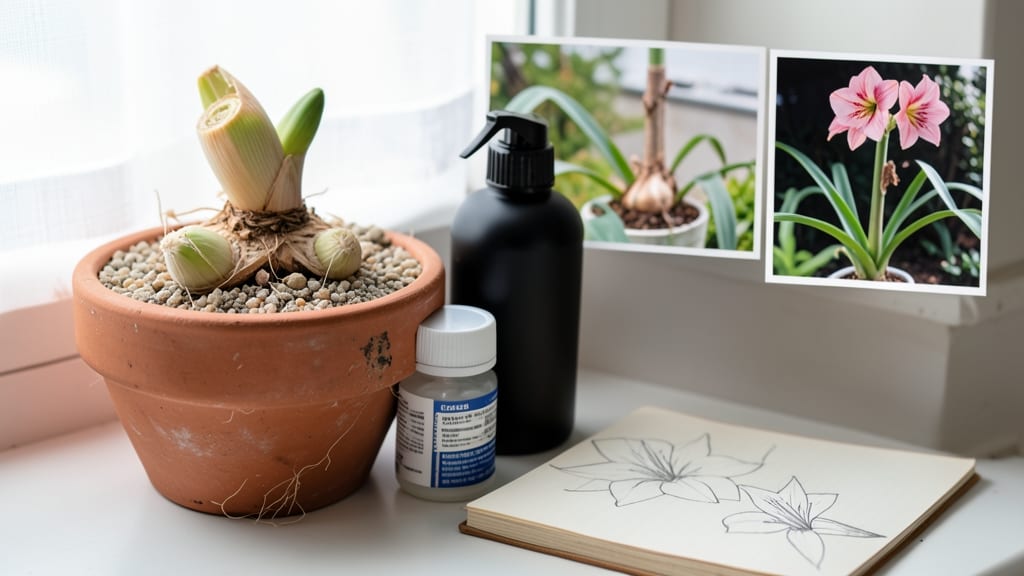
Your amaryllis will bloom again when you replicate its natural dormancy cycle—6-8 weeks of complete darkness, cooler temperatures around 55-65°F, and minimal watering before spring growth. Afterward, bright indirect light and steady warmth trigger the next flowering phase.
This isn't just about waiting—it's about tricking your plant into thinking winter has passed. 🌱 During dormancy, amaryllis bulbs store energy for their next bloom, and darkness mimics the short winter days they'd experience in their native South American habitat.
The key is consistency: too much light or warmth during this period can confuse the bulb, while proper conditions reward you with those iconic trumpet-shaped flowers in just 6-8 weeks.
Once you reintroduce light and warmth, the bulb responds by sending up a new stalk. What many growers miss is that even after blooming, you can encourage a second round by giving the bulb a 4-6 week rest after flowers fade—this second dormancy period primes it for another spectacular display.
Think of it like a plant version of hibernation and rebirth!
💡 In This Article
- Amaryllis Blooming Cycle Explained: Light, Heat, and Dormancy Science
- Step-by-Step Guide to Encouraging Repeat Amaryllis Blooms
Amaryllis blooming cycle explained: light, heat, and dormancy science
Amaryllis bulbs rely on a precise biological rhythm to rebloom, starting with their natural dormancy phase. This period mimics the dry, cooler seasons of their South American origins, where reduced daylight signals the bulb to conserve energy.
During dormancy, the plant shifts resources from foliage to the bulb, storing nutrients like starches that will fuel next year's bloom. The bulb's outer layers even thicken slightly, creating a protective barrier against moisture loss—a survival mechanism that also prepares it for regrowth.
The science behind reblooming hinges on two key triggers: ethylene gas production and temperature fluctuations. As the bulb enters dormancy, it begins producing ethylene—a plant hormone that regulates growth cycles. This gas acts like a biological switch, telling the bulb when to "wake up."
Meanwhile, cooler temperatures (55-65°F) slow metabolic activity, preventing premature growth. Too much warmth during dormancy can disrupt this process, causing the bulb to think spring has arrived when it hasn't, which is why consistent conditions matter so much.
Light plays a paradoxical role—too much during dormancy confuses the bulb, while bright light after dormancy is essential for blooming. In nature, amaryllis bulbs experience short winter days followed by longer spring daylight.
When you provide 6-8 weeks of complete darkness during dormancy, you're essentially tricking the bulb into believing winter has passed, while subsequent light exposure triggers the production of florigen, a protein that initiates flower formation.
This is why placing your amaryllis in a dark closet or basement during dormancy works so well—it removes the light signal that would otherwise delay blooming.
What most growers overlook is the bulb's internal clock, which tracks not just light but also temperature cycles. In the wild, amaryllis bulbs experience daily temperature swings between warm days and cooler nights. Replicating this with a 10°F difference between day and night temperatures can significantly improve reblooming success.
For example, keeping your amaryllis in a sunny window during the day (around 70°F) and moving it to a cooler spot at night (around 60°F) mimics these natural conditions, giving the bulb the subtle cues it needs to prepare for flowering.
Here's what happens when you get the timing right: After dormancy, the bulb's stored energy powers the growth of a new flower stalk, which typically emerges within 6-8 weeks of reintroducing light and warmth.
The stalk grows rapidly—sometimes up to 2 inches per day
The most critical window for reblooming is the 4-6 weeks after flowers fade. During this time, the bulb needs to recover and rebuild its energy reserves. Skipping this recovery period is a common mistake—many growers assume the plant is done after blooming and resume normal care too soon, which can prevent reblooming. Instead, think of it as giving your amaryllis a second chance to recharge before its next performance. Understanding this cycle transforms amaryllis care from guesswork to science. By controlling light, temperature, and dormancy duration, you're essentially conducting a controlled experiment with your plant—one where the variables are carefully calibrated to produce the most stunning results. 🌺 The reward? A bulb that not only blooms again but often produces even more vibrant flowers than its first display.