
Blooming
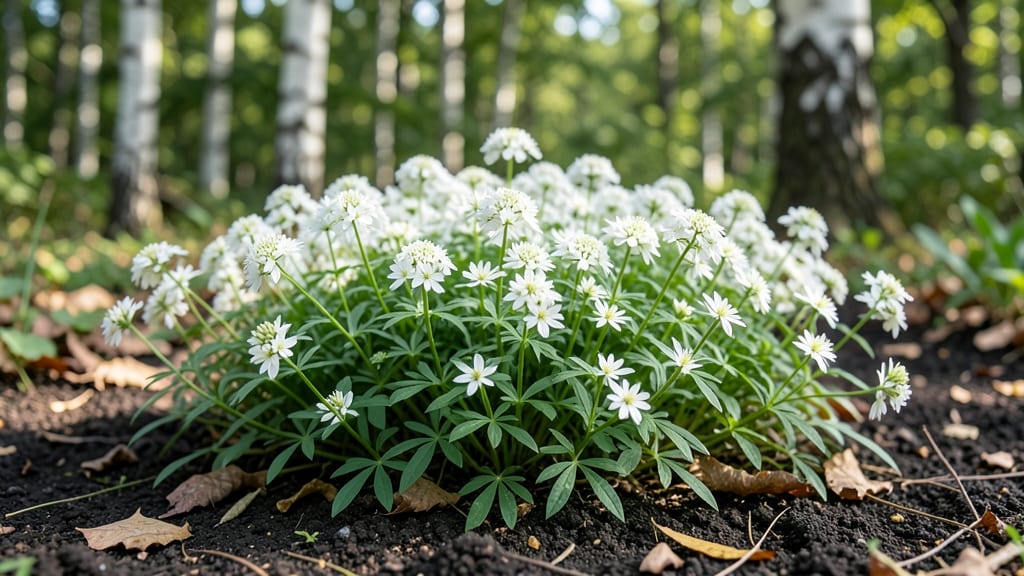
The sweet woodruff bloom time arrives in late spring, typically between April and June, when delicate white clusters rise above its fragrant foliage 🌿 — a sight that transforms shady corners into a vanilla-scented paradise.
If you’ve ever dreamed of a shade garden filled with delicate white blooms and a subtle vanilla-like fragrance, you’re not alone. But here’s the catch: timing is everything. Sweet woodruff thrives in cooler temperatures, so if your spring arrives late, you might miss its peak bloom window entirely.
Understanding its bloom time isn’t just about admiring the flowers—it’s about planning companion plants, like hostas or ferns, that complement its growth cycle. The right care can even extend its flowering period, giving you weeks of fragrant beauty instead of just a fleeting burst.
In this guide, I’ll break down exactly when to expect those iconic white blooms, how to encourage them to last longer, and the simple tricks that make sweet woodruff a low-maintenance star in any shade garden.
Sweet woodruff bloom time: exact months and ideal conditions for peak flowers
Sweet woodruff (Galium odoratum) transforms your shade garden into a fragrant paradise when it blooms, typically between April and June in USDA Zones 3–8. This delicate perennial thrives in cooler climates, making its white star-shaped flowers a welcome sight after winter's dormancy.
Understanding its bloom window helps you plan companion plantings and maintenance for a stunning display.
In my experience, the earliest blooms appear in late March to early April in warmer southern regions (Zones 7–8), while northern gardens (Zones 3–5) may see flowers slightly later, around mid-April to May.
The timing depends heavily on your last frost date and how quickly the soil warms in spring.
For peak blooms, sweet woodruff needs partial shade—think 3 to 6 hours of morning sun and afternoon shade. Too much direct sunlight can scorch its leaves, while too little light delays flowering.
I’ve found that planting it under deciduous trees works beautifully, as the canopy filters harsh afternoon rays while allowing gentle spring sunlight.
The soil plays a critical role too. Sweet woodruff prefers moist, well-drained soil with a slightly acidic to neutral pH (6.0–7.0). Amending heavy clay with compost or sand improves drainage, while adding organic matter like leaf mold keeps the soil consistently moist.
Overwatering or waterlogged conditions, however, can cause root rot and stunt blooms.
Pruning is another key factor. I always trim back the foliage by one-third right after the flowers fade (around June or early July). This encourages a second flush of growth and often results in smaller but later blooms in late summer.
Avoid heavy pruning in fall, as the plant needs its foliage to photosynthesize and store energy for next year.
Regional variations matter! In cooler climates (Zones 3–5), sweet woodruff may bloom slightly later due to slower soil warming. Conversely, in warmer zones (7–8), you might see early blooms as early as March, especially if winters are mild.
Pay attention to your local frost dates and adjust expectations accordingly.
Healthy blooming sweet woodruff has vibrant green leaves and dense, bushy growth. The flowers should be abundant and fragrant, with a subtle vanilla scent that’s strongest in the morning.
If your plant looks leggy or sparse, it may need more light or a light fertilizer application in early spring.
To extend the bloom period, I recommend consistent watering and a light feeding in early spring with a balanced 10-10-10 fertilizer. Avoid heavy fertilizers, which can promote lush foliage at the expense of flowers.
Mulching with organic matter also helps retain moisture and regulate soil temperature, creating ideal conditions for prolonged blooming.
If your sweet woodruff isn’t blooming as expected, check for these common issues: too much shade, poor soil drainage, or over-fertilizing. Sometimes, the plant needs a year or two to establish itself before producing its first flowers.
Patience pays off—once established, sweet woodruff can bloom reliably for decades with minimal care.
With the right conditions, your sweet woodruff will reward you with a sea of fragrant white blooms that transform your shade garden into a tranquil spring sanctuary. Plan your plantings around its bloom time, and you’ll enjoy this charming perennial’s beauty for years to come. 🌿
How to encourage earlier or longer sweet woodruff blooms in your garden
Sweet woodruff (Galium odoratum) naturally blooms in late spring, but with the right techniques, you can coax earlier or more abundant flowers. The key lies in understanding its growth habits and creating ideal conditions.
This delicate ground cover thrives when given proper care, and small adjustments can dramatically extend its fragrant display from just a few weeks to nearly two months.
Many gardeners miss the full potential of sweet woodruff because they focus only on its foliage rather than its blooming cycle. The secret to longer flowers isn't complicated—it's about timing your pruning, monitoring soil moisture, and choosing the right companion plants.
Let's explore how to maximize those charming white clusters and their intoxicating vanilla scent.
One common mistake gardeners make is pruning too late in the season. If you cut back sweet woodruff after buds have formed, you'll delay or even prevent blooming entirely.
Always prune in early spring, just as new growth begins to emerge. This timing gives the plant enough time to recover and produce flowers by late spring.
For earlier blooms, start by providing consistent moisture throughout the winter months. Sweet woodruff is drought-tolerant once established, but a well-watered root system in late winter helps kickstart early growth.
Mulch with 2–3 inches of organic mulch (like shredded leaves or straw) to protect roots from temperature fluctuations and retain moisture.
Companion planting plays a crucial role in extending bloom time. Pair sweet woodruff with shade-tolerant perennials like foamflower (Tiarella cordifolia) or ajuga (Ajuga reptans).
These plants create a supportive ecosystem by improving soil structure and reducing competition for nutrients. The added benefit? A layered garden that blooms sequentially for months of interest.
Remember, sweet woodruff's blooms are fleeting but fragrant. With these techniques, you'll transform a brief spring display into a prolonged sensory experience. The key is patience—this delicate plant rewards careful attention with abundant, fragrant blooms that fill your shade garden with a sweet aroma. 🌿✂️🌸